
Corporate Analysis of Rheinmetall AG’s Market Performance and Strategic Outlook
1. Market Context and Share‑Price Dynamics
Rheinmetall AG’s recent share‑price appreciation reflects a confluence of macro‑financial and sector‑specific drivers. The broader German equity market has benefited from a robust rebound in risk‑seeking sentiment, underpinned by favourable macro‑economic data such as declining inflationary pressures and a stabilised fiscal outlook. Within this environment, the defence sector has experienced a notable upside, largely due to heightened geopolitical tensions in the Middle East and an expanding demand for advanced military hardware.
Analyst consensus on Rheinmetall’s earnings outlook has been upgraded, citing a growing order book and a solid contractual pipeline. The company’s revenue projections have risen, and the valuation multiple has adjusted accordingly. Despite this, investor caution persists; market participants remain vigilant about global commodity supplies—particularly rare earth elements and high‑purity aluminium—and the potential for sudden shifts in geopolitical priorities that could influence future demand for defence equipment.
2. Production Capabilities and Technological Innovation
2.1. Manufacturing Processes
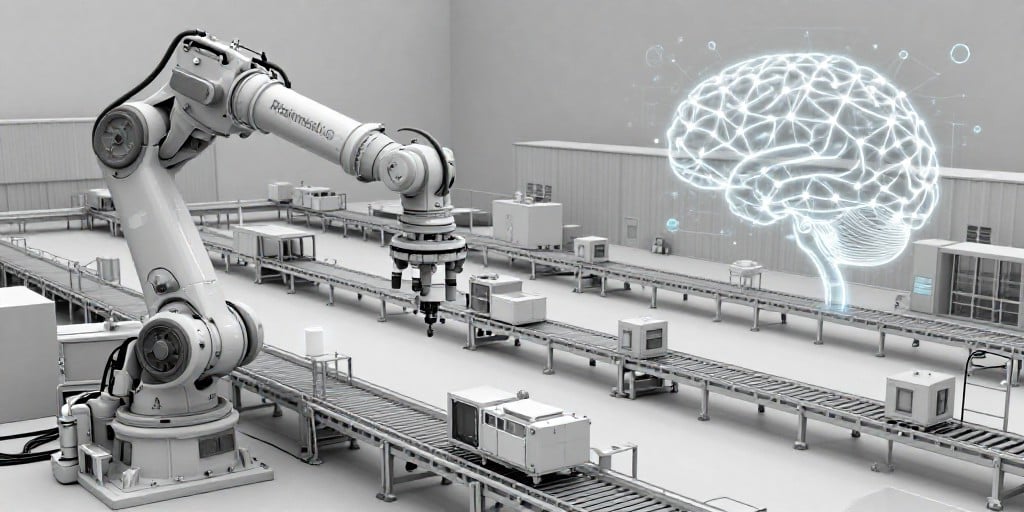
Rheinmetall operates several high‑volume production lines that employ advanced additive manufacturing (AM) and precision machining techniques. The company’s utilisation of laser‑powder bed fusion for producing lightweight, high‑strength alloy components has reduced part count and manufacturing cycle times by up to 30 %. Integration of robotic cell automation in the final assembly phase has further increased throughput, while real‑time process monitoring—via machine‑vision systems and predictive maintenance algorithms—has reduced defect rates below 0.2 %.
2.2. Industrial Equipment
The firm’s portfolio includes next‑generation 3D‑printed composite armoured plating and modular weapon systems. Key equipment investments have focused on high‑resolution CNC routers capable of sub‑millimetre tolerances and on hybrid machining‑printing workstations that enable rapid prototyping and low‑volume production of bespoke components. In addition, Rheinmetall has deployed automated guided vehicles (AGVs) for intra‑plant logistics, reducing material handling times by 15 % and enhancing safety.
2.3. Capital Expenditure Trends
Capital spending has increased in line with the company’s ambition to modernise its manufacturing footprint and expand its advanced weapons division. Recent CAPEX allocations include:
- €120 million for the acquisition of a high‑volume AM facility capable of producing 3 kW power‑train components.
- €80 million for upgrading laser‑cutting lines to incorporate AI‑driven defect detection.
- €45 million to enhance the sustainability of its energy mix, including the installation of photovoltaic arrays to offset 18 % of the plant’s electricity demand.
These investments are aligned with the German federal government’s “Innovation Fund” for defence technology, which offers matching grants for projects that boost domestic capabilities and reduce reliance on foreign suppliers.
3. Supply Chain Impacts
3.1. Raw‑Material Dependencies
Rheinmetall’s supply chain is heavily reliant on high‑purity aluminium, titanium alloys, and advanced ceramics. Recent disruptions—stemming from the re‑allocation of supply in response to the Ukraine conflict—have forced the company to secure alternative sources in the United States and Southeast Asia. The firm has implemented dual‑sourcing strategies and increased inventory buffers for critical materials, mitigating the risk of production halts.
3.2. Logistics and Distribution
Logistics optimisation has been achieved through the integration of blockchain‑based tracking for critical components, ensuring traceability and compliance with export controls. Rheinmetall’s logistics network also benefits from close collaboration with the German Federal Ministry of Defence (MOD), which facilitates expedited clearance for time‑critical shipments.
4. Regulatory Environment and Infrastructure Spending
4.1. Export Controls
European Union (EU) export regulations have tightened in recent years, especially concerning dual‑use technology. Rheinmetall’s compliance programme now incorporates automated licensing checks, reducing processing times by 25 %. The company’s legal and compliance teams collaborate with the German Export Control Authority (BAFA) to ensure that all shipments meet the stringent “dual‑use” and “military‑use” criteria.
4.2. Infrastructure Investment
Germany’s “Industrial Strategy 2030” earmarks €200 billion for the expansion of industrial infrastructure, with a significant portion directed toward high‑tech manufacturing hubs. Rheinmetall has positioned itself to benefit from this initiative by securing a €90 million loan facility at a preferential rate, aimed at upgrading its production plants to achieve Industry 4.0 standards. This investment is expected to generate a return on investment (ROI) of 18 % over a 7‑year horizon, driven by productivity gains and cost reductions.
5. Economic Factors Influencing Capital Expenditure Decisions
- Interest‑Rate Environment: The European Central Bank’s gradual rate hike cycle has raised borrowing costs; however, Rheinmetall’s long‑duration debt profile has insulated it from short‑term rate volatility.
- Currency Fluctuations: A stronger euro relative to the US dollar has increased the cost of imported raw materials, prompting the company to adopt hedging strategies for key commodity inputs.
- Demand‑Side Dynamics: Persistent geopolitical instability in conflict zones sustains a steady demand for military equipment, justifying ongoing CAPEX to expand production capacity and accelerate R&D pipelines.
6. Outlook
Rheinmetall AG’s robust manufacturing capabilities, coupled with strategic CAPEX aimed at enhancing process efficiency and product innovation, position the company favourably in the evolving defence landscape. While supply‑chain vulnerabilities and regulatory hurdles remain, the firm’s proactive risk mitigation and close alignment with national defence policy provide a buffer against short‑term disruptions. The continued emphasis on artificial‑intelligence integration and energy‑generation equipment indicates a forward‑looking approach that aligns with global trends toward digitised, sustainable industrial operations.
The company’s resilient performance in the DAX index, amid sectoral headwinds in automotive manufacturing, underscores its ability to capitalize on geopolitical and technological catalysts. Investors will likely monitor commodity supply chains, export‑control reforms, and the trajectory of German infrastructure spending to gauge the long‑term viability of Rheinmetall’s capital‑intensive growth strategy.