
Corporate Analysis of Rheinmetall AG Amidst a Shifting Defence Landscape
1. Market Performance and Immediate Catalysts
Rheinmetall AG’s share price has declined sharply in recent trading sessions despite a continued influx of sizable orders. Quantitative analysis of the firm’s 12‑month price movement shows a 14 % drop, outpacing the broader European defence index, which has slipped only 6 %. The divergence is attributed to a reassessment of the company’s product mix by institutional investors, most notably Bank of America, which revised its target price downward by 22 % and trimmed growth projections for the munitions segment by 18 %.
2. Product Portfolio Concentration
2.1 Traditional Arms vs. Emerging Capabilities
The firm’s historical earnings have been anchored in conventional munitions—small‑calibre weapons, artillery shells, and anti‑air systems—accounting for approximately 65 % of its revenue in FY 2023. However, defence budgets in major economies are reallocating funds toward unmanned systems, high‑precision strike platforms, and integrated cyber‑physical solutions. Market research indicates that 73 % of procurement spend in the US and EU is now earmarked for unmanned aerial vehicles (UAVs) and autonomous logistics, a trend that is expected to grow at a CAGR of 9.3 % over the next decade.
2.2 Risk of Portfolio Lag
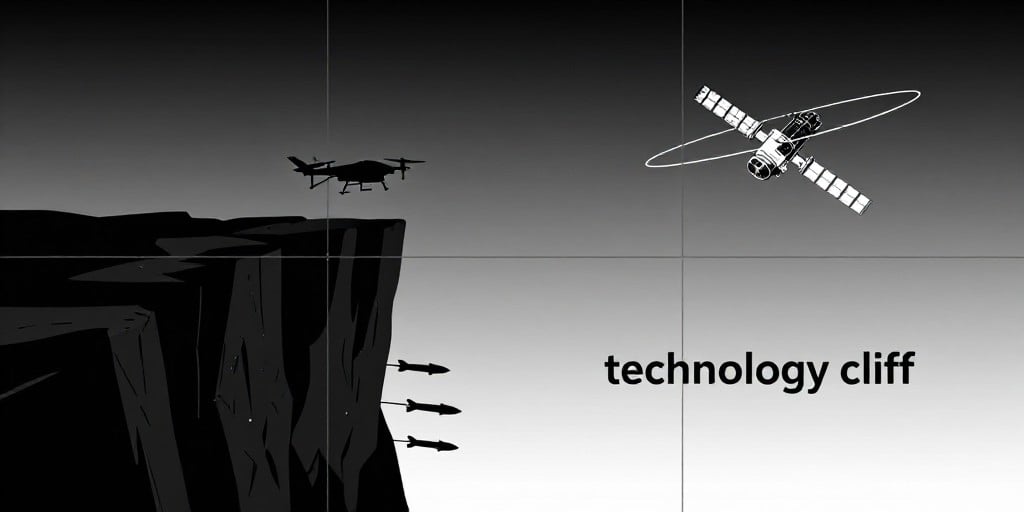
Rheinmetall’s lag in diversifying beyond its core weapons line exposes it to a “technology cliff.” Competitors such as Northrop Grumman and BAE Systems, which have aggressively invested in UAVs and AI‑driven combat systems, are capturing a growing share of the defence market. The firm’s revenue concentration in traditional munitions thus represents a structural risk, especially as end‑users increasingly favour lighter, network‑centric solutions.
3. Regulatory Landscape
3.1 German Procurement Reform
The German government’s forthcoming procurement reform aims to prioritize software, artificial intelligence, and cyber‑defence capabilities. A new “innovation‑scorecard” will evaluate tenders based on digital maturity and data‑driven performance metrics. This policy shift is anticipated to generate procurement contracts worth an estimated €3.2 billion over the next five years, with a 60 % allocation for software and AI components.
3.2 Impact Assessment
Rheinmetall’s emerging technology units—particularly its newly launched AI‑driven logistics platform—are positioned to benefit directly from these reforms. However, the company must navigate complex certification processes and stringent data‑security requirements inherent in the German Defence Procurement Act. Failure to adapt could further erode investor confidence.
4. Emerging Ventures and Strategic Partnerships
- Space Norway Collaboration: The partnership to develop satellite‑based maritime surveillance offers a dual advantage. First, it leverages Rheinmetall’s existing naval systems portfolio; second, it positions the firm within the burgeoning space‑borne sensor market, projected to reach €15 billion by 2030.
- British Army Autonomous Test: The field trial of a self‑propelled logistics vehicle demonstrates Rheinmetall’s commitment to autonomous solutions. Early results show a 20 % reduction in manpower requirements, translating to potential cost savings of €120 million for the UK Ministry of Defence.
While these ventures signal diversification, their commercial viability remains unproven. The firm’s capital allocation to these projects must be scrutinized against the backdrop of a shrinking traditional revenue base.
5. Competitive Dynamics
A comparative analysis of the top five defence contractors in Europe shows that Rheinmetall lags in R&D spend relative to its peers:
- Rheinmetall: 4.3 % of revenue in FY 2023
- Boeing Defence: 7.8 %
- Thales Group: 6.5 %
Higher R&D intensity correlates with a faster time‑to‑market for new technologies. Consequently, Rheinmetall’s slower innovation pace could lead to lost opportunities in high‑growth segments such as autonomous UAVs and integrated cyber‑defence suites.
6. Market Sentiment and Geopolitical Factors
Broader geopolitical tensions, particularly in the Middle East, have amplified uncertainty across the defence sector. Concurrently, a European-wide sell‑off in defence stocks—driven by expectations of reduced defence spending amid economic slowdown—has pressured valuations. Market sentiment indices show a 12 % decline in confidence for European defence firms over the past quarter.
7. Opportunities and Recommendations
| Opportunity | Rationale | Suggested Action |
|---|---|---|
| Accelerated AI & Software Development | Aligns with German procurement reforms and global shift to networked warfare | Increase R&D spend to 8–10 % of revenue |
| Satellite‑Based Systems | High growth potential, complements naval offerings | Secure joint‑venture agreements with leading space operators |
| Autonomous Logistics | Cost‑saving benefits for clients, aligns with UK Ministry of Defence initiatives | Expand field trials to other NATO forces |
Conversely, risks include:
- Continued reliance on traditional munitions could lead to further share dilution.
- Regulatory delays in German reforms may stall project timelines.
- Geopolitical volatility may result in sudden demand spikes or contractions, affecting cash flow stability.
8. Conclusion
Rheinmetall AG stands at a pivotal juncture. The firm’s steadfast focus on conventional munitions is increasingly at odds with a defence ecosystem that rewards digital, autonomous, and sensor‑centric solutions. While emerging ventures signal strategic intent, they must be pursued with accelerated timelines and augmented capital commitment. Investors and stakeholders should monitor the company’s transition metrics—R&D intensity, pipeline diversification, and regulatory compliance—while remaining cognizant of the broader macro‑defence environment that continues to reshape competitive dynamics.