Corporate Analysis: Manufacturing, Investment, and Market Dynamics in the European Defence Sector
The recent modest uptick in Rhein metall AG’s share price, following a dip earlier in the week, exemplifies the broader trend of defence names outperforming industrial and consumer peers across Europe. While the rally is driven by geopolitical tensions in the Middle East and heightened demand for military equipment, a deeper examination of production capabilities, capital allocation, and regulatory influences is required to understand the sector’s trajectory.
1. Production Capacity and Technological Upgrades
Rhein metall’s expansion into the Harz region demonstrates a strategic commitment to increasing domestic manufacturing volume. The new plant leverages advanced manufacturing technologies such as additive manufacturing (3D‑printing of titanium alloy components) and high‑precision CNC machining, which reduce lead times and material waste.
The company’s recent acquisition of a munition specialist brings proprietary blast‑proof casings and smart‑munition technologies under its umbrella. This vertical integration enhances control over the supply chain, enabling a modular production approach that can be re‑configured for various armament classes. In technical terms, the modularity is achieved by standardizing interface protocols (e.g., CAN‑bus communication for guidance systems) and employing a common set of high‑strength composites for hulls, thereby lowering tooling costs and accelerating product development cycles.
2. Capital Expenditure and Economic Drivers
German federal budget allocations for defence are projected to exceed €20 billion in 2024, with a significant portion earmarked for modernization of heavy artillery and missile systems. This fiscal support translates into a capital expenditure (CapEx) surge, with firms like Rhein metall expected to spend €1.2 billion on plant expansion and equipment upgrades over the next two years.
CapEx decisions are influenced by multiple economic levers:
- Oil‑price volatility: Fluctuating energy costs affect production costs, particularly for high‑energy‑intensive processes such as alloy forging and heat‑treating.
- Regional conflict uncertainties: Short‑term spikes in demand are tempered by long‑term geopolitical risk, prompting conservative investment pacing.
- Regulatory changes: The European Union’s “Arms Export Regulation 2025” mandates stricter end‑user checks, potentially extending compliance timelines and increasing administrative overhead.
Analysts project that incremental upside from the current Middle Eastern conflict is modest, with revenue growth expected to rise by 4–5 % year‑on‑year, reflecting the balance between heightened demand and regulatory constraints.
3. Supply Chain Resilience and Logistics
Rhein metall’s supply chain is now more diversified due to the Harz expansion, reducing exposure to single‑point failures. Critical raw materials—steel, aluminum, and high‑performance polymers—are sourced from both domestic and EU‑aligned suppliers, mitigating the impact of U.S.‑China trade tensions.
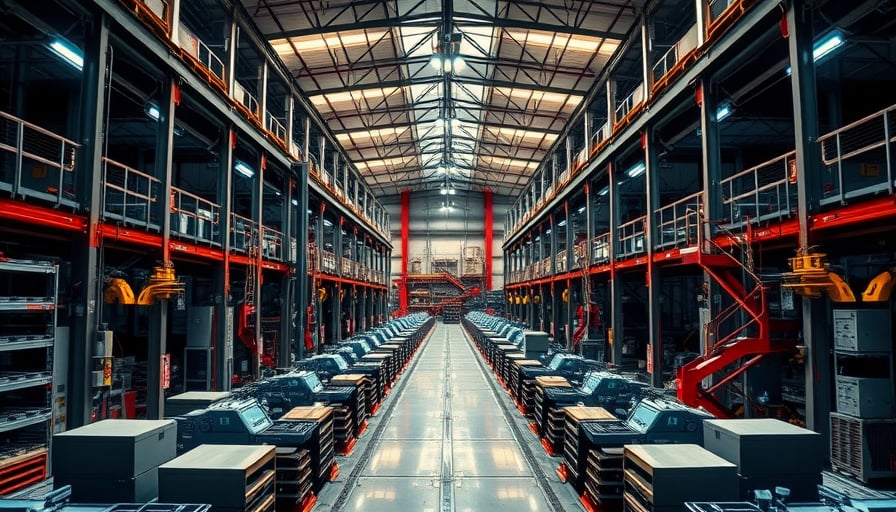
The company’s logistics network has been upgraded with a state‑of‑the‑art automated storage and retrieval system (AS/RS), improving inventory turnover by 15 %. This system employs RFID tagging and AI‑driven demand forecasting to maintain just‑in‑time production schedules, a critical capability when responding to rapid procurement orders from the German armed forces.
4. Regulatory and Infrastructure Context
The European Defence Industrial Strategy (EDIS) emphasizes “regional production hubs” to reduce dependence on external suppliers. This policy aligns with Rhein metall’s Harz strategy and encourages infrastructure spending such as high‑capacity rail links and dedicated freight corridors.
Furthermore, the EU’s “Industrial Strategy for 2024–2030” includes a €5 billion investment fund for high‑tech defence manufacturing, earmarked for companies demonstrating digitalization and sustainability. Rhein metall’s adoption of Industry 4.0 practices positions it favorably to attract co‑financing for further R&D in autonomous weapons systems and cyber‑security modules.
5. Market Implications and Investor Sentiment
The company’s share performance mirrors the broader risk‑averse market environment, with defence names moving in tandem with the DAX rather than exhibiting speculative spikes. This reflects investor confidence in the sector’s long‑term resilience while acknowledging short‑term volatility.
From a productivity standpoint, Rhein metall’s utilization rate—currently at 78 % of installed capacity—suggests ample room for scaling operations. Coupled with a projected CapEx of €1.2 billion, the firm is poised to increase output by 10 % over the next fiscal year, subject to compliance with export regulations and sustained defence budgets.
6. Conclusion
Rhein metall’s recent trading gains, though modest, underscore a steady alignment between corporate strategy and macroeconomic forces shaping European defence manufacturing. The company’s focus on technological innovation, supply‑chain diversification, and capital investment—set against a backdrop of regulatory tightening and geopolitical risk—offers a blueprint for other industry players navigating the complex terrain of modern industrial production.