
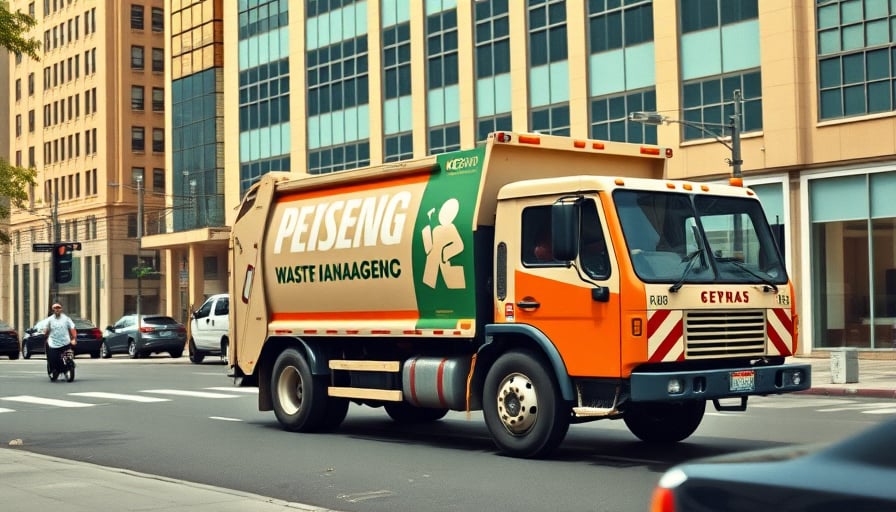
Corporate Update: Republic Services Inc. Maintains Steady Position in the Waste‑Management Sector
Republic Services Inc. (NYSE: RSG), a leading provider of non‑hazardous solid waste collection and disposal services, continues to solidify its standing within the industrial sector. Operating across commercial, industrial, municipal, and residential markets, the company manages an extensive portfolio that includes transfer stations, landfills, and recycling facilities. Its listing on the New York Stock Exchange and robust market capitalization underscore its prominence among peers, while a price‑earnings ratio indicative of moderate valuation pressure reflects investor confidence without excessive premium expectations.
Market Performance and Trading Dynamics
Recent market activity has shown the stock trading in a range that closely tracks its current level. On January 12, 2026, the closing price approached the high recorded earlier in the year, suggesting a phase of consolidation rather than directional movement. Although the share price has dipped modestly from its all‑time peak, it remains comfortably above the low observed earlier this calendar year, demonstrating a stable performance band that reassures short‑term investors.
The lack of significant corporate actions or debt issuances in the preceding 24 hours, coupled with no alterations to its dividend policy or capital structure, further signals managerial focus on operational stability. This approach aligns with industry norms where incremental adjustments, rather than abrupt shifts, often drive long‑term value creation.
Strategic Positioning in a Regulated Environment
Republic Services’ core business is anchored in the provision of reliable waste‑management services to a diverse customer base. The firm’s diversified geography and service mix mitigate concentration risk, while its scale affords bargaining power with suppliers and regulatory bodies. In a sector heavily influenced by environmental regulations and public policy, the company’s sustained compliance record and investment in environmentally sustainable infrastructure—such as recycling facilities—provide a competitive advantage.
Cross‑Sector Connections and Economic Implications
The waste‑management industry, although distinct, shares several dynamics with broader sectors:
Infrastructure and Public‑Private Partnerships Similar to transportation and utilities, waste management often involves long‑term contracts with municipalities. These partnerships create stable revenue streams, reflecting a shared emphasis on infrastructure resilience.
Environmental, Social, and Governance (ESG) Momentum Increasing regulatory pressure and investor demand for ESG compliance are shaping capital allocation decisions across all industrials. Republic Services’ commitment to recycling and landfill reduction aligns with ESG trends that are also prominent in energy, manufacturing, and logistics sectors.
Commodity and Cost Management Fuel price volatility and landfill fees influence operating costs, paralleling the cost structures in transportation and logistics. Effective fuel hedging strategies and operational efficiencies therefore resonate across multiple industrial subsectors.
Technology Adoption The integration of data analytics, route‑optimization software, and automated sorting technologies in waste management mirrors technological transformations in retail supply chains and manufacturing automation, indicating convergent innovation trajectories.
Conclusion
Republic Services Inc. demonstrates a resilient operational model anchored in diversified services and stable financial fundamentals. While recent trading activity points to a consolidation phase, the company’s strategic focus on regulatory compliance, ESG alignment, and infrastructural partnerships positions it favorably against both immediate market fluctuations and long‑term sectoral shifts. As broader economic trends emphasize sustainability, infrastructure investment, and technological integration, Republic Services’ trajectory reflects the intersection of these forces within the waste‑management industry.