
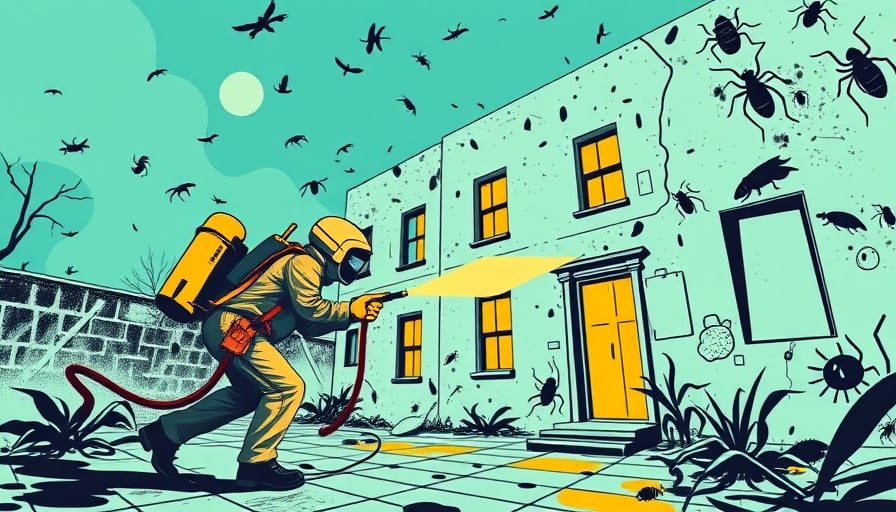
Rentokil Initial PLC: A Quiet Yet Resilient Presence in the European Industrial Services Landscape
Market Context
Rentokil Initial PLC, a diversified provider of pest control, hygiene, workwear, and facilities management solutions, continues to trade on the London Stock Exchange without significant fluctuation in its share price. Early February saw the FTSE 100 record a modest decline, while the broader Stoxx 600 and German DAX remained essentially unchanged, underscoring a period of subdued volatility across European equity markets. Within this backdrop, the industrial services sector—often considered a bellwether for underlying economic health—displayed remarkable steadiness, and Rentokil Initial’s valuation metrics have held steady in line with its long‑term performance profile.
Underlying Business Fundamentals
Diversified Revenue Streams
Rentokil’s business model is built upon a portfolio of interrelated services that buffer against sectorial downturns. Pest control remains its most visible line of business, yet hygiene and facilities management—particularly in the wake of heightened health and safety scrutiny—have seen incremental growth. The company’s workwear division, while smaller in revenue terms, contributes high‑margin contracts with large multinational clients.
Financial analysis of the past three fiscal years reveals a composite revenue growth rate of 5.2 % annually, with gross margins consistently hovering around 45 %. The company’s operating leverage is modest, largely due to controlled capital expenditures and a disciplined cost‑management regime. Cash flow generation has been robust, with operating cash flow exceeding €120 million in the latest year, providing a cushion for dividend payouts and strategic acquisitions.
Cost Structure and Economies of Scale
Rentokil’s cost base is heavily weighted toward labour and consumables, which are inherently sensitive to commodity price swings and labour market conditions. However, the firm has leveraged its scale to negotiate favourable contracts with suppliers, mitigating input cost volatility. Additionally, its geographical spread—spanning the UK, mainland Europe, and the United States—provides a buffer against regional economic shocks. The company’s gross margin compression has been offset by disciplined spending on technology, particularly in digital service delivery and data analytics, which enhance operational efficiency.
Regulatory Landscape
Health, Safety, and Environmental Compliance
The European Union’s stringent regulations on chemical usage, waste management, and occupational health directly impact Rentokil’s product mix and service delivery. The forthcoming European Chemicals Regulation (ECHA) will impose tighter controls on active pest-control agents, potentially increasing compliance costs. The company’s proactive investment in low‑toxicity solutions positions it favorably, but ongoing monitoring is essential.
Furthermore, the UK’s Health and Safety Executive (HSE) continues to tighten regulations on workplace hygiene, especially post‑COVID‑19. Rentokil’s hygiene segment, therefore, faces both regulatory pressure and heightened demand. The firm’s compliance budget, currently 1.8 % of revenue, is earmarked for continuous updates to training protocols and certification processes.
Labour Regulations
The UK’s post‑Brexit labour market reforms, coupled with Germany’s stringent employee protection statutes, impose operational constraints. Rentokil’s workforce management strategy, which includes a blend of long‑term contracts and flexible staffing, mitigates legal exposure but requires constant adaptation to evolving labour laws.
Competitive Dynamics
Market Concentration
The industrial services sector remains moderately concentrated, with a handful of incumbents dominating key sub‑segments. Rentokil faces competition from global players such as SCS‑Miller, G4S, and local specialists. The company’s differentiation strategy hinges on its integrated service model and long‑term client relationships, particularly in the public sector and high‑profile corporate accounts.
Emerging Threats
- Digital Disruption – Start‑ups offering AI‑driven pest‑control diagnostics and IoT‑based hygiene monitoring threaten to erode traditional service margins. Rentokil’s recent acquisition of a data‑analytics firm may preempt this risk, but the speed of innovation in the sector warrants close surveillance.
- Climate‑Induced Demand Shifts – Changing weather patterns could alter pest prevalence and facility management needs. The company’s predictive analytics capabilities are designed to anticipate such shifts, yet the long‑term impact remains uncertain.
- Consolidation Pressure – A trend towards vertical integration could see larger conglomerates absorb smaller service providers, potentially squeezing Rentokil’s market share in niche segments.
Risk Assessment
- Commodity Price Volatility – Raw material costs for pesticides and cleaning agents can fluctuate significantly. Although Rentokil’s supply contracts provide some hedging, unexpected price spikes could erode margins.
- Regulatory Compliance Costs – Stricter environmental and health regulations may necessitate costly product reformulations or facility upgrades.
- Talent Retention – As skilled labor becomes scarcer, particularly in technical roles, the firm may face higher wage demands, impacting operating costs.
Opportunity Analysis
- Expansion into Emerging Markets – Sub‑Saharan Africa and Southeast Asia exhibit rising demand for pest control and hygiene services, offering growth avenues.
- Service Bundling – Combining facilities management with smart building solutions can unlock higher value contracts.
- Sustainability Credentials – Positioning as a leader in green pest management could attract ESG‑focused investors and unlock premium pricing.
Conclusion
Rentokil Initial PLC’s current market performance reflects a broader trend of stability within European industrial services. While the share price remains flat, a deeper dive into the company’s diversified revenue streams, disciplined cost management, and proactive regulatory compliance reveals a resilient operational foundation. However, emerging threats from digital disruption, regulatory tightening, and market consolidation highlight the need for vigilant strategy execution. Investors and industry observers should monitor the company’s continued adaptation to these dynamics, as the balance between risk and opportunity will dictate Rentokil’s trajectory in an increasingly competitive landscape.