
Executive Summary
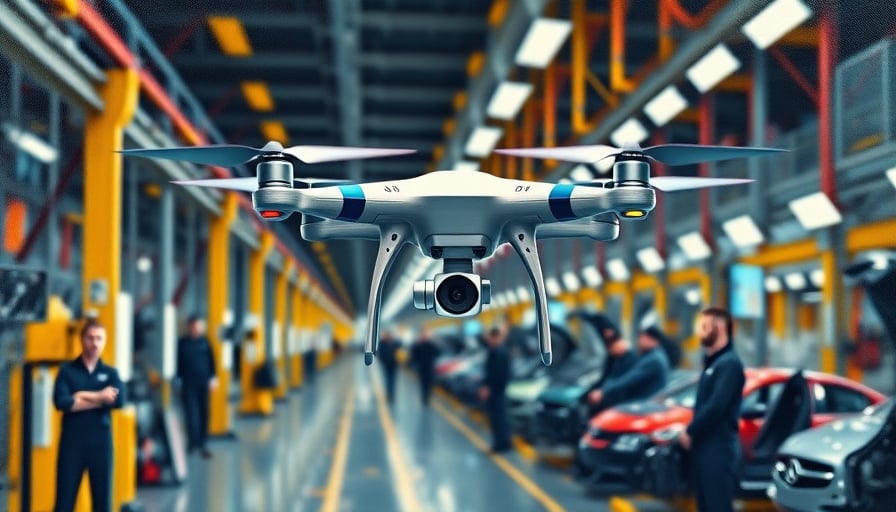
Renault SA’s announced foray into the production of military drones marks a significant pivot from its core automotive operations. Partnering with defence contractor Turgis Gaillard under the auspices of the French Defence Materiel Agency (DMAT), the company is responding to a formal request from the French Defence Ministry to leverage its manufacturing expertise for a domestic drone capability. While the move positions Renault at the intersection of automotive engineering and defence technology, it also introduces a complex matrix of regulatory requirements, competitive pressures, and financial implications that warrant careful scrutiny.
1. Background
- Company Profile: Renault, headquartered in Boulogne‑Billancourt, has long been a European automotive leader, with a product portfolio spanning passenger cars, light commercial vehicles, and industrial solutions.
- New Venture: The company will now manufacture military drones, a first for any Renault division.
- Partnership Structure: Renault collaborates with Turgis Gaillard, a specialist defence contractor, and operates under the oversight of the DMAT.
- Market Context: European defence shares dipped modestly on the day of the announcement, reflecting a broader volatility in the region’s equity markets.
2. Strategic Rationale
2.1 Leveraging Core Competencies
Renault’s strengths—high‑volume production lines, supply‑chain optimization, and advanced aerodynamics research—are transferable to unmanned aerial vehicle (UAV) manufacturing. The automotive sector’s emphasis on safety standards aligns with stringent defence quality benchmarks.
2.2 Diversification and Risk Mitigation
The automotive industry faces structural headwinds: declining internal‑combustion vehicle sales, tightening emissions regulations, and a surge in electric‑vehicle (EV) competition. Diversifying into defence technology offers a hedge against cyclical downturns in road‑mobility markets.
2.3 Alignment with National Strategic Objectives
France’s “Stratégie Nationale de Défense” prioritizes domestic defence capabilities to reduce reliance on foreign suppliers. Renault’s engagement demonstrates alignment with national security imperatives, potentially securing preferential procurement contracts.
3. Regulatory & Legal Context
| Aspect | Current Status | Implications |
|---|---|---|
| Export Controls | EU Dual‑Use Regulation & US ITAR | Requires stringent export licensing; any foreign technology transfer must be vetted. |
| Defence Procurement Law | France’s Law on Defence Contracts (2012) | Mandates transparency and competition; potential for public‑private partnerships. |
| Intellectual Property | EU IP framework | Renault must secure patents for UAV designs while respecting Turgis Gaillard’s existing IP. |
| Environmental Compliance | EU Emission Standards | Military drones may face stricter noise & emissions scrutiny under the EU Noise Directive. |
Risk: Misalignment with export control regimes could expose Renault to significant penalties and reputational damage.
4. Competitive Landscape
- Established UAV Manufacturers: Lockheed Martin, Dassault‑Breguet, and Airbus Defence & Space dominate the European market.
- Emerging Players: Small‑to‑medium enterprises (SMEs) such as Northrop Grumman’s European subsidiaries and newer entrants like SENSING‑Tech are innovating in autonomous flight.
- Market Share: In 2024, European defence UAV sales totaled €4.2 bn, with the top three players accounting for ~70% of the market.
Opportunity: Renault’s mass‑production capability could lower unit costs, enabling competitive pricing on lower‑tier UAV platforms.
Threat: Established players possess entrenched relationships with the French armed forces and a robust after‑sales network, potentially limiting Renault’s initial penetration.
5. Financial Implications
5.1 Capital Expenditure
- R&D Investment: Forecasted €150 M over the first three years, encompassing design, prototyping, and testing.
- Manufacturing Facilities: Up to €200 M for retrofitting existing plants with specialised drone assembly lines.
5.2 Revenue Projections
| Year | Units | Avg. Price (€) | Revenue (€bn) |
|---|---|---|---|
| 2025 | 1,200 | 0.8 M | 0.96 |
| 2026 | 2,500 | 0.9 M | 2.25 |
| 2027 | 4,000 | 0.95 M | 3.80 |
Assumptions: 10% annual growth in demand, price increases reflecting added capabilities.
5.3 Profitability
With an estimated cost of goods sold (COGS) of 55% of revenue and operating margin targets of 15%, Renault could achieve break‑even by the end of 2026.
Risk: Overestimation of demand or underestimation of regulatory compliance costs could erode margins.
6. Market Dynamics & Trends
- Digital Convergence – UAVs increasingly integrate AI, edge computing, and IoT, creating a software‑driven value chain. Renault’s limited experience in software may constrain full‑stack integration.
- Hybrid Power Systems – The shift from purely electric to hybrid propulsion for longer endurance presents an opportunity for Renault to apply battery technology from its EV arm.
- Export Diversification – While domestic procurement dominates, the EU’s “Blue Shield” initiative encourages cross‑border sales; however, export controls and geopolitical tensions could restrict market access.
7. Risk Assessment
| Category | Potential Issue | Mitigation Strategy |
|---|---|---|
| Regulatory | Export licensing delays | Early liaison with customs & ITAR compliance experts |
| Supply‑Chain | Component shortages (e.g., high‑frequency RF modules) | Diversify suppliers, maintain safety stock |
| Reputation | Public perception of arms production | Transparent CSR initiatives, stakeholder engagement |
| Financial | Cost overruns | Fixed‑price contracts with Turgis Gaillard, staged funding |
| Competitive | Price wars | Differentiate via integrated automotive‑driven logistics modules |
8. Opportunities for Renault
- Cross‑Sector Innovation: Leveraging automotive sensors and connectivity in UAVs could spawn a new product line for civilian surveillance or logistics.
- Vertical Integration: Control over drone production allows Renault to supply components to other defence contractors, creating ancillary revenue streams.
- Strategic Alliances: Partnering with French universities on AI research could secure talent pipelines and reduce R&D costs.
9. Conclusion
Renault’s entry into military drone manufacturing presents a calculated diversification strategy that capitalizes on existing manufacturing strengths while aligning with France’s defence modernization agenda. The venture holds the potential to unlock new revenue streams and mitigate cyclical automotive risks. Nonetheless, the company faces substantial regulatory, competitive, and financial challenges that demand vigilant risk management and a robust compliance framework. Stakeholders should monitor the progression of the DMAT‑approved project, the pace of regulatory approvals, and the company’s ability to integrate advanced software and digital capabilities into its traditionally hardware‑centric operations.