
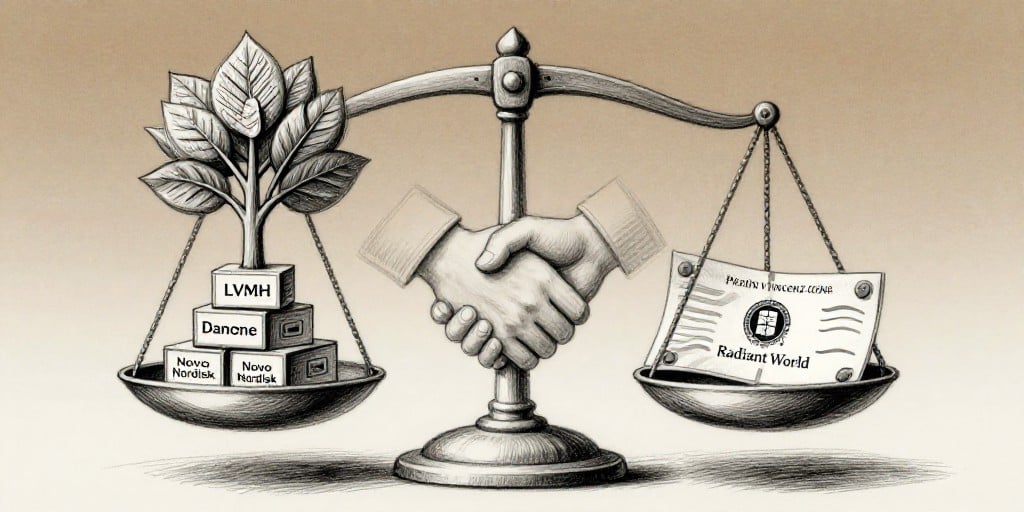
Raiffeisen Bank International AG: Navigating Equity, Credit, and Regulatory Headwinds
Raiffeisen Bank International AG (RBI) has continued to occupy a central position in European financial discourse, simultaneously advancing equity research, extending credit, and grappling with legal scrutiny. A close examination of RBI’s recent activities reveals a nuanced interplay between macro‑economic conditions, corporate governance, and sector‑specific risk dynamics.
1. Equity Research: Selective Optimism Amid a Shifting Macro Environment
RBI’s research desk remains actively engaged in European equities, with a pronounced focus on high‑profile corporates that exhibit resilient fundamentals and clear strategic trajectories. The bank’s latest ratings underscore a bullish outlook on two distinct sectors:
| Company | Sector | Rating | Rationale |
|---|---|---|---|
| LVMH | Luxury Goods | Buy | Consistent revenue growth, expanding product mix, and a strong global distribution network. |
| Danone | Food & Beverages | Buy | Robust portfolio, strategic acquisitions in emerging markets, and a proven ability to weather commodity price swings. |
Conversely, RBI’s stance on Novo Nordisk has shifted from Buy to Hold. The downgrade reflects several nuanced concerns:
- Growth Saturation – While Novo Nordisk’s flagship product portfolio continues to dominate the global diabetes market, the company’s compound annual growth rate (CAGR) has moderated from 12% to roughly 7% over the past two years.
- Regulatory Headwinds – Upcoming EU directives on drug pricing and reimbursement pose potential margin compression, especially in the high‑margin specialty pharmacy segment.
- Competitive Pressure – New entrants in the obesity‑and‑diabetes therapeutics space (e.g., emerging biotech firms) are accelerating pipeline development, intensifying the competitive landscape.
The bank’s equity assessment thus balances the company’s strong market position against an evolving regulatory backdrop, illustrating a cautious yet informed approach.
2. Credit Exposure: The Radiant World Case and Commodity‑Financing Risks
In the credit arena, RBI has emerged as a principal lender to Radiant World, an iron‑ore trading firm, by extending a $100 million trade‑finance facility. This engagement is significant for several reasons:
- Reputational Risk – Radiant World has faced heightened scrutiny over its trade‑finance practices, with other major banks announcing provisions and restrictions. RBI’s continued support signals confidence in the firm’s risk mitigation, yet it also exposes RBI to potential reputational fallout if compliance breaches materialize.
- Geopolitical Exposure – The iron‑ore market is intrinsically linked to geopolitical dynamics, especially in regions experiencing policy volatility (e.g., mining regulations in South America). RBI’s exposure to such markets underscores the need for robust risk‑management frameworks that account for both market and political risk.
- Credit‑Risk Profile – The $100 million facility represents a modest percentage of RBI’s total corporate credit exposure, suggesting that the bank has strategically diversified its commodity‑financing portfolio to avoid concentration risk.
This scenario highlights a broader industry trend: commodity financiers must navigate an increasingly complex regulatory environment, balancing short‑term revenue generation against long‑term reputational integrity.
3. Legal Proceedings: Pierin Vincenz Case and Governance Implications
The Zurich high court’s reopening of the case involving former Raiffeisen chief executive Pierin Vincenz introduces a governance dimension that could reverberate across RBI’s corporate structure. Key points include:
- Fraud and Misappropriation Claims – The 2022 convictions centered on fraudulent transactions and inappropriate use of corporate expenses. The appeal, slated for late August and early September, may result in either a reversal, reduction, or affirmation of the penalties.
- Public Perception – The continued legal scrutiny may erode stakeholder confidence, particularly if the outcome suggests systemic lapses in internal controls.
- Governance Reforms – RBI’s board may be prompted to tighten oversight mechanisms, enhance compliance training, and conduct independent audits of executive expense policies.
This case underscores the importance of proactive governance to mitigate legal and reputational risks, especially for institutions operating across multiple jurisdictions.
4. Balancing Market Engagement and Risk Management
RBI’s dual strategy—active equity research coupled with targeted credit provision—demonstrates an attempt to capitalize on market opportunities while managing inherent risks. However, the bank’s activities raise several investigative questions:
- Risk Appetite Alignment – How does RBI align its credit exposure to commodity markets with its broader risk appetite framework?
- Regulatory Compliance – What internal controls are in place to monitor compliance in high‑risk sectors such as trade finance and commodity trading?
- Governance Resilience – In light of the Pierin Vincenz proceedings, how is RBI reinforcing its governance architecture to prevent recurrence of similar incidents?
Addressing these questions requires a deeper dive into RBI’s risk‑management policies, credit scoring models for commodity traders, and the governance reforms initiated post‑scandal.
5. Outlook and Recommendations
- Equity Research – RBI should continue to monitor Novo Nordisk’s regulatory exposure and adjust its rating in response to any material changes in pricing policy or competitive dynamics.
- Credit Management – Implement enhanced monitoring for Radiant World and other commodity financiers, incorporating scenario analysis for geopolitical disruptions.
- Governance Strengthening – Accelerate the rollout of comprehensive expense audit protocols and ensure executive accountability through transparent reporting to shareholders and regulators.
By adopting a skeptical yet data‑driven approach, RBI can better navigate the complex intersection of market opportunity, regulatory evolution, and corporate governance—ultimately safeguarding stakeholder value while sustaining growth in a rapidly transforming financial landscape.