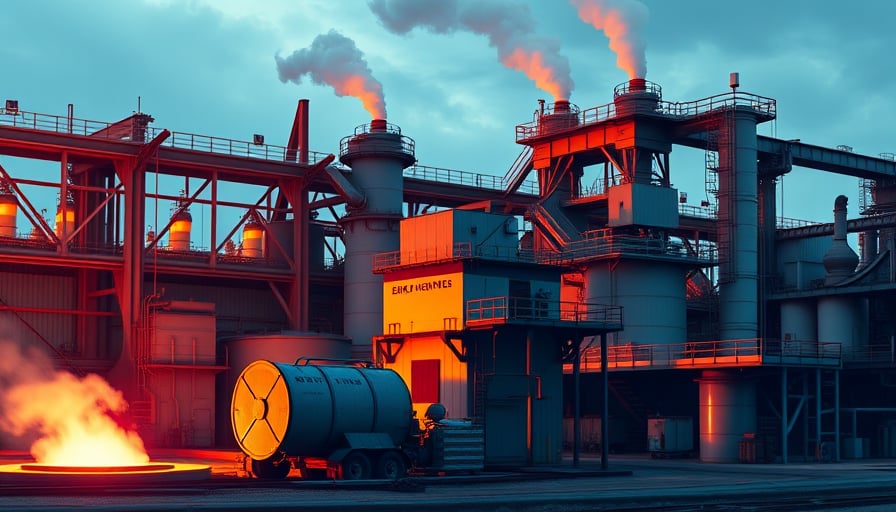
Investigation of Norsk Hydro ASA’s Qatalum Shutdown and Its Implications for Global Aluminum Dynamics
Norsk Hydro ASA announced on 3 March that the joint‑venture smelter Qatalum, located in Qatar, would enter a controlled shutdown due to the suspension of natural‑gas supplies from its gas supplier. The interruption is tied to regional unrest stemming from the Iran conflict, which has reverberated across the Gulf’s energy infrastructure. While the plant’s restart could take anywhere from six to twelve months, the immediate halt has already triggered observable effects in global aluminium markets, where supply routes through the Middle East are experiencing unprecedented constraints.
1. Underlying Business Fundamentals of Qatalum
- Capacity and Output: Qatalum, a 70‑percent joint venture between Norsk Hydro and Qatar Aluminium (Qatalum) Limited, processes 1.6 million tonnes of aluminium per year. Its location on the mainland of Qatar provides a strategic advantage due to the proximity to the Gulf’s hydrocarbon pipeline network.
- Energy Dependency: The smelter’s process requires 8 kWh of electricity per kilogram of aluminium, a substantial portion of which is supplied through the local natural‑gas‑based power plants. Loss of gas feedstock directly reduces the plant’s capacity to sustain continuous operations.
- Financial Exposure: As of the latest annual report, Qatalum contributes approximately 25 % of Norsk Hydro’s net aluminium revenue. A six‑month shutdown translates into a loss of roughly USD 300 million in gross profit, assuming an average selling price of USD 1,700 per tonne.
2. Regulatory and Geopolitical Environment
- Regional Energy Policy: Qatar’s national grid is heavily subsidized by natural‑gas exports. Recent sanctions and diplomatic pressure linked to the Iran conflict have forced the state to reallocate gas supplies to domestic consumption, limiting export and industrial use.
- International Trade Restrictions: The United Nations and the European Union have imposed export controls on critical minerals in response to the conflict. These restrictions have already affected aluminium imports from the Middle East, tightening supply chains globally.
- Risk of Prolonged Disruption: Should the political situation deteriorate further, the shutdown could extend beyond the initial six‑month forecast, potentially reaching a year or more, thereby amplifying the financial and operational risk.
3. Competitive Dynamics in the Aluminum Market
- Supply Chain Concentration: Prior to the shutdown, Qatar accounted for roughly 12 % of global aluminium production. The abrupt loss of this capacity has forced the market to reallocate supply from other producing regions, such as China and Russia, which are themselves dealing with domestic demand pressures.
- Price Volatility: Aluminium spot prices have risen from USD 1,700 to USD 1,850 per tonne since the shutdown announcement—a 9 % increase—indicating that the market is highly sensitive to disruptions in a single geographic region.
- Opportunity for Competitors: Smelters in the United States and the European Union have begun to ramp up production in response to the shortage, potentially gaining market share in automotive and aerospace segments that rely on premium-grade aluminium.
4. Market Research and Consumer Impact
- Automotive Sector: Norwegian automotive manufacturers, which have long been key clients of Norsk Hydro, have cited supply chain uncertainty in their recent quarterly earnings reports. A prolonged aluminium shortage could delay the rollout of new models, especially those that emphasize lightweight construction.
- Transport and Infrastructure: Global shipping and rail companies have also expressed concern over the availability of high‑strength aluminium alloys needed for hull construction and structural components. This could translate into higher project costs and extended timelines.
5. Potential Risks and Opportunities
| Risk | Probability | Impact | Mitigation |
|---|---|---|---|
| Prolonged shutdown (>12 months) | Medium | High | Diversify gas supply contracts, invest in alternative energy sources |
| Regulatory sanctions on aluminium exports | Low | Medium | Engage in diplomatic channels, diversify export destinations |
| Increased competition from US/EU smelters | High | Medium | Accelerate production of high‑value alloys, lock in long‑term contracts with key clients |
| Currency volatility (QAR/USD) | Medium | Medium | Hedge through forward contracts and commodity swaps |
Opportunity: The temporary reduction in Qatalum’s output may create a market niche for high‑performance aluminium alloys that Norsk Hydro can develop. By focusing on specialty grades—such as 6063 and 7075—particularly suited for aerospace and high‑end automotive applications, the company could command premium pricing even during periods of constrained supply.
6. Conclusion
Norsk Hydro ASA’s forced shutdown of its Qatalum smelter underscores a broader vulnerability within the global aluminium supply chain: an overreliance on a limited number of geopolitically exposed energy sources. While the immediate financial impact is substantial, the event also highlights an inflection point. Companies that can quickly adapt to shifting energy landscapes, diversify their supply bases, and innovate in high‑margin specialty segments are likely to emerge stronger. Conversely, those that fail to anticipate regulatory shifts and competitive pressures risk being caught off‑balance by the next geopolitical shockwave.