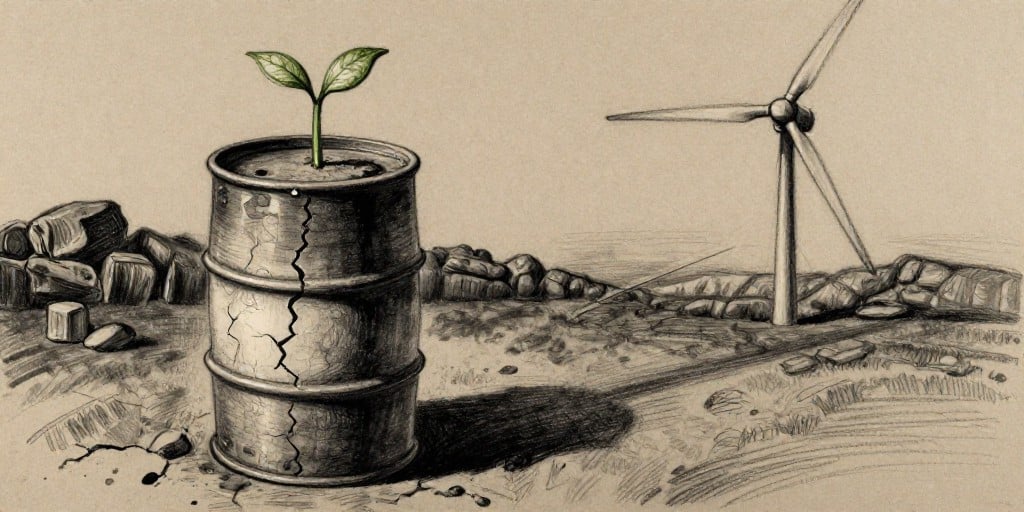
EQT Corp Discloses Q3 2026 Derivative Performance in SEC 8‑K Filing
EQT Corp, the publicly traded energy‑transportation conglomerate, filed a current report (Form 8‑K) with the U.S. Securities and Exchange Commission on 15 October 2026. The filing, which covers the quarter ended 30 September 2026, confirms the company’s financial performance on derivative instruments and offers a window into its hedging strategy, liquidity management, and exposure to volatile commodity markets. While the 8‑K is a routine disclosure, it provides a valuable entry point for investors and analysts to evaluate the firm’s risk‑adjusted profitability and its position within a rapidly changing regulatory and competitive landscape.
1. Derivative Gain as a Signal of Effective Risk Management
The report indicates a total gain of approximately $100 million on derivatives for the quarter. This figure is derived from the net settlement of the company’s natural‑gas and other commodity hedges. Importantly, EQT reports that no premiums were paid or received on derivatives that settled during the period. In other words, the company entered into forward contracts or options that reached maturity at market‑aligned prices, rather than incurring upfront costs or receiving payments for hedging positions.
From a financial‑analysis perspective, this outcome suggests:
| Metric | Interpretation |
|---|---|
| Net derivative gain | Demonstrates successful timing of hedge settlements relative to underlying price movements. |
| Zero premium activity | Implies that the company may be using passive hedging instruments (e.g., cash‑settled forwards) rather than actively seeking premium‑based protection, potentially reducing counterparty risk. |
| Potential tax impact | Unrealized gains on derivatives are typically treated as ordinary income; the realized $100 million will likely be taxed accordingly, affecting after‑tax profitability. |
2. Regulatory Environment and Market Dynamics
2.1. Energy‑Sector Oversight
EQT’s operations span energy production, transmission, and logistics. The company’s exposure to natural‑gas prices is therefore subject to a complex regulatory framework that includes:
- Federal Energy Regulatory Commission (FERC) oversight on transmission and wholesale markets, which can influence capacity prices and hedging opportunities.
- Environmental Protection Agency (EPA) regulations that shape carbon pricing and compliance costs for natural‑gas producers, indirectly affecting derivative valuations.
- State‑level renewable portfolio standards (RPS) that can alter demand for fossil‑fuel‑based transportation fuels, thereby shifting hedging horizons.
Given the impending rollout of the U.S. Carbon Pricing Initiative, EQT may need to adjust its derivatives portfolio to hedge anticipated increases in carbon allowances, which could materially alter the company’s risk profile.
2.2. Competitive Landscape
EQT competes with large integrated energy firms (e.g., ExxonMobil, Chevron) and pure‑play natural‑gas operators (e.g., Cheniere Energy). Key trends shaping competition include:
- Diversification into renewable gas: Many competitors are investing in biogas and hydrogen, which could erode traditional natural‑gas revenues.
- Technological innovation: Advanced digital platforms for real‑time pricing and predictive analytics are enabling more precise hedging; firms that lag may face higher transaction costs.
- Infrastructure bottlenecks: Limited pipeline capacity in key regions can constrain EQT’s ability to arbitrage price differentials, making derivative gains more volatile.
The $100 million gain, while noteworthy, may represent only a marginal portion of the company’s overall earnings. Analysts should examine how derivative performance interacts with core operational profitability, which remains the primary driver of shareholder value.
3. Overlooked Trends and Potential Risks
3.1. Volatility in Derivative Markets
The energy markets have exhibited heightened volatility since the 2023 supply‑chain shock. Derivative valuations are increasingly sensitive to macro‑economic variables such as inflation expectations and monetary policy. EQT’s reliance on passive hedging instruments might expose it to mis‑pricing risk if future market movements deviate from historical patterns. A sudden spike in natural‑gas spot prices could erode the value of existing forwards, turning gains into losses if the company cannot re‑hedge quickly.
3.2. Counterparty Risk
While the 8‑K notes zero premium activity, it does not disclose counterparty credit exposure. As the firm engages in large‑volume forward contracts, it must manage the risk of counterpart defaults, particularly in a stressed market environment. Failure to diversify counterparties or maintain adequate collateral can lead to settlement disruptions.
3.3. Regulatory Shifts in Carbon Pricing
Anticipated federal carbon pricing mechanisms could dramatically alter the cost structure for natural‑gas producers. If the price of carbon allowances rises sharply, the implied value of existing hedges could change, potentially generating gains or losses that are not fully captured in the current quarter. EQT should be prepared to adjust its derivatives strategy in anticipation of regulatory announcements.
4. Opportunities for Strategic Advantage
4.1. Expansion of Derivative Toolkit
EQT could benefit from incorporating options‑based hedging that offers asymmetric risk profiles, enabling the firm to benefit from favorable price movements while protecting against downside shocks. This could enhance the firm’s ability to smooth earnings in a volatile market.
4.2. Cross‑Sector Synergies
Given EQT’s transportation arm, the company can explore fuel‑mix hedging that spans natural‑gas, biofuels, and emerging synthetic fuels. Integrating these assets into a unified derivatives framework could unlock efficiencies and reduce transaction costs.
4.3. Regulatory Arbitrage
As regulations evolve, there may be opportunities to engage in compliant carbon trading or renewable energy certificate (REC) markets. Proactively positioning in these markets can create new revenue streams that complement traditional natural‑gas hedges.
5. Conclusion
The 8‑K filing confirms a substantial derivative gain for EQT Corp in the third quarter of 2026, reflecting adept execution of a hedging strategy that avoided premium costs. However, the underlying financial dynamics and regulatory environment suggest a nuanced risk landscape. Investors and analysts should scrutinize how derivative performance interplays with core business operations, regulatory shifts, and competitive forces. By broadening its derivative toolkit, diversifying counterparties, and aligning with evolving carbon‑pricing frameworks, EQT could transform potential risks into strategic advantages that resonate with long‑term shareholder value.