
Procter & Gamble Engages Amazon Supply Chain Services Amid Industry‑Wide Reactions
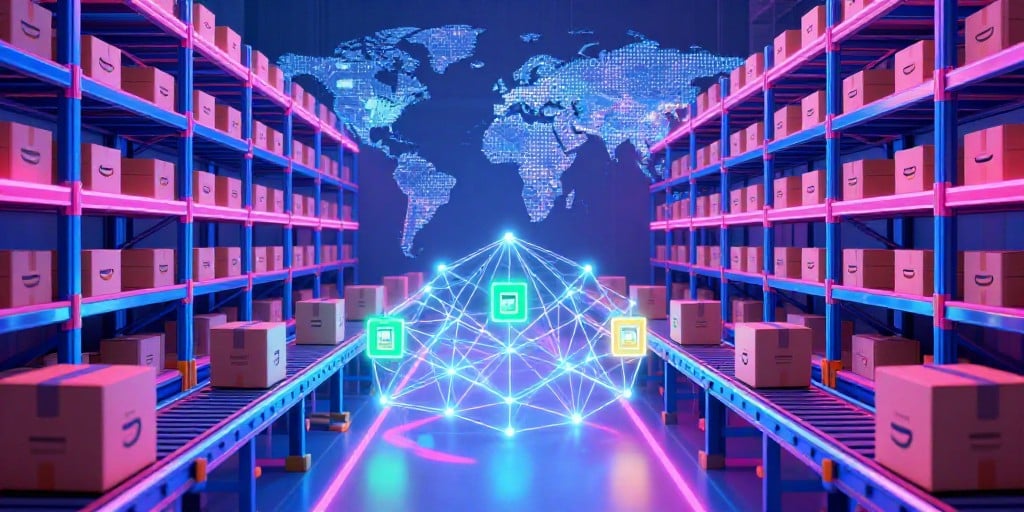
Procter & Gamble Co. (PG) is among the first corporations to enter into a partnership with Amazon’s newly announced Amazon Supply Chain Services (ASCS). The logistics platform, revealed on May 4 2026, opens the retailer’s expansive freight, warehousing, and delivery network to external businesses. Through a central online portal, firms of any size can now access Amazon’s air and ground transportation, inventory management, and order‑fulfillment capabilities. The initiative is intended to emulate Amazon Web Services’ successful model of monetizing internal infrastructure for third‑party customers.
Market Reactions Across the Logistics Sector
The disclosure triggered a noticeable shift in the broader logistics market. Shares of FedEx Corp. and UPS Corp. fell on the day of the announcement. FedEx’s chief executive, John J. Flannery, clarified that ASCS constitutes a third‑party logistics service rather than a direct competitor, emphasizing the distinct operational scope of FedEx’s end‑to‑end network. UPS CEO Carol Tomlinson similarly reiterated that Amazon’s foray into supply‑chain services, while significant, does not directly encroach upon UPS’s core transportation and logistics operations.
Analysts have largely interpreted ASCS as an extension of Amazon’s existing logistics offerings rather than a transformative threat to established carriers. The consensus suggests that Amazon’s primary advantage lies in its proprietary network of fulfillment centers and last‑mile delivery hubs, which have already been leveraged to support its e‑commerce platform. Expanding these assets to third‑party firms is viewed as a natural progression, one that is likely to generate incremental revenue streams without substantially disrupting the competitive balance in the logistics industry.
Procter & Gamble’s Strategic Rationale
Procter & Gamble’s participation signals the consumer‑goods firm’s intent to harness Amazon’s logistics ecosystem for its global supply‑chain needs. By tapping into Amazon’s extensive network, PG aims to potentially enhance distribution efficiency across multiple product categories, from household cleaning products to personal care items. The partnership reflects a broader trend among consumer‑goods companies to adopt flexible, technology‑driven logistics solutions that can rapidly adjust to shifting market demands.
PG’s decision is consistent with its ongoing efforts to modernize its supply‑chain operations, which have historically relied on a combination of third‑party carriers and proprietary distribution centers. Integrating Amazon’s logistics capabilities may reduce lead times, lower inventory carrying costs, and improve service levels in key markets. Moreover, the partnership allows PG to access advanced data analytics and real‑time visibility tools that Amazon’s platform offers, further strengthening its competitive positioning.
Cross‑Sector Implications and Economic Context
The launch of ASCS and PG’s early engagement highlight a convergence between the retail, technology, and logistics sectors. As e‑commerce continues to dominate consumer spending, logistics providers are increasingly adopting cloud‑based and API‑driven solutions to offer seamless, end‑to‑end supply‑chain services. Amazon’s strategy mirrors that of Amazon Web Services, wherein internal infrastructure is commodified for external use—a model that has proven highly profitable and scalable.
From an economic standpoint, the initiative underscores the importance of infrastructure asset utilization in a low‑growth, high‑efficiency environment. By monetizing existing freight and warehouse capacity, Amazon can generate new revenue streams while optimizing asset utilization, thereby mitigating the impact of fluctuating demand on its core e‑commerce business. For companies like Procter & Gamble, the ability to outsource complex logistics functions to a technologically sophisticated partner reduces capital expenditure and enhances operational flexibility.
Outlook for the Logistics Landscape
While the immediate market response suggests a muted perception of threat, the long‑term impact of ASCS will depend on several factors:
| Factor | Potential Effect |
|---|---|
| Adoption Rate | Rapid uptake by mid‑market firms could erode traditional carrier margins. |
| Service Differentiation | Amazon’s integration of data analytics may create new value‑added services. |
| Regulatory Scrutiny | Increased oversight may arise if Amazon’s services significantly influence market dynamics. |
| Competitive Response | Established carriers may innovate, offering integrated digital solutions to retain clientele. |
In conclusion, Procter & Gamble’s engagement with Amazon Supply Chain Services represents a strategic alignment with a leading technology‑driven logistics platform, reflecting broader industry shifts toward flexible, data‑centric supply‑chain solutions. While the immediate competitive threat to traditional carriers remains limited, the initiative marks a noteworthy development in the evolving intersection of retail, technology, and logistics.