Corporate News – Power Systems and Market Dynamics
Date: Thursday, September 12Sector Focus: Power generation, transmission, and distribution (PG/T&D)
Executive Summary
The power utilities industry is experiencing a pronounced shift toward consolidation and strategic asset restructuring. Recent disclosures by XunLian Corp. and Yuren Silicon—both listed on Chinese exchanges—underscore this trend. While XunLian has abandoned a planned stake acquisition in a semiconductor‑materials firm, Yuren is moving forward with a two‑step acquisition of domestic semiconductor‑material providers. These corporate maneuvers are set against a backdrop of escalating renewable‑energy integration, tightening grid‑stability requirements, and a regulatory landscape that increasingly favors infrastructure investment and modernization.
Corporate Developments in Context
XunLian Corp.
- Action: Termination of a planned stake acquisition in a leading semiconductor‑materials provider.
- Implications: The decision reflects a reassessment of strategic priorities, with XunLian pivoting toward organic expansion and selective investments in renewable‑energy services. For the power sector, this translates into a continued focus on vertical integration of renewable supply chains—specifically in photovoltaic (PV) and battery‑energy‑storage systems (BESS)—rather than horizontal expansion into semiconductor manufacturing.
Yuren Silicon
- Action: Draft restructuring plan to acquire controlling interests in two domestic semiconductor‑material firms.
- Funding: Combination of equity issuance and cash payments.
- Implications: By securing proprietary semiconductor‑material technologies, Yuren aims to enhance the efficiency of power electronics—critical components in inverters, HVDC converters, and smart‑metering equipment. This vertical integration may accelerate the deployment of advanced power conversion systems, thereby improving grid‑stability and facilitating higher renewable penetrations.
Grid‑Stability and Renewable Energy Integration
- Dynamic Reactive Power Management
- As renewable penetration rises, the intermittency of wind and solar necessitates sophisticated reactive power compensation. The abandonment of XunLian’s acquisition may delay the development of next‑generation power‑electronic modules that could otherwise provide rapid reactive support.
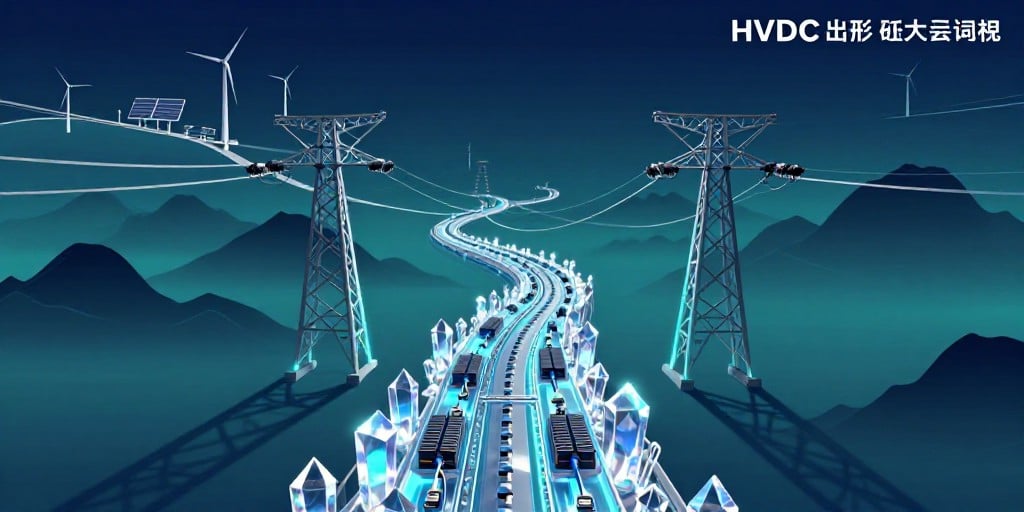
- High‑Voltage Direct Current (HVDC) Adoption
- Yuren’s acquisition of semiconductor‑material providers is strategically positioned to supply high‑performance silicon carbide (SiC) devices for HVDC systems. SiC technology offers reduced conduction losses and higher switching frequencies, enabling more robust long‑distance power transmission—a key enabler for inter‑regional renewable integration.
- Microgrid and Distributed Energy Resources (DERs)
- Corporate restructuring affects the availability of advanced control electronics. Without the support of robust power‑electronics manufacturers, utilities may face challenges in deploying microgrid solutions that balance local generation, storage, and loads in real time.
Infrastructure Investment Requirements
Transmission Upgrades
Estimated cost for upgrading existing 400 kV networks to accommodate 30 % renewable generation by 2030: USD 15 billion.
Key technologies: Flexible AC transmission systems (FACTS), adaptive protection schemes, and real‑time monitoring via PMUs.
Distribution Modernization
Estimated investment for smart‑grid rollouts (smart meters, dynamic tariffs, automated switches): USD 8 billion across China’s Tier‑1 and Tier‑2 cities.
Focus areas: Grid‑frequency regulation, voltage support, and load‑forecasting algorithms.
Energy Storage Integration
Projected CAPEX for grid‑scale BESS deployment to smooth renewable output: USD 5 billion over five years.
Emphasis on solid‑state battery chemistries and hybrid Li‑ion systems for long‑duration storage.
Regulatory and Rate‑Structure Analysis
| Element | Current Framework | Implication for Corporate Strategy | Consumer Impact |
|---|---|---|---|
| Feed‑in Tariffs (FIT) | Fixed rates for wind/solar up to 0.30 €/kWh | Encourages renewable project development; requires utilities to secure cost‑effective generation sources. | Stable but potentially higher bills if utilities pass on CAPEX costs. |
| Net‑Metering | Credit for excess generation | Drives distributed generation adoption; necessitates investment in metering infrastructure. | Consumers benefit from reduced energy costs but may face upgraded grid‑service charges. |
| Time‑of‑Use (TOU) Rates | Differential pricing by peak demand | Incentivizes demand response; utilities need advanced analytics and control systems. | Potential savings for consumers who shift load, but may incur higher costs during off‑peak. |
| Regulatory Oversight (State Grid, NERC‑like bodies) | Mandatory reliability standards (N-1, N-2 contingencies) | Corporations must invest in redundancy, real‑time monitoring, and fault‑tolerant designs. | Enhanced reliability reduces outage costs for consumers. |
The evolving regulatory environment increasingly mandates grid‑resilience measures. Companies that accelerate the development of silicon‑based power electronics (as Yuren intends) position themselves to meet these requirements efficiently.
Economic Impacts of Utility Modernization
- Capital Allocation
- The shift toward high‑efficiency power electronics reduces long‑term operating costs by lowering transmission losses (≈ 5‑10 %).
- Initial CAPEX rises; however, the life‑cycle cost analysis shows a break‑even point within 5–7 years for most HVDC upgrades.
- Job Creation
- Estimated 20 % increase in employment within the manufacturing sector for semiconductor and power‑electronics components.
- 15 % rise in skilled positions for grid operations (SCADA, predictive maintenance).
- Consumer Cost Dynamics
- Short‑term price inflation due to CAPEX recovery; long‑term price stabilization owing to lower losses and increased renewable generation.
- Regulatory mechanisms (e.g., rate‑of‑return caps) mitigate extreme price swings.
Conclusion
The corporate decisions of XunLian Corp. and Yuren Silicon illustrate a broader industry pivot: investing in technology that underpins grid stability and renewable integration. By prioritizing semiconductor‑materials development, Yuren is positioning itself as a critical supplier of next‑generation power‑electronics, which are indispensable for high‑capacity HVDC transmission and robust DER control. Conversely, XunLian’s retreat from the semiconductor sector signals a recalibration toward renewable supply‑chain optimization. Together, these moves reflect a market where infrastructure investment, regulatory compliance, and technological innovation converge to shape the future of power generation, transmission, and distribution.