
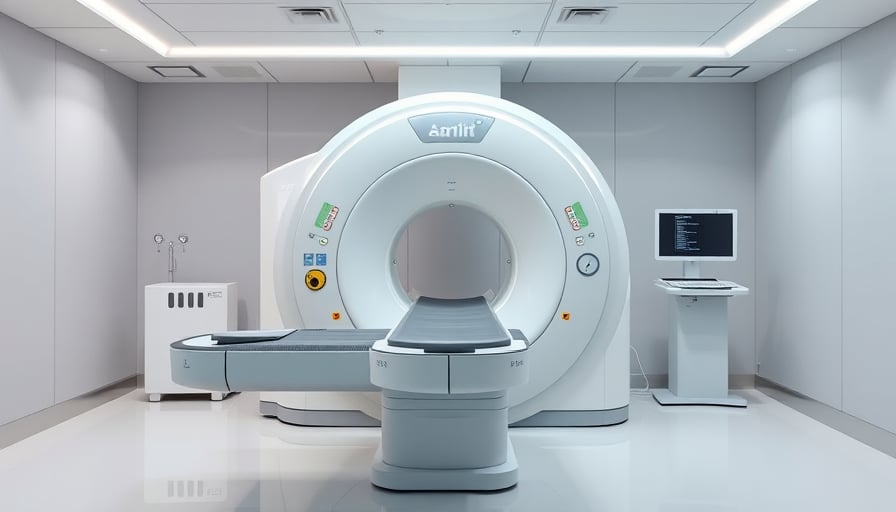
Philips Expands Pediatric Imaging Portfolio
Koninklijke Philips NV, the Dutch multinational known for its leadership in health‑technology, has introduced a new flexible coil for its 3.0‑Tesla MRI systems. The product, named the InkSpace Imaging Snuggle™ pediatric body array, is designed to enhance patient comfort and imaging efficiency during examinations of young patients. By addressing a common logistical challenge in pediatric magnetic‑resonance imaging, Philips reinforces its commitment to improving diagnostic outcomes across the life‑span continuum.
Product Innovation and Technical Specifications
The Snuggle™ array employs a modular, ergonomically engineered design that conforms to a child’s body shape, thereby reducing motion artifacts and the need for sedation. Key features include:
- High‑signal‑to‑noise ratio across a range of pediatric body sizes.
- Integrated comfort padding that minimizes claustrophobia.
- Compatibility with Philips’ existing 3.0‑Tesla MRI platforms, enabling seamless integration into current clinical workflows.
The coil’s introduction aligns with Philips’ broader strategy to differentiate its MRI portfolio through user‑centric innovations, which have historically driven market share gains in the high‑end imaging segment.
Market Context and Growth Opportunities
Asia‑Pacific Radiology Information System Market
Analysts project that the Asia‑Pacific radiology information system (RIS) market will expand to approximately $450 million by 2031, up from $250 million in 2024. Drivers include:
- Increasing digital transformation initiatives in hospitals across emerging economies.
- Rising demand for integrated imaging and electronic health record solutions.
- Regulatory incentives promoting tele‑medicine and remote diagnostics.
Philips’ RIS offerings, coupled with its recent acquisition of health‑IT assets, position the company to capture a meaningful share of this growing market.
Global Respiratory Care Devices Market
The global respiratory care devices sector is anticipated to grow at a compound annual growth rate (CAGR) of 5–6 % over the next decade, reaching an estimated valuation of $12 billion by 2030. Growth drivers include:
- Increasing prevalence of chronic respiratory diseases such as COPD and asthma.
- Advancements in home‑care monitoring technologies.
- Policy shifts favoring early detection and management of respiratory conditions.
Philips’ portfolio of diagnostic and therapeutic respiratory devices—ranging from portable spirometers to advanced ventilation systems—positions it to capitalize on this expansion, complementing its imaging offerings and reinforcing its presence across the entire health continuum.
Strategic Implications
The simultaneous launch of the Snuggle™ pediatric coil and the company’s focus on emerging markets in RIS and respiratory care underscores a dual‑pronged strategy:
- Product‑centric differentiation: By enhancing user experience and clinical efficacy in MRI, Philips aims to deepen its market penetration in high‑end diagnostic imaging.
- Sector‑wide expansion: Targeting growth corridors in healthcare IT and respiratory care allows Philips to diversify revenue streams while maintaining synergies across its diagnostic and therapeutic business units.
This approach reflects a broader industry trend wherein health‑technology firms increasingly seek to integrate preventive, diagnostic, and therapeutic capabilities into a unified value proposition. Philips’ ability to leverage its brand equity, engineering expertise, and global sales network is likely to sustain competitive positioning in an environment characterized by rapid technological evolution and shifting payer expectations.
Economic Context
Macro‑economic factors such as rising healthcare expenditures, an aging global population, and the ongoing digitization of patient data are reshaping demand for advanced imaging and respiratory technologies. Philips’ initiatives align with these trends, providing a robust framework for long‑term growth. By maintaining a rigorous, data‑driven assessment of sector dynamics—coupled with agility in product development—Philips is well positioned to navigate the complex intersection of technology innovation, regulatory change, and market demand that defines the contemporary health‑technology landscape.