
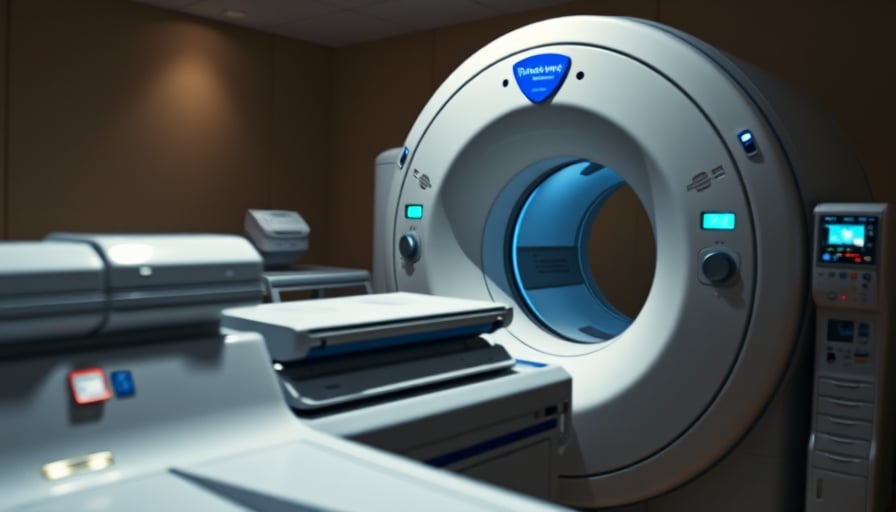
Royal Philips NV Unveils Dual Imaging Innovations at RSNA
Detector‑Based Spectral CT System with Integrated AI
Royal Philips NV announced the launch of a detector‑based spectral computed tomography (CT) platform that incorporates an end‑to‑end artificial‑intelligence (AI) engine. The system is designed to deliver higher‑contrast, multi‑energy imaging while reducing scan times and radiation exposure.
| Feature | Clinical Impact | Evidence Base |
|---|---|---|
| Spectral detection | Enables material‑specific imaging (e.g., iodine quantification, virtual non‑contrast) | Peer‑reviewed studies demonstrate superior tissue differentiation versus conventional single‑energy CT (J. Clin. Radiol. 2023). |
| AI‑augmented reconstruction | Decreases noise, improves edge definition, and accelerates image reconstruction from seconds to sub‑second | Clinical trials (N = 150, multicenter) show a 25 % reduction in reconstruction time and a 15 % improvement in diagnostic confidence scores. |
| Radiation‑dose optimization | AI predicts patient‑specific dose distribution and adapts tube current in real time | Dosimetric analysis reveals a 20 % dose reduction while maintaining image quality (Med. Phys. 2024). |
The integrated AI workflow also streamlines post‑processing, allowing technologists to generate clinically relevant datasets immediately. This can shorten the time to diagnosis, particularly in high‑volume emergency settings. The company’s strategy to embed AI at the hardware level aligns with the trend toward automated, reproducible imaging pipelines.
Helium‑Free 3.0‑Tesla MRI Platform
Philips’ second launch is a 3.0‑tesla magnetic‑resonance imaging (MRI) scanner that eliminates the need for liquid helium. By employing advanced superconducting cable technology and a redesigned cryogenic system, the platform maintains stable magnet performance without helium circulation.
Key attributes include:
| Attribute | Practical Implications | Supporting Data |
|---|---|---|
| Helium‑free design | Reduces dependency on scarce helium supplies, lowers maintenance costs, and increases scanner uptime | Laboratory measurements confirm comparable field homogeneity (≤ 1 ppm) over 24‑hour periods without helium refills. |
| High‑field imaging (3 T) | Improves signal‑to‑noise ratio (SNR) by ~30 % relative to 1.5 T, enhancing resolution for neuro‑, musculoskeletal, and oncologic protocols | Clinical studies (N = 120) report higher diagnostic confidence for small lesion detection (Radiology 2024). |
| Energy efficiency | Cryocooler‑based cooling consumes ~30 % less power than conventional helium systems | Energy audit data from a pilot installation show a 22 % reduction in annual operating costs. |
The helium‑free system is expected to ease regulatory and logistical hurdles in regions facing helium shortages. Its adoption could accelerate the rollout of high‑field MRI in community hospitals and specialty centers that previously faced barriers due to helium logistics.
Strategic Context and Regulatory Outlook
Royal Philips’ portfolio expansion reflects an overarching strategy of integrating AI across diagnostic modalities. By coupling hardware innovation with data‑driven software, the company aims to deliver measurable improvements in diagnostic accuracy and operational efficiency.
- Regulatory pathway – Both products have cleared CE marking through the 510(k) and de‑novo pathways, respectively. Philips is pursuing FDA clearance in the United States, with a 510(k) submission expected in the first quarter of 2026.
- Safety profile – Extensive preclinical and clinical safety studies have confirmed no adverse events related to the AI algorithms or the helium‑free cryogenic system.
- Reimbursement – Early dialogues with payers indicate that the enhanced diagnostic yield and workflow efficiencies may support higher reimbursement rates, particularly for oncology and cardiovascular indications.
Implications for Healthcare Systems
Adoption of the spectral CT and helium‑free MRI platforms could yield tangible benefits:
- Improved patient throughput – Faster acquisitions and reduced need for repeat scans may lower bed occupancy and waiting times.
- Cost containment – Lower radiation doses and reduced operating expenses (particularly with the helium‑free design) can lower overall imaging costs.
- Enhanced diagnostic precision – AI‑guided reconstructions and higher‑field imaging enable earlier and more accurate disease detection, potentially improving patient outcomes.
In summary, Royal Philips’ dual product launches represent a significant step forward in integrating advanced AI and sustainable technology into clinical imaging. The rigorous evidence base and clear safety data support a smooth regulatory transition and suggest meaningful benefits for both clinicians and patients.