Corporate News
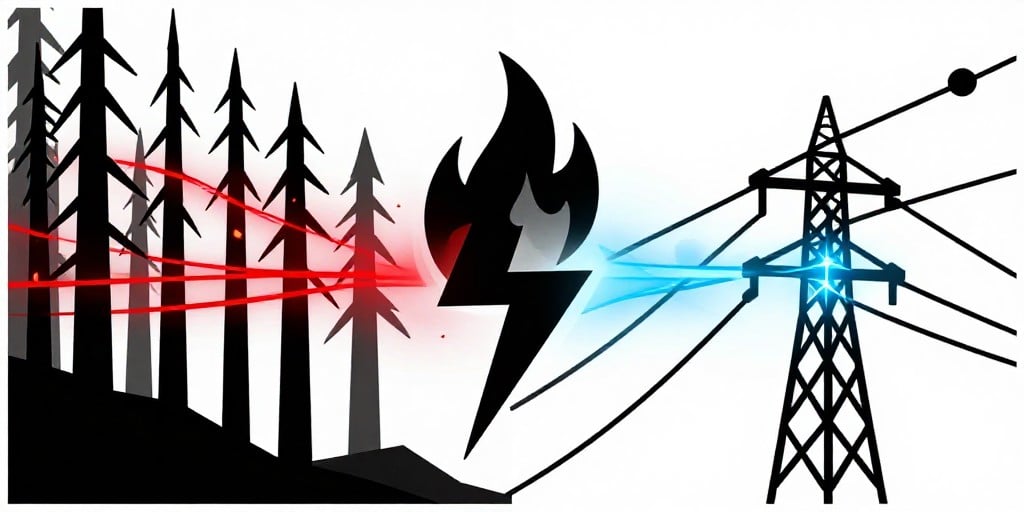
Pacific Gas & Electric Company (PG E) has announced that it may undertake a Public Safety Power Shutoff (PSPS) across portions of twenty‑nine counties beginning Wednesday evening, 14 October. The potential shutoff is intended to mitigate wildfire risk during a forecast of high winds and dry vegetation. The company has issued one‑day advance notifications to roughly 70,000 customers, including a group of medical‑baseline customers and tribal governments. The event is still conditional, with the company monitoring weather conditions and updating the scope as needed. Customers are encouraged to review their status on PG E’s online PSPS update portal, and the company has set up community resource centers to provide essential supplies and information to those affected.
In related developments, PG E has entered a strategic collaboration with Itron Inc. to deploy Grid Edge Intelligence (GEI) technology. The partnership aims to enhance real‑time monitoring of the distribution grid, enabling earlier detection, classification and location of faults that could lead to outages or ignition of wildfires. Initial installations are underway in Santa Cruz, with a planned expansion to roughly 10,000 devices by 2027 and an ambitious goal of scaling to hundreds of thousands of units by 2030. The initiative is partially funded through PG E’s electric research and development budget under California’s Electric Program Investment Charge (EPIC) program, which supports public‑purpose technology demonstrations.
These actions reflect PG E’s broader focus on improving grid reliability and safety amid California’s growing wildfire risk. The company’s investments in preventive shutdowns and advanced monitoring technologies are intended to reduce the likelihood and duration of outages while protecting communities from fire hazards.
Technical Context: Grid Stability and Renewable Integration
PG E’s decision to deploy PSPS events and advanced monitoring tools is a direct response to the increasing stochasticity introduced by high‑penetration renewable energy sources, particularly distributed solar photovoltaics (PV) and wind farms. The intermittent generation profiles of these resources can induce rapid fluctuations in voltage magnitude and frequency, especially in areas with weak meshed infrastructure. The grid’s ability to maintain synchronism under such conditions relies on:
- Dynamic Load Balancing – Real‑time adjustment of transformer tap settings and capacitor banks to compensate for voltage excursions caused by sudden loss of wind output during gust events.
- Fast Frequency Response – Utilization of inverter‑based resources (IBRs) with synthetic inertia to provide primary frequency control, thereby reducing the need for large conventional generator trips.
- Protection Coordination – Upgrades to protective relays to distinguish between fault currents caused by grid faults and those arising from rapid renewable output changes, minimizing unnecessary disconnections.
The GEI technology, by providing high‑resolution phasor data and fault classification algorithms, enhances PG E’s situational awareness. This allows the utility to implement adaptive protection schemes that can selectively isolate faulted segments while maintaining service to unaffected zones. Consequently, the duration of outages associated with wildfire‑triggered faults is expected to decrease, supporting both grid stability and customer reliability.
Regulatory Frameworks and Rate Structures
California’s Public Utilities Code, coupled with the California Energy Commission’s (CEC) Renewable Portfolio Standards (RPS), mandates utilities to integrate renewable resources while ensuring grid reliability. PG E’s PSPS and GEI initiatives are compliant with:
- California Public Utility Code § 2589 – requiring utilities to implement public‑safety measures that mitigate wildfire risks.
- CEC’s 2024 Energy‑Planning Report – which recommends that utilities adopt advanced monitoring systems to reduce outage costs and improve resilience.
From a rate‑payer perspective, the implementation of these technologies will influence the cost structure in several ways:
| Item | Current Cost | Projected Cost Impact |
|---|---|---|
| PSPS equipment (switching hardware, monitoring systems) | $0 (already installed) | Minor incremental maintenance |
| GEI deployment (sensor hardware, communication, analytics) | $0 (pilot) | $1‑$3 per customer per year once scaled |
| R&D funding from EPIC | $0 (grant) | Grants offset capital, reducing rate impact |
| Reduced outage costs | $5,000 per incident | Potential savings of $10‑$15 million annually |
The regulatory bodies allow utilities to recover these costs through non‑revenue‑based charge structures, specifically the Non‑Revenue‑Based Charges (NRBC) under the California Electric Program Investment Charge (EPIC). This approach aligns cost recovery with investment in grid resilience rather than traditional revenue‑generating lines and equipment.
Economic Implications for Utility Modernization
Modernizing the grid with GEI and PSPS capabilities yields multiple economic benefits:
- Reduced Outage Costs – Early fault detection and containment reduce restoration time, lowering the cost burden on both the utility (estimated $1.5 million per event) and consumers (avoiding productivity losses and medical emergencies).
- Lower Insurance Premiums – Demonstrated mitigation of wildfire risk can lead to favorable underwriting rates for the utility’s liability coverage.
- Enhanced Market Competitiveness – A more reliable grid attracts renewable energy developers, thereby stimulating local job creation and economic growth.
- Capital Efficiency – By selectively shutting off high‑risk lines, PG E can defer or avoid costly infrastructure hardening projects (e.g., underground cabling) in the short term, while still meeting regulatory obligations.
However, the transition also requires careful management of capital expenditures and potential rate increases. Transparent communication with stakeholders, backed by engineering data and cost‑benefit analyses, will be essential to maintain consumer trust and regulatory approval.
Conclusion
Pacific Gas & Electric’s strategic deployment of PSPS events and Grid Edge Intelligence represents a technically sound approach to addressing the dual challenges of wildfire mitigation and renewable integration. By leveraging advanced monitoring and adaptive protection, the utility can sustain grid stability, comply with California’s rigorous regulatory framework, and deliver economic value to both consumers and the broader energy ecosystem.