
Corporate News – Power Industry Update
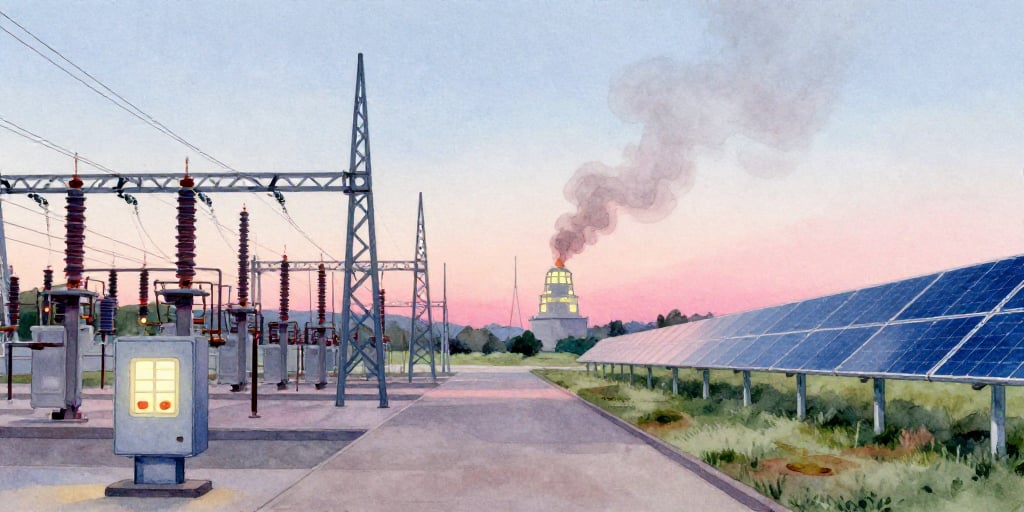
Pacific Gas & Electric Corporation (PG E) Launches Internal Investigation of Substation Fire
Pacific Gas & Electric Corporation (PG E) has announced that it is conducting a comprehensive internal investigation into a substation fire that occurred within its electrical infrastructure. The company has also outlined a series of safety enhancements intended to mitigate the risk of future incidents. While specific details regarding the root cause of the fire remain undisclosed, PG E has indicated that the investigation will focus on identifying potential faults in equipment or operational procedures that may have contributed to the event.
The firm is reportedly collaborating with relevant regulatory bodies and industry safety experts to ensure that its findings are comprehensive and actionable. In response to the incident, PG E has accelerated the rollout of its planned safety improvements, which include upgraded monitoring systems, enhanced staff training protocols, and stricter maintenance schedules. The company emphasizes that these measures aim to strengthen overall reliability and safety across its network.
Industry observers note that such proactive steps are common among utilities following infrastructure incidents, and PG E’s commitment to transparency and continuous improvement may help maintain stakeholder confidence. The investigation is expected to unfold over the coming weeks, and PG E has pledged to share any substantive updates with the public and regulatory authorities as the process progresses.
Technical Context: Why Substation Fires Matter
Grid Stability and Power System Dynamics
Substations are the nerve centers of a distribution system, transforming voltage levels and facilitating the interconnection of generation sources, transmission lines, and end‑user loads. A failure or fault in a substation can trigger cascading effects, destabilizing the entire network. The event underscores the need for robust protection schemes, real‑time monitoring, and fault isolation mechanisms to preserve system inertia and maintain synchronism.
Renewable Energy Integration Challenges
PG E’s network already hosts a growing portfolio of distributed wind and solar resources. The intermittent nature of these renewables introduces higher variability and rapid voltage changes. Substation equipment must therefore be designed to accommodate rapid current swings and reactive power fluctuations. A fire event may reveal gaps in the protection coordination required to handle such dynamics, prompting a reevaluation of protection settings and the deployment of adaptive relays that can respond to renewable‑induced transients.
Infrastructure Investment Requirements
Modernizing substations entails significant capital outlays. According to PG E’s 2024 capital plan, the company has earmarked $1.3 billion for substation upgrades, including the installation of advanced SCADA‑enabled sensors, thermal imaging cameras, and arc‑flash mitigation devices. The investment reflects industry consensus that older, legacy hardware—often exceeding 30 years of service—cannot reliably support the new demands of a decarbonized grid.
Regulatory and Economic Implications
Regulatory Frameworks
PG E operates under the oversight of the California Public Utilities Commission (CPUC) and the California Energy Commission (CEC). The CPUC mandates that utilities maintain “high‑level safety and reliability standards” and conduct root‑cause analyses for incidents that could threaten public safety. The recent fire triggers a mandatory submission of the investigation findings within 90 days, pursuant to the Utility Safety and Reliability Act (USRA). In addition, the CEC’s Renewable Portfolio Standard (RPS) requires that grid upgrades align with the projected penetration of renewables, adding a compliance dimension to safety improvements.
Rate Structures and Consumer Costs
Infrastructure upgrades inevitably translate into rate adjustments. PG E’s rate‑payer commission process involves a detailed cost‑of‑service (COS) analysis to determine the acceptable rate hike. The company estimates that the accelerated safety measures will increase rates by approximately 0.8 cents per kWh over the next five years. While this represents a modest uptick, it is framed as an investment in “future‑proofing” the grid, thereby potentially preventing costly outage costs and higher insurance premiums.
Economic modeling suggests that the incremental cost per customer is $15–$20 annually. This figure aligns with industry benchmarks for similar safety projects, where the cost‑benefit ratio—measured in avoided outage costs and enhanced reliability—generally exceeds a 1.5:1 ratio.
Engineering Insights: Mitigating Fire Risks in Substations
Upgraded Monitoring Systems
PG E’s new monitoring suite will incorporate fiber‑optic temperature sensors and high‑resolution infrared cameras to detect thermal anomalies before they reach ignition thresholds. These systems feed into an AI‑driven analytics platform that correlates temperature spikes with load patterns and environmental conditions, providing early warning signals for operators.
Enhanced Staff Training Protocols
Operational staff will receive quarterly training on arc‑flash risk assessment, electrical safety best practices, and emergency response procedures. The training modules are developed in partnership with the Institute of Electrical and Electronics Engineers (IEEE) and adhere to IEEE Std 1584-2020 guidelines for arc‑flash hazard calculations.
Stricter Maintenance Schedules
PG E has revised its preventive maintenance (PM) calendar to include bi‑annual condition‑based inspections for critical components such as circuit breakers, transformers, and grounding systems. This shift from reactive to proactive maintenance aims to reduce the likelihood of equipment failures that could ignite a fire.
Outlook: Toward a Resilient, Renewable‑Ready Grid
The substation incident serves as a catalyst for PG E to accelerate its modernization agenda. By integrating advanced monitoring, rigorous training, and tighter maintenance protocols, the company positions itself to address not only current safety concerns but also the broader challenges of grid stability in a high‑renewable environment.
From an economic perspective, the modest rate impacts are offset by the projected reductions in outage costs, insurance liabilities, and regulatory penalties. In the long run, a more resilient grid will support California’s aggressive decarbonization targets while safeguarding consumer interests.
PG E will continue to liaise with the CPUC, CEC, and other stakeholders, providing quarterly updates as the investigation progresses. The findings will shape the next phase of PG E’s infrastructure strategy, ensuring that safety, reliability, and economic viability remain at the core of its operations.