
Corporate News
PepsiCo’s Employee Savings Plan and Strategic Expansion: A Micro‑Perspective on Macro‑Trends
PepsiCo Inc. released an 11‑K filing on June 18 that detailed the current status of its employee savings plan, confirming the plan’s 100 % ownership of the PepsiCo Master Trust. The trust holds the company’s equity and other assets earmarked for employee benefits. The report underscored a modest rise in net assets attributable to both investment performance and fresh contributions from employees, the company, and rollovers. While PepsiCo shouldered the majority of administrative costs, participants were required to pay additional fees for select investment alternatives.
Integration of Acquisitions into the Master Trust
The filing also noted a series of corporate actions that directly impacted the plan’s asset base. In late 2024, PepsiCo acquired a controlling stake in Sabra Dipping Company. The subsidiary’s 401(k) plan was subsequently folded into the master trust, contributing substantial assets. Subsequent acquisitions in 2025—Siete Foods and poppi beverages—brought new employees into the plan’s eligibility framework, expanding the employee base and diversifying the plan’s demographic profile.
Strategic Partnerships in Global Expansion
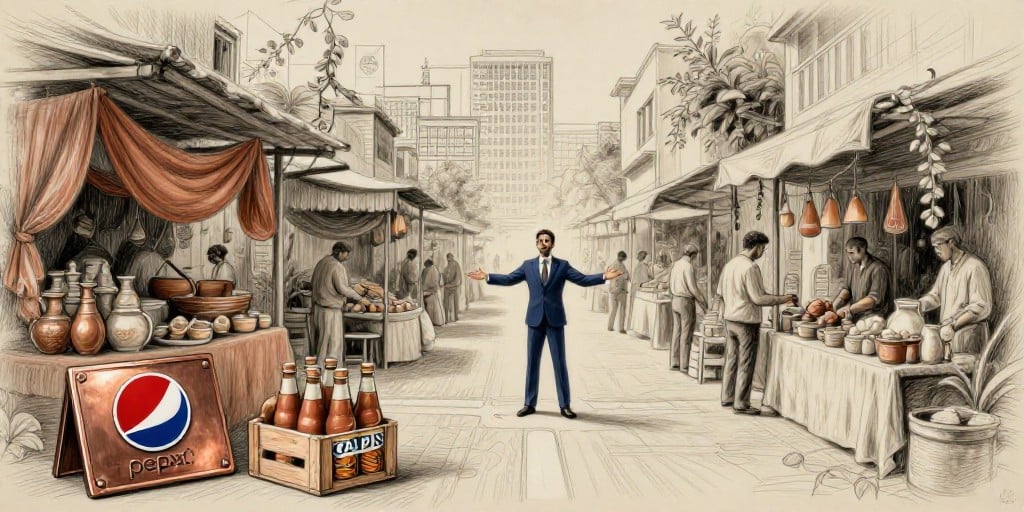
Parallel to the internal consolidation, PepsiCo’s leadership announced a new collaboration with Japan’s Asahi Group and India‑based Varun Beverages. The partnership is set to introduce Asahi’s CALPIS brand into the Indian market, leveraging Varun’s established distribution network. PepsiCo’s involvement signals its intent to reinforce its presence in the burgeoning Indian beverage sector through strategic alliances, rather than outright acquisitions.
Editorial Lens: From Micro‑Financial Moves to Macro‑Industry Trends
1. Consumer Goods Trends and Brand Positioning
The infusion of diverse product lines—Sabra, Siete Foods, poppi beverages—into PepsiCo’s ecosystem illustrates a broader industry shift toward health‑centric, plant‑based, and functional beverages. Consumer demand for transparent sourcing and nutritional value has accelerated the adoption of such brands. PepsiCo’s brand architecture now positions it as a one‑stop portfolio provider, offering conventional sodas, ready‑to‑drink teas, and emerging “clean‑label” options under a unified corporate umbrella.
2. Omnichannel Retail Innovation
The merger of multiple 401(k) plans into a single master trust reflects the company’s commitment to seamless, unified systems—a principle mirrored in its retail strategy. PepsiCo is investing in digital grocery platforms and subscription models that deliver its products directly to consumers’ devices, while simultaneously reinforcing its shelf presence through experiential in‑store activations. The hybrid approach satisfies the consumer’s expectation of a frictionless journey from online discovery to offline purchase.
3. Supply Chain and Distribution Innovations
The CALPIS collaboration in India exemplifies a supply‑chain paradigm shift: local partners are harnessed to accelerate market penetration, mitigate logistics costs, and comply with regional regulatory landscapes. This model aligns with a global trend where multinational corporations engage in joint ventures to leverage local expertise and distribution networks, thereby reducing capital outlay and time to market.
Cross‑Sector Pattern Recognition
| Category | Key Observations | Market Data | Implications |
|---|---|---|---|
| Health‑Focused Beverages | Rising demand for low‑sugar, plant‑based options | CAGR 9.5 % (2023‑2027) | Brands must diversify portfolios to capture this segment |
| Omnichannel Retail | Integration of e‑commerce, mobile, and physical stores | 40 % of sales now via digital touchpoints | Investment in data analytics and inventory management is critical |
| Strategic Partnerships | Joint ventures with local distributors | 15 % of global beverage sales in emerging markets via partners | Partnerships become the preferred entry strategy over acquisitions |
These patterns underscore a convergence of consumer expectation, technological capability, and operational agility. Companies that align their product development, retail execution, and supply‑chain collaborations with these trends position themselves to capture both short‑term upside and long‑term sustainability.
Connecting Short‑Term Movements to Long‑Term Transformation
- Short‑Term: PepsiCo’s plan consolidation and partnership with Asahi/Varun provide immediate financial efficiencies and market access, reflected in modest increases in net assets and expanded brand reach.
- Long‑Term: By embedding health‑centric products into its core portfolio and adopting omnichannel retail models, PepsiCo is restructuring its value chain to meet evolving consumer preferences. The partnership model signals a shift toward a collaborative ecosystem that can rapidly scale in emerging markets.
In sum, PepsiCo’s recent filings and strategic initiatives illustrate a coherent move toward diversified product offerings, unified employee benefit structures, and partnership‑driven growth. These micro‑decisions collectively chart a path for the broader consumer goods sector toward resilience, adaptability, and sustained relevance in a rapidly changing marketplace.