
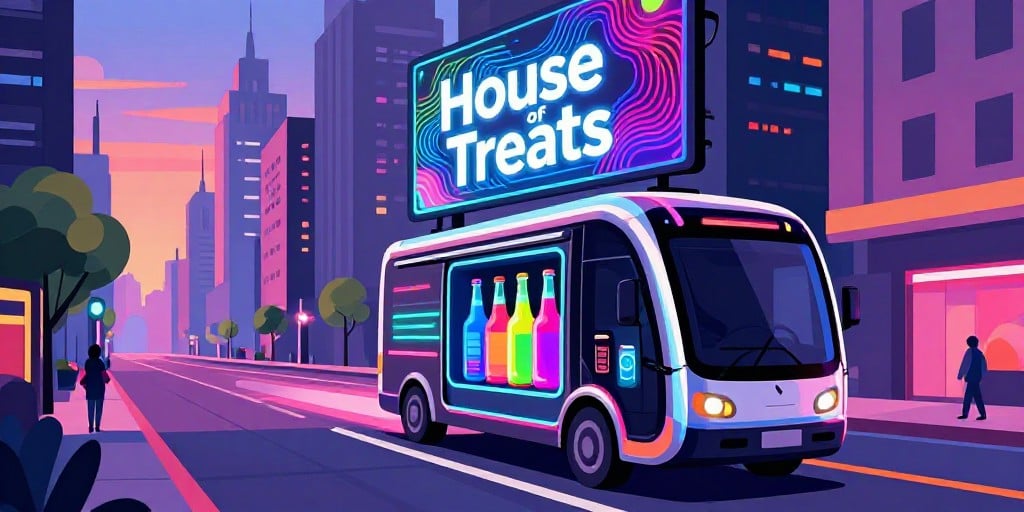
PepsiCo’s Dual‑Front Expansion: Experience‑First Drinks and Autonomous Logistics
Experience‑First Beverage Platform in the United Kingdom
PepsiCo has unveiled a new “House of Treats” platform designed to deliver custom, experience‑first beverages across high‑volume venues such as cinemas, stadiums, restaurants and live events. Launched in the United Kingdom this month, the initiative will later expand into Poland, Romania, the Czech Republic and additional UK sites later in the year. The platform is positioned as a key element of PepsiCo’s broader “Meaningful Food and Drink Experience” strategy, seeking to blend flavour innovation, rapid service and seamless integration with existing operations.
From an industry perspective, the House of Treats platform illustrates how large consumer‑goods firms are reshaping the point‑of‑sale experience to meet contemporary lifestyle demands. Younger generations—particularly Gen Z and Millennials—are increasingly seeking personalized, curated experiences rather than commodity products. By offering tailored beverage options that can be customized on‑the‑fly, PepsiCo is tapping into this desire for individuality while retaining the speed and scalability required in high‑traffic venues.
Moreover, the platform’s focus on “experience‑first” aligns with the growing trend of experiential retail. Consumers are willing to pay a premium for immersive, interactive offerings, a phenomenon that has been amplified by the COVID‑19 pandemic, which accelerated the shift toward digital engagement. The House of Treats can be seen as a hybrid solution: it leverages digital ordering interfaces (mobile apps, QR codes, kiosks) while delivering a physical product that is consumed in situ. This convergence of digital convenience and tactile satisfaction is a potent opportunity for brands seeking to differentiate themselves in saturated markets.
Autonomous Delivery Fleet in the United States
In a separate development, PepsiCo is deploying a fleet of autonomous delivery trucks in Texas, Arizona and Arkansas. This move reflects the company’s growing interest in autonomous logistics solutions and its broader strategy of enhancing operational efficiency and sustainability across the supply chain.
The adoption of autonomous vehicles (AVs) in the food‑and‑drink sector signals a decisive shift toward technology‑driven logistics. AVs promise significant reductions in fuel consumption, emissions, and labor costs—key metrics for companies that are increasingly held accountable for their environmental footprints. For PepsiCo, the introduction of autonomous trucks supports the firm’s sustainability targets, while also providing a scalable platform for rapid, reliable delivery to large venues that rely on the House of Treats platform.
From a demographic perspective, the AV rollout is also a strategic response to the changing expectations of the workforce. Millennials and Gen Z workers—who comprise a sizable portion of the logistics labor pool—often prioritize flexibility and work‑life balance. By reducing the need for human drivers, PepsiCo can mitigate labor shortages while creating a more attractive operational model that appeals to younger employees.
Intersection of Digital Transformation and Physical Retail
The simultaneous launch of the House of Treats platform and the AV fleet underscores a broader trend in which digital transformation is no longer confined to marketing or e‑commerce but is extending deeply into supply‑chain operations. This intersection presents multiple market opportunities:
| Opportunity | Explanation | Consumer Insight |
|---|---|---|
| Personalized On‑Demand Beverage Experiences | Digital kiosks and mobile ordering enable real‑time customization. | Consumers seek unique, shareable moments. |
| Rapid, Scalable Service in High‑Volume Venues | Seamless integration with existing infrastructure. | High foot‑fall venues demand efficient service to maximize revenue. |
| Sustainable, Low‑Carbon Logistics | Autonomous trucks reduce fuel usage and emissions. | Sustainability is a decisive factor for 60% of Gen Z purchases. |
| Labor Efficiency and Workforce Appeal | Autonomous vehicles reduce reliance on drivers. | Younger workers value flexibility and tech‑savvy roles. |
| Data‑Driven Product Development | Analytics from ordering systems inform flavour innovation. | Continuous feedback loop accelerates product relevance. |
PepsiCo’s strategy effectively marries these elements: the House of Treats provides a digital interface for the consumer while maintaining a physical product, and the AV fleet ensures that the supply chain can deliver that product efficiently and sustainably. The synergy between the two initiatives amplifies the company’s competitive advantage in a market increasingly defined by speed, sustainability, and personalization.
Forward‑Looking Analysis
Scaling Across Geographies PepsiCo’s expansion into additional UK sites and Central‑European markets indicates a modular platform that can be quickly adapted to local tastes and regulatory environments. As consumer preferences vary by region—e.g., sweeter profiles in the UK versus spicier options in Eastern Europe—customization will remain a core value proposition.
Leveraging Data for Innovation The digital ordering data generated by the House of Treats will provide granular insights into flavour preferences, consumption patterns, and peak demand times. PepsiCo can use this data to refine its product portfolio, forecast demand more accurately, and optimize inventory across its supply chain.
Integrating with Smart Venue Technology Future opportunities exist in partnering with venue operators to embed PepsiCo’s offerings within their broader digital ecosystems—e.g., seat‑side ordering via seat‑embedded screens, integration with loyalty programs, or dynamic pricing based on crowd density.
Expanding Autonomous Fleet Capabilities While the initial focus in Texas, Arizona and Arkansas may target the distribution of beverages to high‑volume venues, the autonomous fleet can eventually serve broader regional logistics, reducing delivery times for all PepsiCo brands and reinforcing the company’s commitment to sustainability.
Capitalizing on Generational Spending Patterns Gen Z and Millennials continue to drive spending in experiential categories. Brands that can seamlessly combine digital engagement with a tangible product experience will capture higher per‑customer spend and foster brand loyalty. PepsiCo’s dual‑front approach positions it well to meet this demand.
Conclusion
PepsiCo’s simultaneous push into experience‑first beverage platforms and autonomous logistics demonstrates a sophisticated understanding of how societal shifts—particularly in lifestyle preferences, generational spending behaviors, and cultural movements—translate into tangible business opportunities. By blending digital convenience with physical retail, the company is not only responding to current consumer demands but also laying the groundwork for a future in which sustainability, speed, and personalization coexist as standard expectations. The House of Treats and autonomous delivery fleet together create a robust, scalable model that other consumer‑goods firms can emulate as they navigate the evolving landscape of consumer experiences.