
PepsiCo’s Recent Strategic Initiatives: A Corporate‑News Analysis
Packaging Transparency and Ingredient Clarity
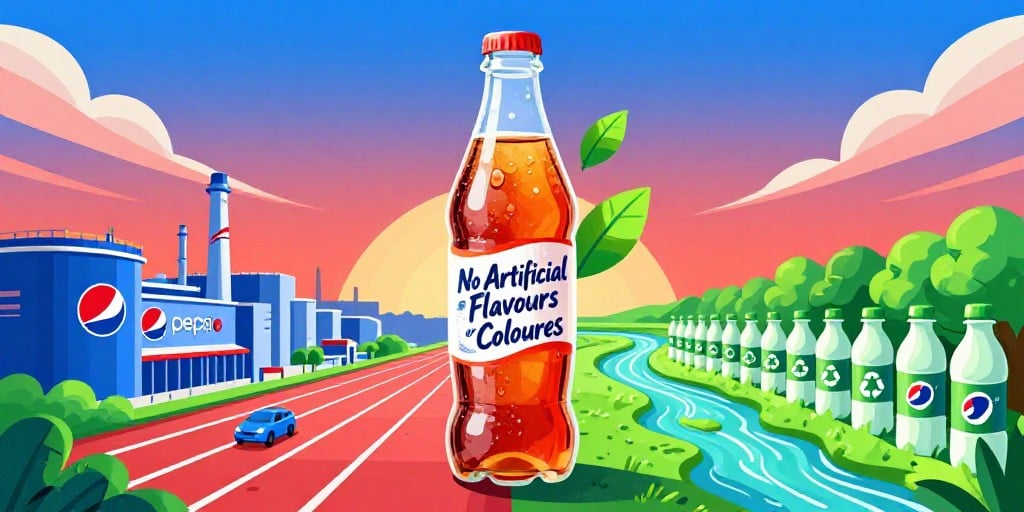
PepsiCo Inc. has announced a new labeling initiative for its food portfolio, marking a shift toward greater ingredient transparency. The company will affix a “No Artificial Flavours or Colours” statement to prominent snack brands such as Lay’s, Kurkure, and Doritos. Importantly, the firm stresses that this change will not alter existing recipes or affect flavor profiles.
From an investigative standpoint, the initiative represents a response to consumer demand for clearer nutritional information—a trend that has accelerated since the 2020s when regulatory agencies in the United States and Europe tightened labeling requirements. While the company claims the move is purely informational, analysts should question whether this signals a broader strategic pivot. A potential risk is that the statement may raise scrutiny from nutrition advocacy groups if any of the snack lines were to be found containing trace artificial additives that were previously unreported. Conversely, the initiative offers a competitive advantage by differentiating PepsiCo’s products in a market where “clean label” offerings command a price premium.
Financially, the cost of the labeling change is likely minimal relative to PepsiCo’s annual marketing budget. However, the long‑term impact could be significant if the transparency move attracts a new segment of health‑conscious consumers, thereby increasing market share in the snack category. To quantify this potential upside, a regression analysis of price elasticity for “clean‑label” snack brands versus traditional offerings would provide actionable insights.
Expansion of Manufacturing Capacity in India
PepsiCo India has unveiled a planned investment of up to ₹5,700 crore (approximately $680 million) by 2030 to expand its manufacturing footprint in the food business. India accounts for roughly 30 % of PepsiCo’s global food sales, making this investment critical to sustaining growth in one of its largest markets.
The decision aligns with broader macro‑economic factors: rising disposable incomes, urbanization, and a shift toward packaged convenience foods. Yet, the investment also carries regulatory and supply‑chain risks. Indian food‑safety regulations, particularly the FSSAI (Food Safety and Standards Authority of India), have become increasingly stringent, and any lapses could result in costly recalls or regulatory penalties.
Moreover, the expansion relies on a stable supply of raw materials such as corn, wheat, and potato starch. Volatility in commodity prices, exacerbated by climate change and global supply disruptions, could erode projected margins. A scenario analysis that models commodity price fluctuations against projected revenue growth would be prudent for stakeholders evaluating this capital allocation.
Sustainability Efforts and Recycled Polymer Use
A recent industry study on the global tea market identified PepsiCo, alongside Coca‑Cola and other consumer‑goods leaders, as a key adopter of recycled polymer content in packaging. The move toward post‑consumer recycled plastics is part of PepsiCo’s broader sustainability agenda, aimed at reducing carbon footprints and aligning with the United Nations Sustainable Development Goals.
While the company’s participation in recycled packaging aligns with investor expectations for Environmental, Social, and Governance (ESG) performance, the actual impact depends on the scale of material substitution. Current reports suggest that recycled content constitutes a modest fraction of total packaging—typically under 10 % for beverage bottles. Until the company commits to a higher recycled content target, the ESG ratings may not reflect a substantial improvement.
From a regulatory perspective, the European Union’s Circular Economy Action Plan and the U.S. EPA’s Plastic Pollution Prevention Act impose increasing obligations on packaging waste management. PepsiCo’s early adoption could position it favorably relative to competitors lagging in circularity initiatives, but it also exposes the firm to potential future compliance costs as legislation tightens.
Market Performance and Investor Sentiment
In a recent trading session, PepsiCo’s shares fell approximately 3 %, mirroring a broader rotation from defensive consumer staples toward higher‑growth sectors such as technology and semiconductors. This pattern is consistent with the “flight to quality” sentiment that has emerged amid concerns about slowing global economic growth and tightening monetary policy.
From a fundamental perspective, PepsiCo’s dividend yield (~2.5 %) and earnings stability have historically shielded it from such sector rotations. However, the short‑term decline underscores investor sensitivity to macro‑economic signals and the competitive pressure from rival snack manufacturers, many of which are also pursuing “clean‑label” strategies. A comparative analysis of the price‑earnings ratios of PepsiCo versus key competitors (e.g., Mondelez, Nestlé) could illuminate whether the current valuation reflects a broader market correction or a sector‑specific adjustment.
Synthesis of Risks and Opportunities
| Theme | Opportunity | Risk |
|---|---|---|
| Ingredient transparency | Differentiation in health‑conscious market | Potential backlash if hidden additives are discovered |
| Manufacturing expansion in India | Capture growing consumer base, increase local sourcing | Regulatory compliance costs, commodity price volatility |
| Recycled packaging | ESG rating improvement, alignment with circular economy | Limited current impact, future compliance costs |
| Market rotation | Attract investors seeking stability during growth sector volatility | Share price volatility, dilution of investor confidence |
Conclusion
PepsiCo’s recent initiatives demonstrate a deliberate strategy to enhance product transparency, expand production capacity in key growth markets, and advance sustainability objectives. While the company appears poised to capitalize on emerging consumer preferences and regulatory trends, it must navigate a complex landscape of supply‑chain risks, regulatory scrutiny, and shifting investor expectations. A nuanced understanding of these dynamics, underpinned by rigorous financial and market research, will enable stakeholders to assess whether PepsiCo’s actions truly position the firm for long‑term resilience and growth.