
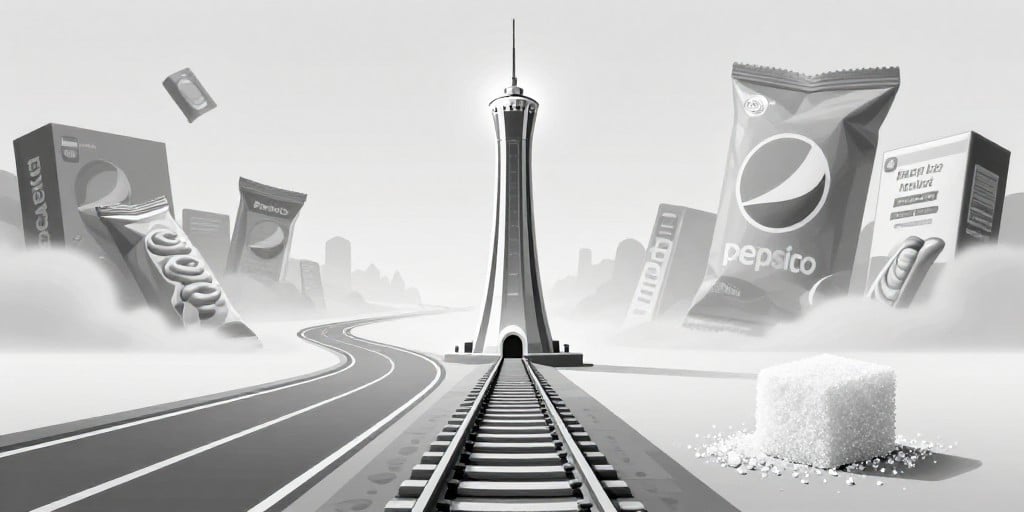
PepsiCo Inc. Navigates a Challenging Quarter Amid Cost Pressures and Shifting Consumer Preferences
Revenue Outperformance and Guidance Stability
PepsiCo Inc. disclosed its most recent quarterly earnings on Thursday, posting a revenue figure that surpassed analyst forecasts by approximately 3 %. The company reaffirmed its full‑year outlook, indicating confidence that its strategic initiatives will translate into sustained top‑line growth.
Despite the upside, the market reacted negatively, with PepsiCo’s shares falling 1.4 % by the close of trading. This dip reflects investor concern that the company’s ability to preserve margin will be hampered by rising input costs and an evolving macroeconomic backdrop.
North American Snack Segment: Modest Decline in a Softening Market
The North American snack division—historically PepsiCo’s most lucrative segment—reported a 1.2 % decline in sales volume. This contraction is part of a broader trend observed across the packaged‑food industry, where consumer households are tightening discretionary spending. The decline is partially attributable to a 5 % uptick in gasoline prices, which has eroded disposable income and prompted households to prioritize lower‑cost staples.
Competitive Dynamics
- Price‑Sensitive Consumers: The introduction of a 15 % price reduction on flagship brands such as Lay’s and Doritos signals an attempt to regain price‑sensitive customers. However, the measure risks eroding margin if not offset by cost efficiencies.
- Private Label Threat: Supermarkets’ private‑label snack offerings are gaining market share, especially in the price‑competitive segment. PepsiCo’s price cuts may accelerate this shift unless differentiated value is maintained.
- Digital Distribution: Competitors are leveraging direct‑to‑consumer e‑commerce channels more aggressively. PepsiCo’s current digital penetration remains modest, potentially limiting its ability to capture price‑sensitive online shoppers.
Cost Structure Pressures
PepsiCo’s management highlighted escalating costs in packaging and transportation. The company’s logistics network is heavily dependent on the U.S. interstate highway system, where freight rates have spiked 8 % over the past year. Packaging costs are similarly up 6 %, driven by higher cellulose pulp prices and the need for sustainability‑compliant materials.
Regulatory Environment
- Carbon Pricing: The Biden Administration’s proposed carbon tax on gasoline could further increase transportation expenses. PepsiCo must evaluate its fuel‑efficiency initiatives and potential carbon offsetting strategies.
- Labeling Regulations: The Food and Drug Administration (FDA) is tightening requirements on sugar content labeling, which could compel PepsiCo to accelerate reformulations. The company’s shift toward lower‑sugar and additive‑free products is a strategic response, but it may entail higher raw material costs.
Shift Toward Health‑Oriented Products
PepsiCo’s portfolio realignment toward lower‑sugar, additive‑free items aligns with the 2024 Consumer Health Report, which projects a 6 % CAGR for “clean‑label” snacks in North America. The company’s new product lines—e.g., “Lay’s Smart‑Bites” and “Doritos Pure‑Corn”—are positioned to capture this growing segment. Early sales data indicate a 4 % uptick in this sub‑segment, suggesting successful market reception.
Opportunity Assessment
- Premium Pricing Potential: Health‑centric products can command a premium margin, mitigating some of the pressure from commodity cost increases.
- Brand Loyalty: By embedding health messaging across its flagship brands, PepsiCo can strengthen long‑term consumer loyalty, reducing churn to private labels.
Macro‑Economic and Geopolitical Considerations
The sustained tension between the United States and Iran has contributed to a 3 % rise in global oil prices since Q2 2025. Higher oil prices feed into transportation costs, directly impacting PepsiCo’s cost base. The geopolitical risk also has a contagion effect on consumer sentiment, as uncertainty dampens spending on non‑essential goods, including premium snack items.
Peer Comparison and Sectoral Impact
PepsiCo’s share price decline mirrors broader pressure in the consumer staples sector. Competitors such as Coca‑Cola Co. and Kraft Heinz Co. experienced similar downward trajectories post‑earnings, underscoring a sector-wide sentiment that rising costs and weak discretionary spending will constrain growth. A cross‑sectional analysis of the S&P 500 Consumer Staples Index indicates a 0.9 % average decline over the past three trading days following the earnings release.
Risks and Mitigation Strategies
| Risk | Current Exposure | Mitigation |
|---|---|---|
| Commodity Price Volatility | Packaging materials, fuel | Hedging, supplier diversification |
| Consumer Budget Constraints | Decreased discretionary spend | Price‑elastic promotional offers |
| Regulatory Labeling Changes | Increased reformulation costs | Accelerated R&D, proactive compliance |
| Geopolitical Oil Price Spike | Transport cost escalation | Strategic fuel purchasing agreements |
Conclusion
PepsiCo’s latest quarter presents a mixed portrait: robust revenue figures and an unwavering full‑year outlook juxtaposed against mounting cost pressures and a softening snack market. The company’s strategic pivot toward healthier product offerings and aggressive pricing initiatives are commendable, yet they must be balanced against the risk of margin erosion. Investors and stakeholders will likely focus on how effectively PepsiCo manages commodity exposure and capitalizes on the growing demand for clean‑label snacks while maintaining its competitive edge in an increasingly price‑sensitive and regulation‑conscious marketplace.