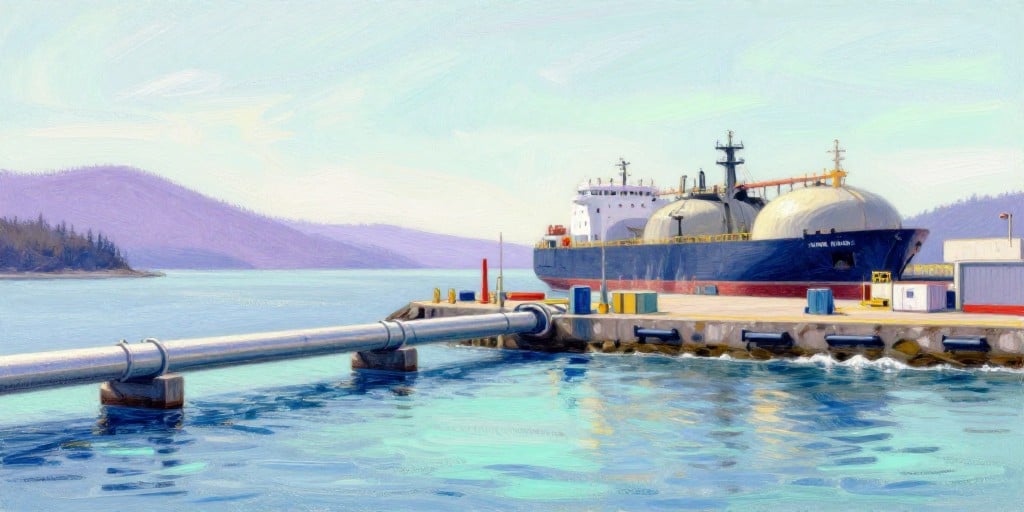
Pembina Pipeline Corp. Eyes Potential LNG Development at Bish Cove, British Columbia
Pembina Pipeline Corporation is reportedly exploring involvement in a new liquefied natural gas (LNG) development at Bish Cove on the northern coast of British Columbia. The site was previously pursued by Chevron and its partners but was abandoned in 2021 when global LNG prices fell sharply. Recent reports suggest that, amid geopolitical tensions in the Middle East that have reshaped energy supply dynamics, Pembina and other developers are re‑examining the feasibility of the location.
Strategic Context
- Geopolitical Shifts: Escalating tensions in the Middle East have disrupted conventional gas supply routes, creating a renewed appetite for LNG projects that can diversify source regions and secure supply chains to Asia.
- Regional Development Plans: British Columbia’s government has pledged to double natural gas production by 2032, while federal incentives for LNG projects have further amplified the sector’s attractiveness.
- Infrastructure Synergies: Enbridge holds a stake in a southern British Columbia LNG project and owns a 471‑km pipeline that could serve as a supply corridor to Bish Cove if the project proceeds.
Bish Cove Ownership and Community Involvement
The Haisla Nation acquired the Bish Cove assets last year through Bish LNG GP Ltd. They have announced a forthcoming feasibility study to evaluate the site’s potential, with any subsequent development decisions requiring community approval. Although the Haisla may ultimately opt against further development, they remain open to partnerships that would allow the site to contribute to Canada’s expanding LNG export capacity.
Pembina’s Existing LNG Footprint
Pembina is already a minority shareholder in Cedar LNG, a nearby plant that is 70 % complete. The Haisla also hold a controlling stake in Cedar LNG, indicating an established collaborative relationship between the two parties. Pembina’s potential engagement with the Bish Cove project would align with its broader strategy to bolster LNG infrastructure in western Canada, positioning the region as a key conduit between North American gas supplies and Asian markets.
Market Dynamics and Future Outlook
- Supply‑Demand Fundamentals: Global LNG demand is expected to grow steadily, driven by Asia’s energy needs and a gradual shift away from coal. However, short‑term price volatility remains influenced by weather patterns, refinery maintenance schedules, and geopolitical events.
- Technological Innovations: Advancements in cryogenic technology and carbon‑capture storage are reducing the operational costs of LNG facilities, making projects that were previously marginally viable now economically attractive.
- Regulatory Impacts: Canadian federal support for LNG projects, coupled with provincial incentives, is creating a conducive regulatory environment. Nonetheless, projects must navigate rigorous environmental assessments and community consent processes.
While Pembina’s involvement remains in the preliminary stages and the company has not made a public statement confirming its plans, its interest in Bish Cove reflects a sustained commitment to expanding Canada’s LNG export infrastructure. The outcome will hinge on the feasibility study’s findings, community approvals, and alignment with broader energy transition trends that balance immediate trading opportunities with long‑term market evolution.