
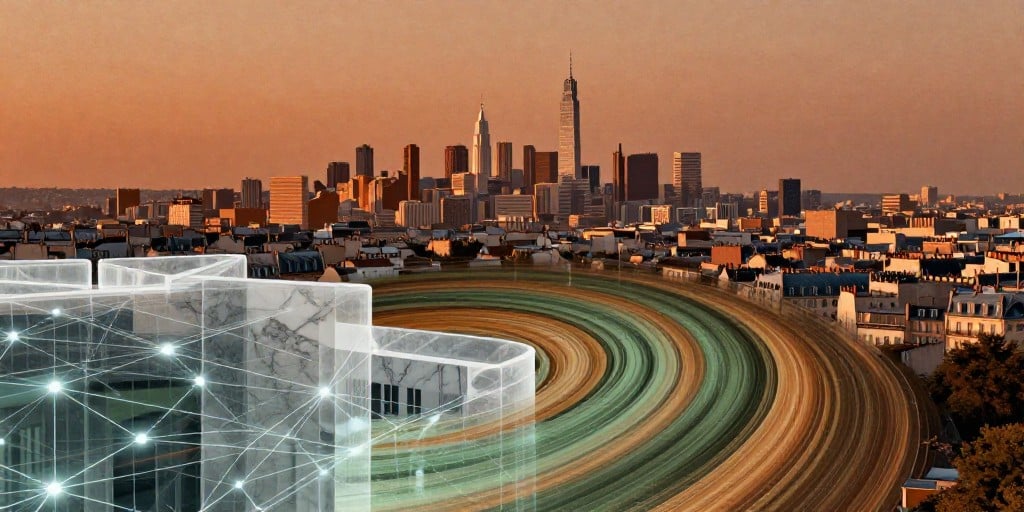
The Parisian Pulse: Digital‑Physical Synergy and Generational Dynamics Shape Luxury’s Future
The Paris market opened on a modestly positive note, with the CAC 40 edging higher in early trade. Among its largest constituents, LVMH Moët Hennessy Louis Vuitton continued to dominate market capitalisation, underscoring its entrenched leadership in the luxury sector. Yet, beneath the surface of a resilient index lie nuanced shifts that hint at broader transformations across consumer behaviour, demographic trends, and cultural currents.
Uneven Geographical Momentum and Product‑Specific Resilience
The luxury goods industry is experiencing a patchwork of sales performance. The United States has posted a discernible rebound, driven by a resurgence of high‑net‑worth consumers and an appetite for experiential luxury. In contrast, Europe’s slowdown—largely attributed to a decline in affluent foreign buyers from the Middle East—has tempered growth. Within the European market, jewellery retains relative strength, whereas cosmetics, leather goods, and footwear face headwinds.
These disparities translate into mixed outcomes for luxury stocks. While LVMH and peers have posted modest gains, the broader market softness signals that luxury firms must navigate a complex landscape of shifting demand patterns and regional sensitivities.
Real‑Estate as a Strategic Lever in a Digitally‑Enabled Era
Paris’s luxury ecosystem is pivoting toward experiential, high‑end real‑estate developments that blur the lines between private residences and hotel‑style amenities. Projects that offer concierge services, wellness suites, and curated cultural programming cater to a new generation of consumers who value curated experiences over ownership of discrete products.
High‑profile acquisitions by industry leaders—most notably recent purchases by LVMH’s CEO—demonstrate sustained confidence in prime properties. These moves are not merely real‑estate investments; they represent a strategic response to an era in which consumers seek immersive, multisensory encounters that digital platforms alone cannot deliver.
Digital Transformation Meets Brick‑and‑Mortar: The New Consumer Experience
The intersection of digital and physical retail is redefining how luxury brands engage with consumers. Augmented‑reality try‑on experiences, personalised AI‑driven recommendations, and blockchain‑based provenance tracking are increasingly integrated into flagship stores. The result is a hybrid ecosystem where online discovery leads to curated in‑store interactions, creating a seamless narrative that spans screens and spaces.
Generational spending patterns amplify this trend. Millennials and Gen Z, who prioritise authenticity and sustainability, are more likely to engage with brands that offer transparent supply chains and digital storytelling. Meanwhile, Gen X and Baby Boomers still value the tactile luxury of in‑store purchasing but are increasingly comfortable with online pre‑ordering and virtual consultations.
Societal Shifts as Market Catalysts
Several societal changes are converging to create tangible business opportunities:
| Societal Shift | Consumer Behaviour | Business Opportunity |
|---|---|---|
| Demographic aging in Europe | Increased demand for heritage and quality | Luxury brands can expand heritage‑centric lines and offer personalized service for older clientele |
| Urbanisation and cosmopolitan lifestyles | Preference for boutique, experiential retail | Development of micro‑stores and pop‑ups that deliver curated experiences |
| Digital native culture | Expectation of omnichannel presence | Investment in AR/VR, AI personalization, and e‑commerce ecosystems |
| Sustainability consciousness | Demand for ethical sourcing and transparency | Adoption of circular economy models, transparent supply chains, and eco‑friendly product lines |
| Cultural fluidity | Openness to cross‑cultural luxury narratives | Collaborative ventures with local artisans and cross‑border product lines |
The luxury sector’s ability to translate these macro‑trends into actionable strategies—such as selective product focus, real‑estate expansion, and digital‑physical integration—will dictate its competitive positioning in the coming years.
Forward‑Looking Outlook
Experience‑Centric Retail Brands that embed experiential elements—virtual reality showcases, in‑store concierge services, and lifestyle events—will better capture the attention of younger demographics and reinforce brand loyalty.
Digital‑Physical Symbiosis Investments in AI‑driven inventory management, AR fitting rooms, and blockchain provenance will create trust and convenience, bridging the gap between online convenience and offline luxury.
Selective Product Focus Concentrating resources on high‑margin, resilient categories such as jewellery, while innovating within pressured segments (e.g., cosmetics) through sustainable formulations and limited‑edition collaborations, will optimise profitability.
Strategic Real‑Estate Premium real‑estate developments that offer integrated hospitality services can serve dual purposes: generating revenue streams and enhancing brand prestige.
Demographic‑Tailored Marketing Leveraging data analytics to segment audiences by age, geography, and lifestyle will allow brands to craft messaging that resonates with each cohort, from Gen Z’s value‑based purchasing to Boomers’ heritage appreciation.
In sum, the luxury market is at a crossroads where societal evolution meets commercial opportunity. By harmonising digital innovation with tactile experiences, and by aligning product strategies with shifting demographics, luxury firms can navigate current volatility and unlock sustained growth.