
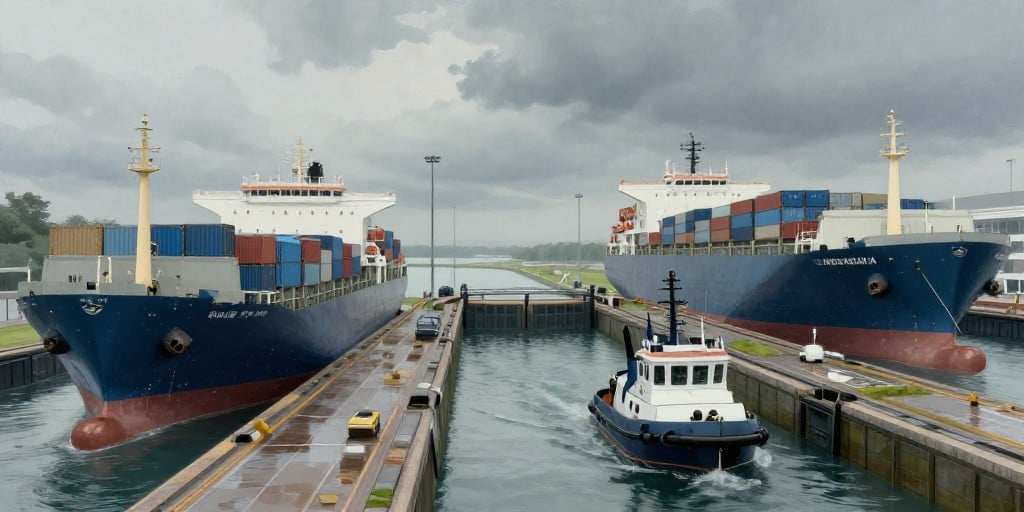
Panama Canal Congestion Drives Innovative LNG/LPG Shipping Tactics
The increasing congestion in the Panama Canal has triggered a measurable shift in liquefied natural gas (LNG) and liquefied petroleum gas (LPG) shipping patterns, with significant implications for major gas carriers such as ENEOS HOLDINGS INC. Shipping analysts observe that extended wait times—reaching unprecedented durations—are compelling gas tankers to explore alternative routes and operational strategies.
Tactical Cargo Transfer Off the Pacific Coast
A recent incident off Panama’s Pacific coast illustrates this adaptive behavior. A Panamax tanker, constrained by the canal’s bottleneck, offloaded its cargo to a Neopanamax vessel. The Neopanamax then traversed the canal, effectively shuttling the cargo while reducing the overall journey time to Asian markets. This maneuver, chartered by a prominent European oil major, exemplifies how shipping lines are optimizing vessel movements to mitigate idle time at the canal’s congested entry and exit points.
ENEOS’ Strategic Fleet Utilization
ENEOS’ ship‑management division played a pivotal role in the cargo transfer operation. By transferring cargo from the Panamax vessel to a Neopanamax tanker, ENEOS leveraged its fleet mix to sustain a steady flow to key customers. Opting to shuttle the Neopanamax vessel—rather than routing it through the lengthier Pacific transit—demonstrates a deliberate balancing act between operational costs and the premium associated with expedited transit. While the canal’s constraints disproportionately affect larger Neopanamax vessels, the relative stability of Panamax routes offers carriers a degree of flexibility for managing mixed‑fleet operations.
Geopolitical and Climatic Amplifiers
The broader context of these logistical adjustments includes heightened geopolitical tensions in the Middle East and climatic phenomena such as El Niño, which collectively exacerbate shipping delays. These factors underscore the interconnectedness of global energy markets and reinforce the necessity for carriers to maintain agility in the face of unpredictable disruptions.
Implications for the LNG and LPG Supply Chain
ENEOS’ involvement in the recent transfer operation underscores its ongoing commitment to efficient, responsive logistics within the evolving LNG and LPG supply chain. By adapting vessel assignments and optimizing routing decisions, the company demonstrates how strategic fleet management can offset infrastructural bottlenecks and sustain market reliability.
In sum, the Panama Canal’s congestion is reshaping LNG and LPG shipping dynamics. Major carriers like ENEOS are responding with tactical fleet adjustments and route optimizations that reflect broader industry trends toward operational resilience and cost‑effective supply chain management.