Pan American Silver Corp. Announces Significant Zinc‑Dominated Intersections at the Cosuo Project, Bolivia
Pan American Silver Corp. (PAN AMERICAN SILVER CORP) has released new assay data from its Phase 2 diamond drilling program at the Cosuo Project, reporting a substantial zinc‑dominated interval that extends over a hundred metres. Within this broader zone a narrower, high‑grade segment containing significant zinc and silver values has been identified. The discovery also records modest concentrations of copper, lead, gold, bismuth, and antimony, underscoring the polymetallic character of the deposit.
Examination of the Mineralisation Architecture
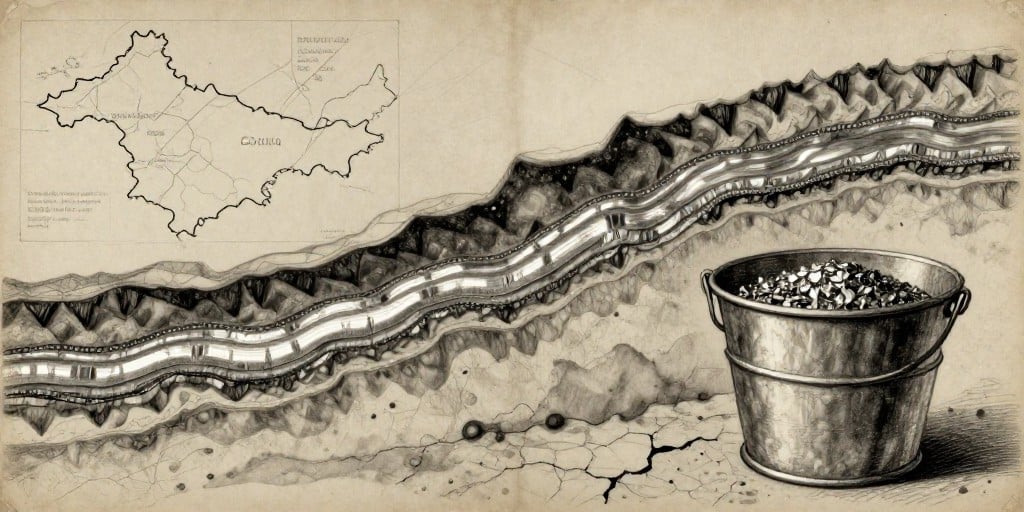
The drill hole CO‑0015 intersected an extensive interval of zinc‑rich mineralisation that appears to be structurally controlled by a northwest‑trending fault. The fault zone is marked by veinlets, breccia, and disseminated sulfides across a variety of lithologies, including volcanic units and underlying conglomerates. Alteration patterns are consistent with hydrothermal activity, showing silicification and chlorite‑calcite in volcanic rocks, and clay‑rich alteration in the conglomerates. These features suggest the mineralisation may belong to an upper or distal segment of a larger hydrothermal system that is also responsible for the high‑grade silver occurrence Pocaita Chica.
Implications for Resource Potential
While the new data reinforce the potential for deeper, more extensive mineralisation at nearby Jalsuri North, the company cautions that further drilling is required to test continuity and delineate the full extent of the mineralised zone. The identification of multiple metal systems—zinc, silver, copper, lead, gold, bismuth, and antimony—could translate into a high‑grade, multi‑metallic resource, but the economic viability remains contingent on:
- Grade‑Depth Continuity – The extent to which the high‑grade segment is continuous laterally and downwards.
- Processing Complexity – The feasibility of extracting multiple metals efficiently, given the polymetallic nature of the deposit.
- Regulatory and Political Risk – Bolivia’s mining regulations and potential changes in licensing or taxation that could affect project economics.
Management expressed confidence that the emerging data point to a substantial resource, yet it emphasized that additional exploration and metallurgical testing will be required before any economic assessment can be made. The company’s disciplined exploration strategy is intended to unlock the value of the Cosuo Project and advance its portfolio of high‑grade silver assets.
Market Context and Competitive Dynamics
Pan American Silver’s focus on high‑grade silver assets aligns with a broader market trend toward premium, low‑impurity metals, driven by demand in electronics, renewable energy, and jewelry sectors. In this competitive landscape, the ability to produce a multi‑metallic resource could provide a diversification advantage, mitigating exposure to price swings in any single commodity. However, the market for zinc is also evolving, with increasing demand from battery cathode development and construction materials, suggesting that the discovery could unlock additional revenue streams if successfully integrated into the company’s production pipeline.
Risks and Opportunities
| Opportunity | Risk |
|---|---|
| Potential for a high‑grade, polymetallic deposit that could improve the company’s resource base. | Uncertain economic viability due to complex metallurgy. |
| Diversification of revenue streams across zinc, silver, copper, and other metals. | Political and regulatory uncertainties in Bolivia that could delay permitting or increase costs. |
| Alignment with market demand for low‑impurity metals for batteries and electronics. | Commodity price volatility could impact projected cash flows. |
| The possibility of a larger hydrothermal system that could be explored across adjacent projects. | Limited data on depth continuity may delay resource definition. |
Conclusion
Pan American Silver’s latest assay results provide a promising glimpse of the Cosuo Project’s mineral potential, especially in terms of zinc and silver. However, the true value of these discoveries will depend on the ability to confirm continuous, high‑grade intervals and to develop efficient, cost‑effective extraction and processing pathways. As the company continues its disciplined exploration strategy, investors and analysts should monitor subsequent drilling outcomes, metallurgical test results, and any regulatory developments that could influence the project’s trajectory.