
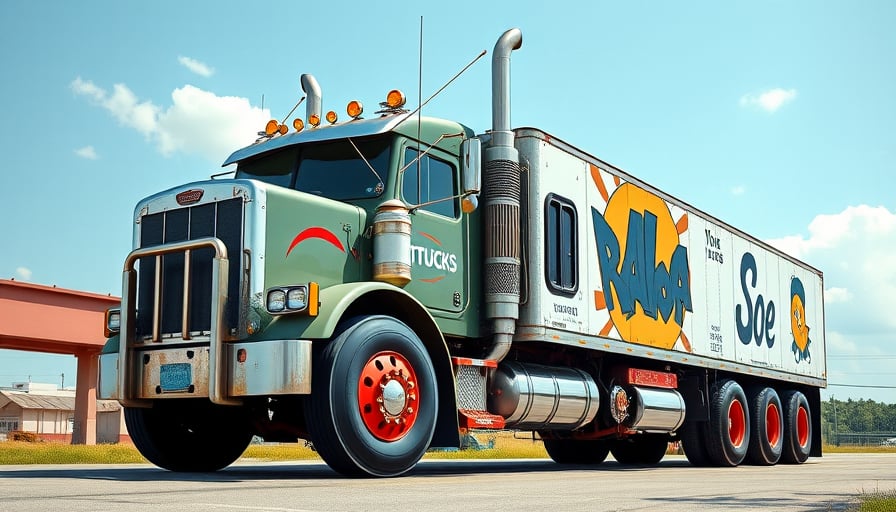
PACCAR Inc. Maintains Steady Market Performance Amid Positive Outlook
PACCAR Inc. closed its trading day with a share price that remained largely unchanged, following an early‑day uptick that suggested market optimism. Despite the muted price action, the company’s financial fundamentals and analyst sentiment indicate a resilient position within the industrial machinery sector.
Analyst Commentary and Target Price Revision
Bernstein analysts have reaffirmed their positive stance on PACCAR, raising the 2026 target price to a level that reflects expectations of continued stability for the light, medium, and heavy‑duty truck market. The revision is grounded in several key factors:
- Robust Order Pipeline: PACCAR’s order books for both new fleet acquisitions and aftermarket services show consistent demand, particularly in the commercial and defense sectors where truck usage remains high.
- Cost Management: The company’s disciplined approach to cost control, including hedging of raw material inputs and streamlined production processes, helps safeguard margins against commodity price volatility.
- Service and Parts Revenue: PACCAR’s aftermarket services—spare parts, repair, and maintenance—provide a steady revenue stream that offsets cyclical fluctuations in new truck sales.
Comparative Performance Across Peers
Within its peer group, PACCAR’s market reaction aligns with broader industry trends. Several competitors posted modest gains early in the session, buoyed by positive earnings reports and favorable commodity outlooks. Conversely, a few peers recorded minor declines, driven by supply chain constraints and currency headwinds. Overall, PACCAR’s performance sits comfortably in the middle of the pack, underscoring its relative stability.
Sectoral and Economic Context
The industrial machinery sector, which encompasses truck manufacturing, remains sensitive to macroeconomic variables such as infrastructure spending, trade policy, and freight demand. PACCAR’s exposure to multiple truck categories—light, medium, and heavy-duty—provides diversification that mitigates sector-specific risk. Additionally, the company’s strategic investments in electrification and autonomous technologies position it favorably for the transition to more sustainable mobility solutions.
Economic indicators such as GDP growth, manufacturing index figures, and logistics activity levels continue to influence demand for commercial vehicles. PACCAR’s ability to maintain a balanced product mix and leverage service contracts allows it to navigate these dynamics effectively.
Conclusion
PACCAR Inc.’s share price stability, coupled with a bullish analyst outlook, reflects a company that is well‑positioned to sustain performance amid evolving industrial and economic conditions. Its comprehensive strategy—spanning robust order flow, disciplined cost management, and diversified revenue streams—reinforces its standing in the light, medium, and heavy‑duty truck markets, while also preparing it for future shifts toward electrification and advanced automation.