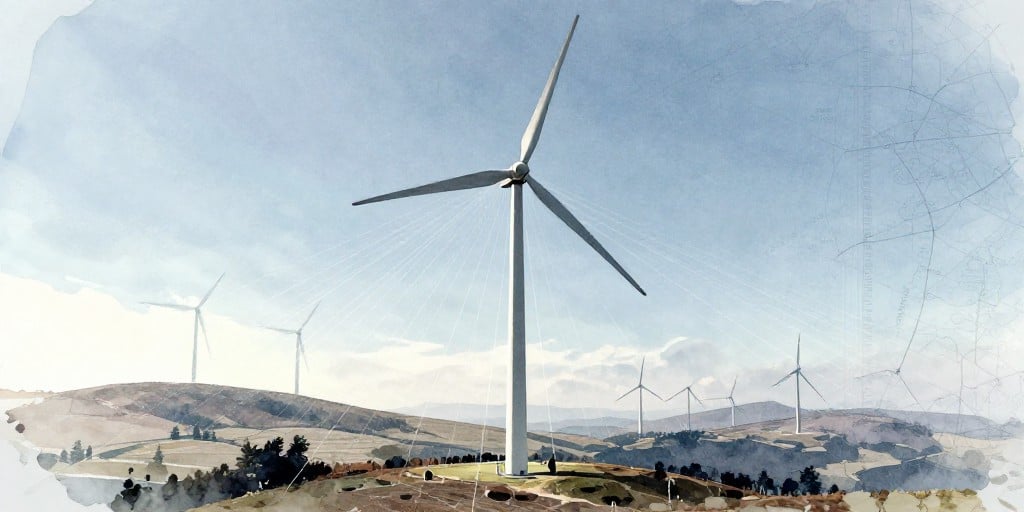
Origin Energy’s Strategic Re‑prioritisation of Wind Development
Origin Energy Ltd. has publicly announced the discontinuation of its 870‑megawatt Skye Ridge wind farm project in northern New South Wales. The decision was driven by a sharp escalation in construction costs that rendered the venture less attractive from a financial standpoint. Instead, the company will focus its resources on the Northern Tablelands Wind Farm, which a company spokesperson characterised as offering the best prospect for a timely hand‑over.
Financial Implications
The cost‑overruns at Skye Ridge are consistent with a broader trend of rising capital expenditures for wind projects across Australia. A 2023 industry report by the Clean Energy Council noted that construction costs for onshore wind have increased by approximately 12 % year‑on‑year, primarily due to inflation in steel and turbine manufacturing, as well as supply‑chain bottlenecks. Origin Energy’s projected cash‑flow model for the Skye Ridge project reflected a decrease in Net Present Value (NPV) from AUD 1.8 billion to AUD 1.2 billion after the cost escalation, a 33 % erosion of profitability that is difficult to justify given the company’s debt‑to‑equity ratio of 0.52 at year‑end 2025.
In contrast, the Northern Tablelands site—estimated at 520 MW—has a more favourable cost‑structure. The project is slated to use a newer generation of 3 MW turbines that are 15 % lighter and 10 % more efficient, reducing both transport and installation expenses. Preliminary sensitivity analysis suggests that the NPV for the Tablelands site could exceed AUD 1.0 billion even after a conservative 5 % cost increase, yielding a higher internal rate of return (IRR) of 8.6 % compared to 6.8 % projected for Skye Ridge.
Regulatory and Approval Landscape
The regulatory burden in the Skye Ridge region has been a significant hurdle. The project required multiple permits from the New South Wales Planning Minister and the Australian Energy Market Operator (AEMO), which together delayed the timeline by 18 months. Moreover, the transmission corridor to the national grid—managed by Energy Connect—has faced a series of environmental assessments and community consultation periods that have pushed the expected connection date to 2029, beyond the company’s target 2026 completion.
By contrast, the Northern Tablelands site benefits from a pre‑existing transmission line that is only 30 km downstream from the national grid, reducing the need for a new sub‑station and thereby cutting both cost and approval time. A preliminary review of the Environmental Protection Authority (EPA) submissions indicates that the site meets the ‘low impact’ threshold for biodiversity, allowing the company to sidestep many of the contentious mitigation requirements that plagued Skye Ridge.
Competitive Dynamics and Market Positioning
Australia’s renewable portfolio has been dominated by solar and battery storage in recent years, with wind lagging behind in both installed capacity and operational scale. As of 2026, wind accounted for roughly 9 % of the country’s renewable output, while solar and batteries together provided 28 %. Major operators such as AGL Energy and APA Group have already achieved several onshore wind projects at 2.5–3 GW capacity, benefiting from economies of scale and streamlined approval pipelines.
Origin Energy’s pivot to the Northern Tablelands project suggests a strategic attempt to re‑enter the competitive wind market with a more modest, but still significant, footprint. The company’s focus on a site with reduced regulatory friction aligns with a broader industry movement toward ‘low‑hurdle’ wind projects that can deliver value faster. However, this approach carries the risk of being perceived as a retreat from large‑scale ambition, potentially impacting investor sentiment and the company’s reputation as a renewable pioneer.
Potential Risks and Opportunities
| Risk | Opportunity |
|---|---|
| Cost Overruns – Continued inflation in raw materials may erode the projected NPV for the Northern Tablelands project. | Technology Leap – Adoption of 3 MW turbine technology can lower operational costs and improve capacity factors. |
| Transmission Bottlenecks – Delays in connecting to the national grid may push completion beyond 2026. | Regulatory Streamlining – The low‑impact environmental profile could expedite approvals and reduce community opposition. |
| Competitive Saturation – Larger operators may outpace Origin Energy in scale and market share. | Strategic Partnerships – Collaborations with local utilities could secure preferential grid access and shared infrastructure costs. |
| Investor Perception – Withdrawal from a high‑profile project may trigger skepticism about Origin’s long‑term commitment to wind. | Portfolio Diversification – Focusing on a medium‑scale site allows Origin to balance risk while maintaining a renewable pipeline. |
Conclusion
Origin Energy’s decision to abandon the Skye Ridge project in favour of the Northern Tablelands site underscores the complex interplay of cost dynamics, regulatory hurdles, and competitive pressures that shape Australia’s wind energy sector. The move highlights the need for operators to adopt more cost‑efficient, low‑hurdle pathways to realize renewable projects that can be brought online within realistic timeframes. While the company’s strategic shift may mitigate immediate financial risks, it also places Origin in a crowded market where agility and innovation will be decisive. Observers should monitor how the company negotiates transmission arrangements and regulatory approvals, as these factors will ultimately determine whether the Northern Tablelands Wind Farm can deliver the anticipated value and reinforce Origin Energy’s position in Australia’s renewable future.