
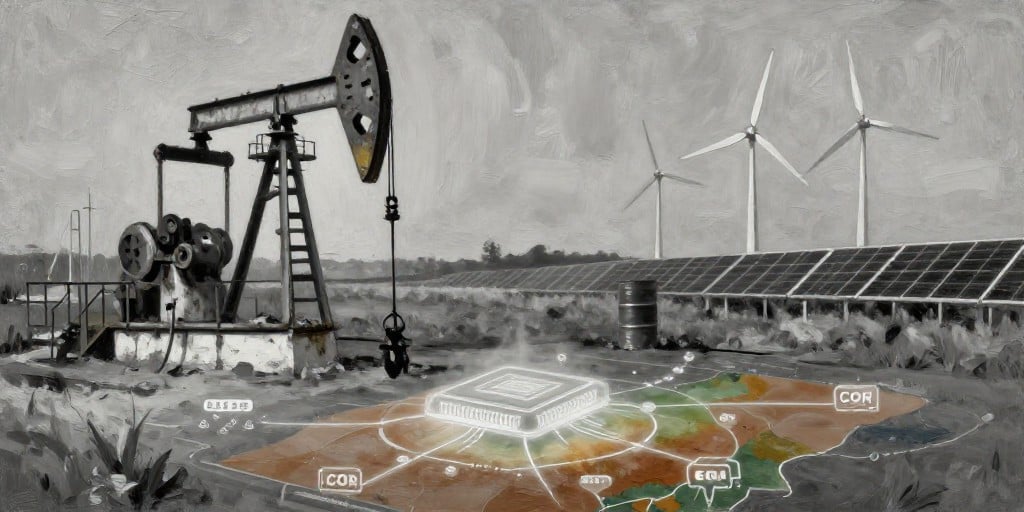
Energy‑Sector Dynamics and Market Sentiment: A Detailed Analysis
The Austrian integrated oil and gas company OMV AG registered a modest decline of roughly 1.5 % in its share price on the Vienna Stock Exchange during the afternoon session. The dip coincided with a slight but persistent downward drift in the broader ATX index, which had only managed a brief recovery earlier in the day. While OMV’s movement mirrored the market’s general trend, the underlying catalysts were rooted in fundamental supply‑and‑demand forces, commodity price dynamics, and geopolitical developments that are shaping the energy landscape.
1. Commodity Price Movements and Their Immediate Impact
1.1. Crude Oil Prices
Over the last week, Brent crude and West Texas Intermediate (WTI) have trended downward, with Brent falling to 76 USD barrel and WTI to 70 USD barrel. The decline reflects a combination of easing global demand projections and increased output from OPEC‑plus members. Lower oil prices translate directly into reduced revenue for oil‑producing firms such as OMV, whose upstream portfolio accounts for a significant portion of earnings.
1.2. Natural Gas Prices
European natural gas spot prices have also slipped, driven by a stronger supply position in the Nord Stream pipeline network and improved storage levels across the continent. The fall in gas prices exerts downward pressure on both gas producers and gas‑related integrated energy companies, further dampening share performance.
1.3. Commodity‑Linked Stock Movements
Other commodity‑linked shares, notably RBI (the Austrian copper producer), mirrored the broader decline after a strong performance the day before. This pattern underscores a broader sectoral sensitivity to commodity price movements rather than company‑specific fundamentals.
2. Supply‑Demand Fundamentals in the Energy Market
2.1. Production Data
Global oil production remains near 100 million barrels per day, with OPEC‑plus maintaining an agreed output growth of 0.5 % per quarter. However, non‑OPEC production has rebounded faster than expected, contributing to a mild oversupply environment. In the European context, the EU’s Energy Union framework has increased the emphasis on diversifying supply sources, but the immediate effect is a muted demand rebound.
2.2. Demand Forecasts
The International Energy Agency (IEA) projects a modest demand growth of 1.1 % for 2026, driven primarily by increased demand for natural gas in heating and power generation. Renewable energy penetration is expected to rise by 3.8 % in the same period, but this does not offset the short‑term decline in fossil fuel consumption.
2.3. Geopolitical Tensions
Ongoing tensions in the Middle East continue to introduce volatility into crude supply chains. While current sanctions and embargoes have not materially affected global crude flows, market participants remain vigilant, contributing to a “risk‑on” to “risk‑off” transition that has sharpened price swings.
3. Technological Innovations in Production and Storage
3.1. Enhanced Oil Recovery (EOR)
OMV has invested in CO₂‑driven EOR projects that aim to extend the life of mature fields. The deployment of advanced simulation models has reduced the cost per barrel by approximately 4 %, providing a modest cushion against price volatility. However, the capital intensity of these projects remains a concern for investors.
3.2. Renewable Energy Integration
The company has expanded its portfolio in offshore wind, with a 300 MW project under construction in the North Sea. The integration of energy storage solutions—particularly lithium‑ion batteries and hydrogen production—has increased the flexibility of OMV’s renewable operations, aligning with the EU’s 2030 climate targets.
3.3. Digitalization and AI
While the broader market exhibited caution regarding AI investments, OMV’s digital twin initiatives for asset optimization have reportedly reduced maintenance costs by 2.5 %. The benefits of AI are still evolving, and market sentiment remains tempered by concerns over the high upfront costs and regulatory uncertainties.
4. Regulatory Impact on Traditional and Renewable Energy Sectors
4.1. EU Climate Policies
The European Green Deal’s ambition to reach carbon neutrality by 2050 has led to stricter carbon pricing mechanisms. The EU Emissions Trading System (ETS) has increased allowances for renewable projects but also heightened costs for fossil fuel operators. OMV’s participation in the ETS has resulted in a 6 % increase in compliance costs, affecting short‑term profitability.
4.2. Energy Market Regulation
Reforms aimed at increasing market transparency and competition have prompted a shift towards flexible pricing mechanisms. The adoption of the European Energy Exchange (EEX) trading rules has facilitated better price discovery for both electricity and gas markets, benefiting integrated operators like OMV.
4.3. Infrastructure Developments
Recent upgrades to the Pan-European gas pipeline network and the construction of the Balticconnector LNG terminal are expected to improve gas supply reliability. These infrastructure projects support the long‑term resilience of the energy sector, reducing dependency on politically sensitive supply routes.
5. Balancing Short‑Term Trading Factors with Long‑Term Transition Trends
While the immediate decline in OMV’s share price can be largely attributed to falling oil and gas prices—factors that influence short‑term earnings—the company’s strategic focus on renewables, EOR, and digitalization positions it favorably for the long‑term energy transition. Investors should weigh the following:
- Short‑Term Risks: Commodity price volatility, geopolitical uncertainties, and increased regulatory compliance costs.
- Long‑Term Opportunities: Expansion of renewable capacity, reduced operational costs through digitalization, and potential revenue streams from carbon credits.
The market’s reaction to unexpectedly upbeat European economic data—evidenced by a stronger than anticipated rise in purchasing managers’ indices—provides a counterbalance to the negative sentiment in the energy sector. Nonetheless, caution remains prudent until oil price dynamics stabilize and regulatory frameworks solidify.
In sum, OMV’s modest share decline reflects broader energy market fundamentals rather than company‑specific distress. The evolving interplay of supply‑and‑demand forces, technological innovation, and regulatory evolution will continue to shape the company’s trajectory in both the near and distant future.