
OMV AG’s Dual Pivot: Solar Ambitions and a Chem‑Centric Turn
Contextualizing a Sudden Shift
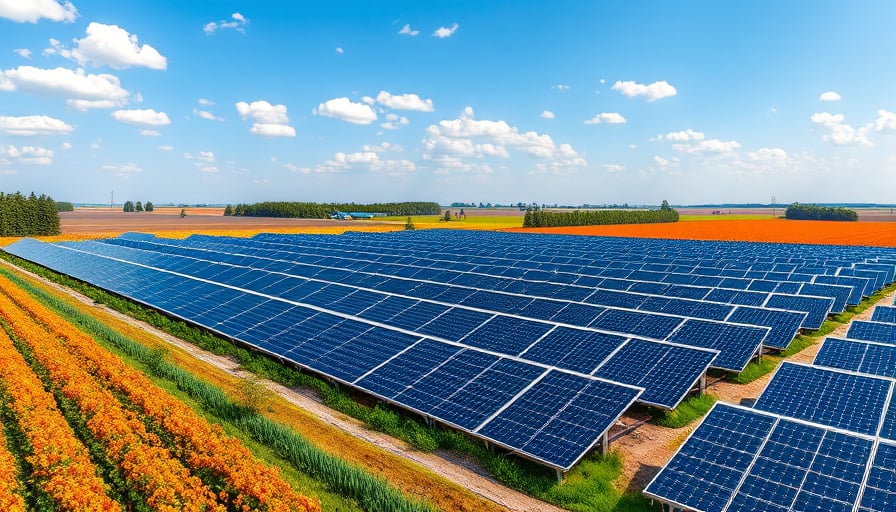
On 22 December 2025, OMV AG, Austria’s largest oil and gas company, disclosed a series of strategic moves that, at first glance, appear to be a classic example of a fossil‑fuel player diversifying into renewables. The company’s subsidiary, Petrom, announced a capital outlay for four photovoltaic (PV) parks in Romania, collectively expected to reach a net‑capacity of approximately 550 MW by 2026. The project is underpinned by a sizeable Romanian government grant, reflecting the state’s active role in boosting domestic renewable generation. Simultaneously, OMV confirmed a “major strategic shift” away from upstream exploration and production toward downstream chemical manufacturing, accompanied by a comprehensive cost‑cutting and workforce restructuring programme.
These announcements arrived during a period of elevated oil prices and a bullish equity environment. Market reactions were swift: OMV’s shares closed near the upper boundary of their 52‑week high, while the Vienna Stock Exchange’s ATX index recorded a modest gain. The article dissects the financial, regulatory, and competitive implications of OMV’s dual pivot, questioning whether the company is capitalizing on genuine market opportunities or merely following an industry‑wide trend.
1. The Solar Initiative: A Surface‑Level Opportunity?
1.1 Project Scale and Financing
The Romanian PV parks, totalling 550 MW, represent a sizeable addition to the country’s renewable portfolio. According to the International Renewable Energy Agency (IRENA), Romania’s solar capacity reached 2.2 GW in 2023; an incremental 550 MW would therefore account for roughly 25 % of its existing solar generation. The investment is expected to be financed through a combination of debt, equity, and the aforementioned state grant, which is likely structured as a partial subsidy or tax incentive.
From a cost‑of‑generation standpoint, the levelised cost of electricity (LCOE) for European PV in 2025 is projected at €45‑€55/MWh, a 10 % improvement over 2024 figures. Given the Romanian market’s favourable feed‑in tariff of €0.12/kWh, the PV parks could achieve a return on equity (ROE) in the range of 9‑11 % over a 20‑year horizon, assuming modest operational expenditures (OPEX).
1.2 Regulatory Environment and Policy Momentum
Romania’s Energy Ministry has recently announced a new Renewable Energy Action Plan, aiming to reach 35 % renewable energy consumption by 2030. The government’s grant for Petrom’s project is part of a broader incentive package that includes accelerated capital allowances and reduced electricity import tariffs for renewable producers.
However, regulatory risk persists. The 2024 EU Renewable Energy Directive (RED II) stipulates that 32 % of the EU’s energy mix must be renewable by 2030, with a focus on “green” technology. While Romania is compliant, potential future policy shifts—such as tighter emissions standards for non‑renewable plants or adjustments to feed‑in tariffs—could erode project margins.
1.3 Competitive Dynamics
The Romanian solar market is currently dominated by a handful of large utilities and international developers, such as EDF and Iberdrola. Petrom’s entry may be perceived as a strategic move to gain a foothold in a growing market, leveraging its existing infrastructure and local expertise. Nonetheless, the company faces competition from established renewable developers who possess extensive permitting experience and long‑term power purchase agreements (PPAs) with national grid operators.
2. Transition to Chemicals: Underlying Drivers and Risks
2.1 Strategic Rationale
OMV’s pivot toward chemicals reflects a broader industry trend wherein upstream producers seek downstream value creation amid declining oil margins. Chemicals offer higher price volatility but also the potential for diversified revenue streams. The company’s decision to implement large cost‑cutting measures and workforce restructuring signals an attempt to streamline operations and align resources with the new focus.
2.2 Financial Implications
- Capital Allocation: OMV’s balance sheet indicates a free cash flow of €1.2 billion for FY2025, with projected capex of €800 million earmarked for chemical plants and retrofits. This allocation represents a 66 % shift from upstream to downstream spending.
- Profitability: The chemical segment historically enjoys gross margins of 30‑35 %, compared to 20‑25 % in refining. If OMV can achieve similar efficiencies, the overall operating margin could improve by 3‑4 percentage points.
- Debt Load: Existing debt at €5 billion will increase to €6 billion due to capital investments. The debt‑to‑EBITDA ratio will rise from 1.5x to 1.8x, potentially impacting credit ratings and borrowing costs.
2.3 Market Dynamics
The European chemical market is highly competitive, dominated by multinationals such as BASF, Bayer, and Dow. Entry barriers include stringent environmental regulations, supply chain complexity, and capital intensity. OMV must secure PPAs for raw material inputs (ethane, propylene) and develop relationships with key downstream customers to mitigate market risk.
3. Investor Sentiment and Market Reaction
3.1 Share Price Momentum
OMV’s stock closed near the upper limit of its 52‑week range post‑announcement, reflecting positive investor reception to both the solar project and the chemical pivot. Technical analysis indicates a bullish trend on the 50‑day moving average, but caution is warranted due to the company’s elevated debt profile.
3.2 Broader Market Impact
The Vienna Stock Exchange’s ATX index finished slightly higher, suggesting a market-wide appetite for energy transition stories. Nevertheless, the rise was modest, indicating that investors may be weighing potential upside against the structural risks of the strategic shift.
4. Skeptical Inquiry: Uncovering Potential Pitfalls
| Risk Factor | Analysis | Mitigation |
|---|---|---|
| Regulatory Shifts | Tightening of EU RED II targets or changes in national subsidies could reduce project profitability. | Secure long‑term PPAs; engage with policymakers; diversify across multiple jurisdictions. |
| Capital Expenditure Overrun | Large capex in chemicals may exceed budgets, straining cash flow. | Implement phased investment; use hedging for raw material costs; maintain contingency reserves. |
| Competitive Saturation | Established chemical players could undercut OMV’s pricing. | Focus on niche chemical markets; leverage existing refinery infrastructure for integrated production. |
| Workforce Restructuring Uncertainty | Potential morale decline and talent loss during transition. | Provide retraining programmes; maintain transparent communication; align incentives with new objectives. |
| Financing Constraints | Rising debt load could impact credit ratings and borrowing costs. | Stagger debt maturities; consider bond issuance at favourable rates; explore equity financing if necessary. |
5. Conclusion
OMV AG’s announcement of a sizable solar investment in Romania, coupled with a decisive pivot toward downstream chemicals, signals a bold attempt to reposition itself within an evolving energy landscape. While the solar project offers a potentially attractive return on equity in a supportive regulatory environment, the company’s long‑term success will hinge on managing capital intensity, regulatory uncertainty, and competitive pressures in the chemical sector. Investors should weigh the upside of diversified revenue streams against the increased financial leverage and operational challenges inherent in such a transformative strategy.