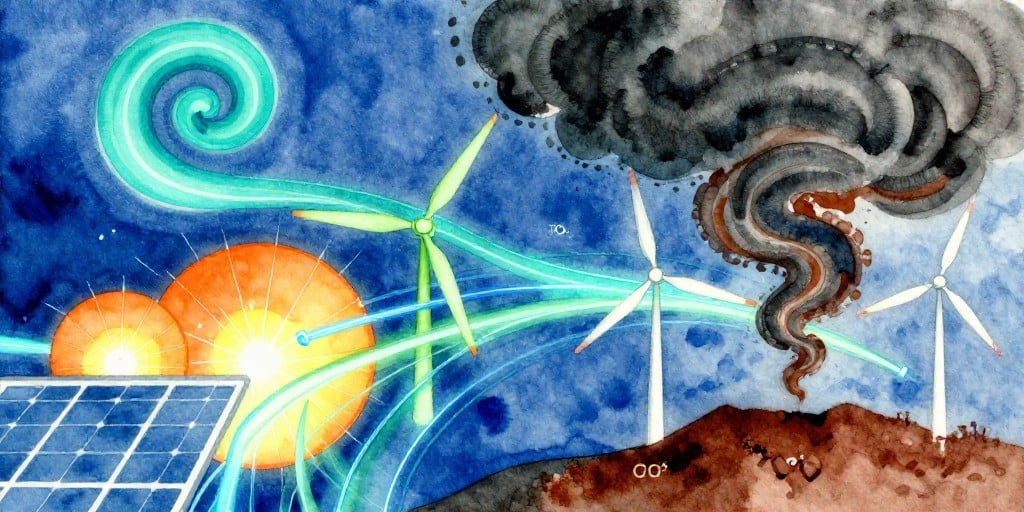
Corporate Update on OMV AG’s Energy Transition Strategy
Market Context and Recent Performance
On 5 November 2026, OMV AG scheduled a presentation of its latest strategy and outlook at the Oil & Gas Virtual Investor Conference. The session occurs amid a broader conference agenda that brings together exploration, production and sustainability‑focused firms, underscoring the industry’s pivot toward integrated energy solutions.
Austrian market data for the week preceding the conference showed the ATX index delivering modest gains, while the oil‑sector segment recorded a slight decline. Analysts attribute the downturn to a dip in crude prices, which in turn is linked to recent diplomatic developments between the United States and Iran. Within the ATX, OMV’s shares slipped, reflecting the broader softness in oil‑related stocks. Despite this decline, the company’s shares remain part of a portfolio that includes notable gains from the construction sector, where firms such as Strabag and Wienerberger performed well.
Regulatory Disclosure and Institutional Ownership
In its regulatory filings, OMV disclosed that the investment house BlackRock, Inc. had recently fallen below a five‑per‑cent ownership threshold. The notification, filed under German securities law, detailed the exact number of voting shares held directly and through various financial instruments. This disclosure highlights the dynamic nature of institutional ownership at OMV, with the holding hovering just above the reporting threshold before the recent adjustment.
Energy Market Fundamentals
Supply–Demand Dynamics
- Crude Supply: Global oil supply has remained relatively stable, with OPEC+ maintaining output levels. However, geopolitical tensions in the Middle East continue to introduce supply risk, while emerging economies maintain steady demand growth.
- Demand Shifts: The transition to lower‑carbon fuels is reshaping demand. The growth of electric vehicles and renewable energy capacity is gradually eroding the share of conventional oil in total energy consumption.
- Price Volatility: Short‑term price swings are driven by geopolitical events and inventory reports. In the long term, price trends are increasingly influenced by the pace of the energy transition and the deployment of carbon pricing mechanisms.
Technological Innovations
- Enhanced Oil Recovery (EOR): OMV has accelerated investment in carbon‑capture‑and‑storage (CCS) coupled with EOR to boost production while reducing emissions.
- Renewable Generation: The company is expanding its renewable portfolio, with new solar and wind projects in Austria and Central Europe, targeting a 30 % renewable share of its power mix by 2030.
- Energy Storage: Grid‑scale battery storage is being deployed to support renewable intermittency, and OMV is exploring hydrogen‑based storage solutions for long‑term balancing.
Infrastructure Development
- Pipeline Networks: OMV’s pipeline infrastructure is undergoing upgrades to improve efficiency and reduce leakages, supporting both oil transport and natural gas distribution for power generation.
- Carbon Capture Facilities: The company has announced a new CCS hub in the Austrian Alps, intended to capture up to 2 million tonnes of CO₂ annually and inject it into underground geological formations.
- Digitalization: Smart‑grid technologies and predictive maintenance are being integrated to optimize asset performance and reduce operational costs.
Regulatory Environment
- EU Climate Policies: The European Green Deal and the EU Emissions Trading System (ETS) impose stricter emissions caps, encouraging a shift toward low‑carbon operations.
- National Targets: Austria’s 2030 climate targets necessitate rapid decarbonization of the energy sector, influencing corporate strategies like OMV’s.
- Tax Incentives: Feed‑in tariffs and investment subsidies for renewables and CCS provide financial incentives that can offset transition costs.
Balancing Short‑Term Trading with Long‑Term Transition
- Short‑Term: OMV’s share price movements reflect current market sentiment tied to crude price fluctuations and geopolitical risk. Institutional ownership changes, such as BlackRock’s threshold crossing, can also create liquidity pressures or opportunities.
- Long‑Term: The company’s stated ambition to achieve net‑zero emissions by the middle of the decade aligns with global decarbonization trajectories. Investment in renewable capacity, storage, and CCS positions OMV favorably for the evolving regulatory and market landscape.
Conclusion
OMV AG’s forthcoming conference presentation and recent market developments illustrate a company actively managing its energy transition strategy while navigating current volatility. By integrating technological innovations, infrastructure upgrades, and regulatory compliance into its operational model, OMV seeks to balance immediate financial performance with the long‑term objective of a sustainable, low‑carbon energy future.