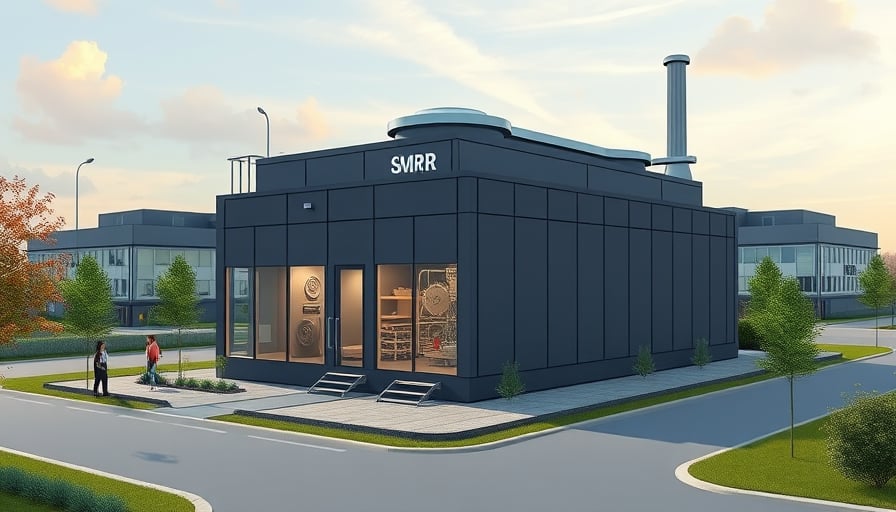
Corporate Update on Oklo Inc.’s Strategic Expansion into Nuclear Fuel Services
Oklo Inc. has announced a joint venture with Centrus Energy to develop nuclear fuel services in Ohio, a development that will reinforce the company’s standing within the advanced reactor sector. The partnership is designed to eliminate the current bottleneck in nuclear fuel supply by combining Oklo’s expertise in fuel fabrication for small modular reactors (SMRs) with Centrus’s long‑standing capabilities in fuel distribution and logistics. The collaboration is expected to bolster Oklo’s operational infrastructure and advance its broader strategy of accelerating the deployment of innovative reactor designs across the United States.
Technical Implications for Power Generation and Grid Stability
The partnership’s immediate benefit lies in ensuring a reliable, high‑quality fuel supply for next‑generation SMRs. SMRs typically operate at lower power densities than conventional large reactors, which reduces the frequency of refueling outages and minimizes downtime. By securing a consistent fuel feed, the joint venture will:
- Maintain Continuous Generation Capacity – SMR output is largely constant, providing a predictable base‑load contribution that mitigates the intermittency associated with renewable resources such as solar and wind.
- Enhance System Frequency Regulation – The steady power delivery from SMRs improves the grid’s ability to absorb sudden changes in demand or generation, thereby contributing to overall frequency stability.
- Support Ancillary Services – Advanced SMRs can offer voltage support, spinning reserve, and black‑start capabilities, essential for maintaining reliability during contingency events.
These attributes directly address a key challenge in modern power systems: the need for flexible, dependable baseload power that can complement variable renewable energy (VRE).
Renewable Energy Integration Challenges
The United States is undergoing a rapid transition toward increased renewable penetration, driven by aggressive policy targets and falling capital costs for wind and solar. However, the variability of VRE presents significant grid stability concerns, particularly in regions with limited storage or inter‑regional transmission capacity. The Oklo‑Centrus partnership could play a pivotal role by:
- Providing Dispatchable Backup – SMRs can operate at adjustable output levels to match renewable generation curves, smoothing the supply profile without the need for large‑scale battery installations.
- Facilitating Grid Modernization – A stable nuclear supply base encourages investment in flexible transmission systems and advanced grid management technologies, such as real‑time monitoring and automated fault response.
- Reducing Curtailment – Reliable baseload support reduces the necessity to curtail VRE output during periods of oversupply, improving overall renewable utilization rates.
Infrastructure Investment Requirements
Achieving a fully integrated, resilient grid that incorporates both SMRs and high shares of VRE will necessitate substantial infrastructure upgrades:
| Infrastructure Component | Investment Need | Strategic Impact |
|---|---|---|
| Transmission Corridors | $10–15 billion | Enables long‑distance delivery of SMR power and interconnection of remote renewable resources. |
| Substation Modernization | $3–5 billion | Supports voltage regulation and enhances fault tolerance. |
| Grid Management Systems | $1–2 billion | Provides real‑time analytics for dynamic dispatch of SMR output. |
| Battery Energy Storage | $5–8 billion | Complements SMRs for rapid ramp‑up/down to match VRE variability. |
The Oklo‑Centrus venture effectively reduces the capital outlay required for nuclear fuel supply chains, freeing capital that can be redirected toward these broader grid investments.
Regulatory Frameworks and Rate Structures
Federal and state regulators are increasingly adopting frameworks that recognize the value of low‑carbon, dispatchable generation. The Federal Energy Regulatory Commission (FERC) has issued orders that incentivize the integration of advanced nuclear technologies by:
- Facilitating Pathways to Market Participation – SMRs can be qualified as “clean” generation and allowed to bid in wholesale markets.
- Providing Long‑Term Power Purchase Agreements (PPAs) – State utilities are increasingly seeking long‑term PPAs with SMR developers to hedge against fossil fuel price volatility.
- Streamlining Licensing – The Nuclear Regulatory Commission (NRC) has introduced streamlined licensing pathways for small reactors, reducing lead times by 2–3 years compared to conventional reactors.
Rate structures are evolving to reflect the cost advantages of SMRs. In many regulated markets, the marginal cost of nuclear generation is comparable to, or lower than, that of conventional thermal plants, enabling utilities to offer competitive rates while maintaining fiscal prudence. The improved fuel supply chain will help maintain these low operating costs, reinforcing consumer affordability.
Economic Impact of Utility Modernization
Modernizing utilities to incorporate SMRs and high‑penetration renewables yields a cascade of economic benefits:
- Job Creation – Construction of SMR plants and transmission upgrades can generate thousands of skilled jobs, both in the short and long term.
- Reduced Fuel Cost Volatility – SMRs use highly enriched uranium in a closed fuel cycle, minimizing exposure to volatile natural‑gas markets.
- Lower Lifecycle Emissions – Integration of SMRs reduces reliance on natural‑gas peaker plants, decreasing CO₂ and NOₓ emissions.
- Consumer Price Stability – By providing a stable, low‑operational-cost baseload, SMRs help insulate consumers from spikes in energy prices associated with renewable curtailment or fossil fuel shortages.
The positive reception from research analysts—evidenced by upward revisions of price targets—underscores the market’s confidence that this partnership will enhance Oklo’s profitability and accelerate the commercialization of SMR technology.
Conclusion
Oklo Inc.’s joint venture with Centrus Energy marks a strategic advance in securing the nuclear fuel supply chain that underpins the viability of advanced SMRs. By addressing the supply bottleneck, the partnership not only strengthens Oklo’s operational capabilities but also contributes to broader grid reliability and stability. In the context of an accelerating renewable transition, the steady, dispatchable output from SMRs, supported by a robust fuel supply, will play an essential role in maintaining system frequency, minimizing renewable curtailment, and facilitating the necessary infrastructure investments. Regulatory incentives and evolving rate structures further bolster the economic case for integrating SMRs into the contemporary electricity mix, promising tangible benefits for utilities, investors, and end‑users alike.