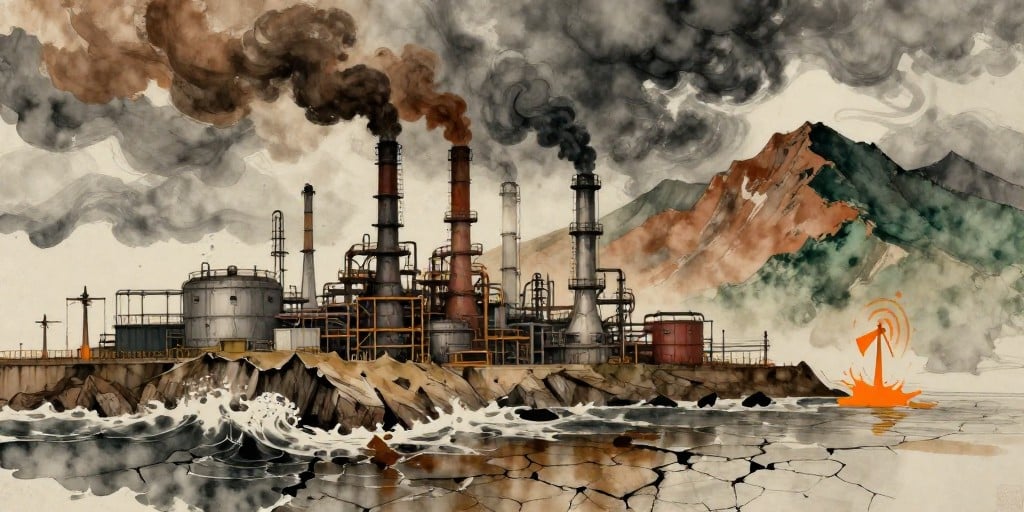
Energy Markets Respond to Renewed Middle‑East Tensions
Oil prices surged on Tuesday following reports of attacks on Saudi energy facilities, triggering a sharp rise in crude and tightening supply expectations. The spike in Brent and WTI—reaching 10‑day highs—was driven largely by fears of disruption to the Strait of Hormuz, a key transit route for about 20 % of global oil exports. This escalation in geopolitical risk translated into a pullback across the U.S. equity markets: the Dow, S&P 500, and Nasdaq all posted declines, while the energy sector bucked the trend, recording gains for major players such as Occidental Petroleum, Marathon Petroleum, and Valero Energy.
Supply–Demand Fundamentals
The short‑term supply shock is underscored by the latest production data. OPEC+ has maintained a 2 million‑barrel‑per‑day output cut for the first quarter, but the attacks have prompted the U.S. Strategic Petroleum Reserve (SPR) to consider emergency releases. Concurrently, inventories on the East Coast of the United States have fallen to their lowest levels since the 2020 pandemic‑induced shortfall, further tightening the market. Demand, meanwhile, remains robust: industrial output is rebounding from the pandemic slowdown, and the U.S. Federal Reserve’s dovish stance on monetary policy has encouraged corporate capital expenditures, boosting energy consumption.
Technological Innovations in Production and Storage
While geopolitical events dominate the headlines, underlying technological progress continues to shape the long‑term trajectory of the energy sector. In the production domain, advanced drilling techniques—such as managed pressure drilling (MPD) and high‑temperature, high‑pressure (HTHP) completions—have pushed the frontiers of deep‑water and onshore shale plays. In storage, the rapid expansion of lithium‑ion battery capacity, combined with emerging solid‑state technologies, is reducing the cost of renewable integration and mitigating the intermittency of wind and solar power. These innovations are expected to moderate the impact of supply shocks over the medium term by increasing the flexibility of the energy grid.
Regulatory Impacts on Traditional and Renewable Sectors
Regulatory developments continue to influence both traditional and renewable energy markets. The Biden Administration’s recent push for a clean‑energy transition, exemplified by the Inflation Reduction Act, has accelerated investment in solar, wind, and battery storage, while also imposing stricter emission standards on new coal and natural gas plants. In contrast, the Trump-era deregulation of the oil and gas industry has been reversed, with the current administration proposing more stringent oversight on fracking and emissions reporting. These policy shifts are reshaping the competitive landscape, prompting incumbents to diversify portfolios and invest in cleaner technologies.
Commodity Price Analysis and Infrastructure Developments
Crude futures are currently priced at $91.35 per barrel for delivery in the next 30 days, with a 4 % year‑on‑year increase. Natural gas prices have edged up 3 % in response to a tightening supply curve and higher refinery input costs. Meanwhile, the natural gas pipeline network is undergoing a series of expansions to alleviate regional bottlenecks, notably the construction of the Texas Eastern Midstream expansion. The resulting capacity increases are projected to bring regional prices closer to the national average by the end of 2026.
On the renewable front, the cost of solar photovoltaic (PV) installations has fallen 20 % over the past year, driven by economies of scale and improved manufacturing efficiency. Wind power costs have also declined, with offshore projects benefiting from advances in turbine design and floating platform technologies. These cost reductions are accelerating the adoption of renewables and reducing the levelized cost of energy (LCOE) to below $50 per megawatt‑hour in many markets.
Balancing Short‑Term Trading and Long‑Term Transition
In the short term, traders are closely monitoring geopolitical developments and inventory data to gauge price volatility. The Federal Reserve’s dovish stance—evidenced by its recent pause on rate hikes—provides a cushion for market participants, although concerns about inflationary pressures and the potential for tightening remain. Over the long term, the trajectory of the energy transition is expected to moderate the impact of supply shocks. Technological advancements in storage and production, coupled with regulatory support for renewables, are likely to enhance the resilience of the energy system.
The current market environment, marked by a sharp rise in oil prices amid Middle‑East tensions, underscores the intricate link between geopolitical risk, commodity pricing, and broader financial markets. Investors should remain attentive to both the short‑term dynamics of supply‑demand imbalances and the evolving policy landscape that shapes the future of energy production and consumption.