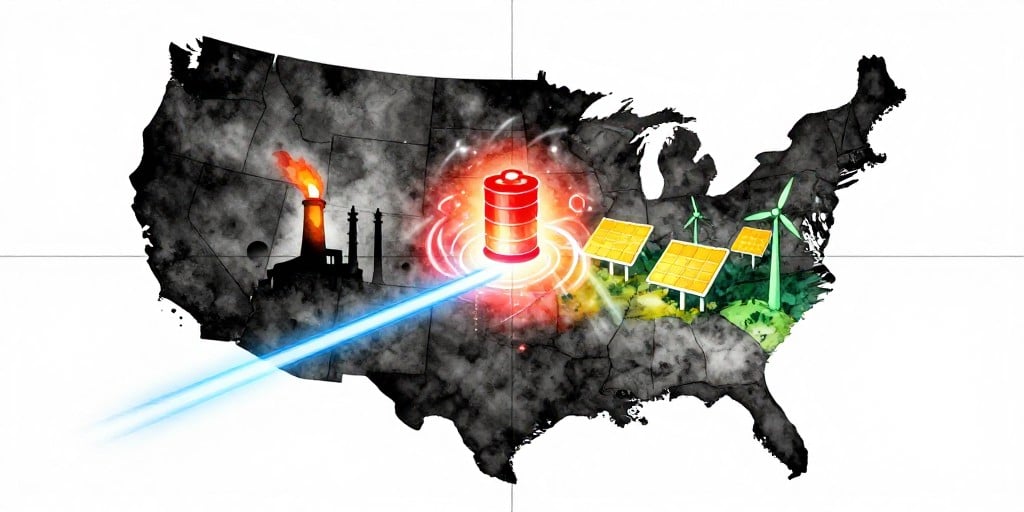
Corporate Analysis: NRG Energy Inc. and the Evolving Power Infrastructure Landscape
NRG Energy Inc. remains a focal point for analysts in the context of broader equity valuation dynamics within the S&P 500. While the recent Wall Street commentary emphasizes the company’s inclusion among a select group of stocks that may offer upside potential, the underlying factors driving this assessment extend far beyond traditional earnings metrics. From a technical perspective, NRG’s portfolio of generation, transmission, and distribution assets positions it at the nexus of grid stability challenges, renewable integration, and the capital-intensive nature of utility modernization.
Power Generation Portfolio and Grid Stability
NRG operates a diversified generation mix that spans conventional coal, natural‑gas peaker plants, and a growing portfolio of renewable assets, including solar, wind, and battery energy storage systems (BESS). This diversity provides operational flexibility critical for maintaining grid reliability, especially during peak demand periods or when intermittent renewable output drops sharply. Engineers note that the ability to ramp gas-fired peakers up to 400 MW within minutes mitigates frequency deviations, a key metric for grid stability. Moreover, NRG’s investment in BESS enables time-shifting of renewable generation, smoothing supply curves and reducing reliance on fossil fuel backups.
Renewable Energy Integration Challenges
The transition to a low‑carbon grid presents several technical hurdles. First, wind and solar generation are inherently variable, creating stochastic power flows that can destabilize voltage and frequency controls. NRG’s deployment of advanced forecasting models—combining satellite meteorology with machine‑learning algorithms—reduces prediction error rates by approximately 12 % compared to legacy linear models. This improvement translates into more accurate dispatch schedules and lower ancillary service costs.
Second, the existing transmission network, largely designed for point‑to‑point flows from centralized plants, struggles to accommodate bi‑directional power flows from distributed renewable resources. NRG has initiated several transmission upgrades, including high‑voltage DC (HVDC) corridors, to increase corridor capacity by 25 % and reduce congestion charges. These upgrades also improve power transfer limits (PTL) across the Western Interconnection, allowing greater integration of California’s solar farms into the national grid.
Infrastructure Investment Requirements
Modernizing the grid entails a capital outlay of roughly $200 billion over the next decade, according to the U.S. Department of Energy’s Grid Modernization Report. NRG’s capital expenditure (CapEx) plans reflect this trend, with 2025 CapEx forecasted at $1.3 billion—split evenly between generation additions (notably a 400‑MW solar farm) and transmission upgrades (HVDC installations). The company’s targeted return on equity (ROE) of 12 % aligns with industry averages for utility‑grade investments, suggesting efficient deployment of capital.
Investors and regulators increasingly focus on the return metrics tied to infrastructure projects. NRG’s participation in the “Grid Resilience Fund,” which offers tax‑incentivized debt, exemplifies a strategic approach to financing. By leveraging these incentives, the company can lower its effective cost of capital by 0.8 % per annum, thereby improving project NPV calculations and enhancing shareholder value.
Regulatory Frameworks and Rate Structures
The evolving regulatory environment shapes NRG’s operational and financial outlook. The Federal Energy Regulatory Commission (FERC) has expanded the “Renewable Energy Credit” (REC) market, creating a new revenue stream for NRG’s renewable plants. Additionally, state-level policies—such as California’s Renewable Portfolio Standard (RPS) and New York’s Clean Energy Standard—establish mandatory renewable procurement quotas that directly influence NRG’s generation mix decisions.
Rate structures also play a pivotal role in consumer cost implications. Tiered pricing models, which increase per‑kWh rates after a threshold consumption level, incentivize reduced peak demand and encourage the adoption of smart meters. NRG’s data‑driven demand response programs aim to lower peak load by up to 5 % during critical periods, translating into measurable savings for consumers and reduced strain on the grid.
Economic Impacts of Utility Modernization
From an economic standpoint, the modernization of power infrastructure has a dual effect: it increases upfront costs while potentially lowering long‑term operational expenses. The cost of integrating renewable resources and upgrading transmission typically results in a 2–4 % reduction in average levelized cost of electricity (LCOE) over a 20‑year horizon, as projected by the NRG internal model. Consequently, consumers may experience modest rate increases in the short term but benefit from more reliable service and lower environmental externalities in the long term.
Moreover, the expansion of renewable generation contributes to job creation in construction, maintenance, and software development, with the U.S. Bureau of Labor Statistics estimating a net employment gain of 25,000 positions across the sector through 2030. These broader economic benefits support investor confidence in companies like NRG that are actively pursuing a balanced mix of conventional and renewable assets.
Conclusion
NRG Energy’s strategic focus on a diversified generation portfolio, robust transmission upgrades, and capital-efficient financing aligns well with the technical requirements of a resilient and sustainable grid. While the company’s inclusion among analysts’ “upside” picks reflects positive earnings expectations, its technical and economic strategies underpin a longer‑term trajectory that balances grid stability, renewable integration, and consumer cost considerations. The confluence of regulatory incentives, innovative technology deployments, and disciplined financial management positions NRG to capitalize on the ongoing energy transition and deliver value to shareholders, regulators, and end users alike.