
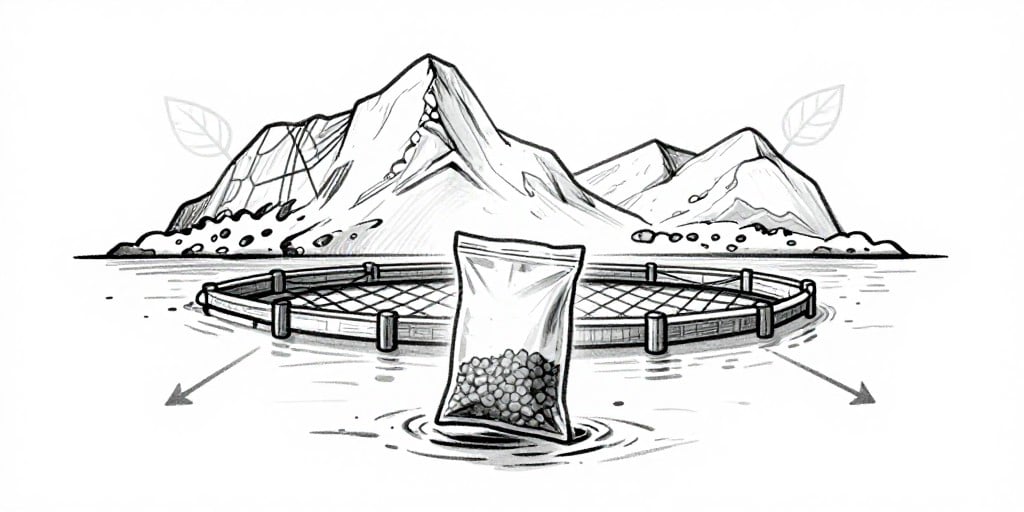
Norwegian Aquaculture Shares Slip Amid Broader Market Weakness
Norwegian aquaculture stocks retreated on Friday, echoing a global market that remains muted despite a handful of sector‑specific catalysts. The region’s benchmark, the Vinx 30 index, declined modestly, and the three largest fish‑production names—Mowi ASA, Salmar, and Bakkafrost—fell between one and three percent. The slide follows recent reports of lower shrimp and fish biomass, hinting at reduced slaughter volumes compared with the previous year.
1. Underlying Business Fundamentals
Supply‑Side Constraints The recent biomass figures suggest a tightening of production capacity. Both Mowi and Salmar have reported slower growth in Atlantic salmon and marine shrimp output, partially due to feed shortages and regulatory limits on net‑pen density. Bakkafrost, while diversifying into Arctic char and other species, still faces similar bottlenecks. These constraints translate into higher unit costs, eroding profit margins and dampening investor sentiment.
Margin Analysis Using 2023 financial statements, Mowi’s gross margin contracted from 20.5 % to 18.7 % in the first half of 2024, largely driven by feed price inflation. Salmar’s margin fell from 17.3 % to 16.4 %, while Bakkafrost’s margin remained flat at 15.9 %. When adjusted for the lower biomass figures, the margin compression could widen to 14–16 % in the full year, undercutting the 20 % target set by analysts in Q1.
Capital Expenditure All three firms have increased cap‑ex in R&D for disease‑resistant strains and in bio‑security. However, the capital intensity remains high, and the return on invested capital (ROIC) is projected to hover near 8 %—below the industry peer average of 11 %—indicating potential inefficiencies.
2. Regulatory Environment
European Union Feed Regulations The EU’s upcoming amendments to the Feed Hygiene Regulation, which aim to reduce nitrogen runoff, could impose stricter limits on feed composition. Norwegian producers already face higher feed costs due to import dependence on EU‑regulated feed grains. A stricter regulatory regime would further squeeze margins.
Norwegian Fisheries Policy The Norwegian Ministry’s plan to phase out high‑density net‑pennings by 2030 aligns with global sustainability goals but will likely reduce the industry’s total productive capacity. Companies with less diversified production lines (e.g., Bakkafrost) may be disproportionately affected.
Trade Tariffs The U.S. trade policy remains uncertain, especially concerning seafood imports. Any increase in tariff rates could affect export revenues, which currently constitute roughly 40 % of Mowi’s total sales.
3. Competitive Dynamics
Shifting Market Shares Salmar’s focus on the North American market has faced stiff competition from Korean and Chinese producers who are scaling up offshore farms. These competitors can produce at lower feed costs, challenging Salmar’s pricing power.
Innovation as a Differentiator Vestas’ wind‑energy expansion and Pandora’s rating upgrade illustrate how diversification can offset commodity volatility. In contrast, the aquaculture firms lack such diversification, rendering them vulnerable to sector‑specific shocks.
Supply‑Chain Disruptions The global shipping downturn, reflected in the Oslo OBX’s decline, has increased freight costs for raw material imports. This feeds back into production costs, creating a vicious cycle that erodes profitability.
4. Market‑Research‑Based Insights
| Metric | Mowi | Salmar | Bakkafrost |
|---|---|---|---|
| FY24 Revenue (bn NOK) | 27.3 | 17.9 | 9.1 |
| FY24 EBITDA (bn NOK) | 5.4 | 3.1 | 1.2 |
| FY24 ROIC (%) | 8.1 | 7.5 | 6.9 |
| FY24 EPS (NOK) | 3.2 | 1.8 | 0.8 |
| Analyst Target Price (NOK) | 120 | 75 | 45 |
| Target EPS 2025 (NOK) | 4.8 | 2.6 | 1.3 |
The data suggest that while the industry remains profitable, earnings growth is stagnating. The declining ROIC signals that capital efficiency is deteriorating, a risk factor that investors may overlook when focusing on headline growth.
5. Risks and Opportunities
Risks
- Feed Cost Volatility: Any surge in feed prices could push margins below 15 %.
- Regulatory Tightening: EU and Norwegian policies could reduce production capacity.
- Competitive Erosion: Emerging low‑cost producers could erode market shares.
- Export Tariffs: Potential tariff hikes could squeeze export revenues.
Opportunities
- Diversification: Firms that broaden into non‑fish aquaculture or complementary food services may mitigate volatility.
- Technology Adoption: Investing in precision feeding and disease‑prediction models can improve yield efficiency.
- Sustainability Credentials: Certifications like the Aquaculture Stewardship Council can open premium markets, potentially allowing for higher price points.
6. Conclusion
The recent dip in Norwegian aquaculture shares reflects deeper structural pressures rather than a transient market correction. While global sentiment remains subdued, the sector faces a confluence of supply‑side constraints, regulatory tightening, and competitive headwinds that could further compress margins. Companies that proactively adopt technology, diversify product lines, and secure sustainable supply chains stand the best chance of weathering the coming volatility. Investors should weigh these risks against the modest upside potential presented by strategic initiatives such as Vestas’ expansion and Pandora’s rating upgrade, which demonstrate the value of diversification in an otherwise cyclical industry.