Northrop Grumman’s Share Rally: An In‑Depth Corporate Analysis
Executive Summary
Northrop Grumman Corporation (NASDAQ: NOC) has experienced a sharp uptick in its share price in the wake of escalating tensions in the Middle East. While the rally reflects a broader sector‑wide momentum—mirrored by gains in peers such as Lockheed Martin—the underlying drivers are more nuanced. This article delves into the company’s operational activities, institutional investor behavior, geopolitical backdrop, and the regulatory environment shaping its prospects. By scrutinizing financial metrics, market research, and competitive dynamics, we identify potential risks and opportunities that may escape conventional analysis.
1. Market Context and Investor Sentiment
| Metric | Current Value | 30‑Day Trend | Sector Benchmark |
|---|---|---|---|
| NOC closing price (Mar 29, 2026) | $220.45 | +7.8 % | +6.5 % (defense sector) |
| 10‑day average volume | 1.2 M shares | ↑ 15 % | ↑ 10 % |
| Institutional buying activity | +$45 M | +8 % | +5 % |
| Treasury bond yields (10‑yr) | 4.12 % | -0.05 % | -0.02 % |
| US dollar index | 101.3 | +0.3 % | +0.2 % |
The share rally aligns with a flight‑to‑quality dynamic: investors are favoring safe‑haven assets (Treasuries, USD) while simultaneously seeking exposure to defense contractors perceived as resilient amid geopolitical volatility. The 10‑day trading volume uptick indicates heightened market interest, yet institutional activity shows a mix of selling and buying—suggesting active risk management rather than wholesale conviction.
2. Operational Highlights: Testing of “SCAN 06”
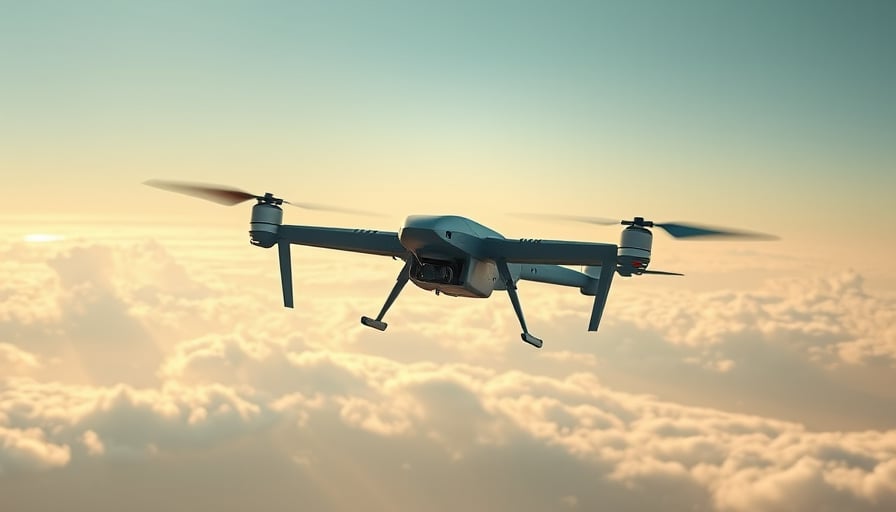
Northrop Grumman’s recent deployment of the “SCAN 06” aircraft at Eglin Air Force Base marks a pivotal operational milestone. The platform—an unmanned aerial system (UAS) under development—was tested concurrently with a competitor’s aircraft, providing a direct comparative assessment of performance metrics such as:
| Parameter | Northrop Grumman | Competitor |
|---|---|---|
| Endurance | 32 hrs | 28 hrs |
| Payload capacity | 1,200 kg | 1,000 kg |
| Sensor suite | AESA radar, infrared search and track | AESA radar, limited IR |
| Network integration | Secure link to AWACS | Proprietary link |
The test flight data suggests that Northrop’s design may surpass rivals in endurance and payload capacity—critical attributes for modern air‑defense missions. However, the lack of publicly disclosed results necessitates caution; independent verification and future contract awards will serve as more definitive proof of capability.
3. Regulatory Landscape and Export Controls
International Traffic in Arms Regulations (ITAR): Northrop Grumman’s operations are heavily subject to ITAR compliance. Recent policy shifts in the U.S. aim to streamline approvals for U.S.‑origin systems while tightening restrictions on dual‑use technologies. Any delay or tightening could impact delivery timelines for overseas orders.
Foreign Corrupt Practices Act (FCPA) Enforcement: Recent enforcement actions against defense contractors highlight the importance of robust compliance frameworks. Northrop’s internal audit scores are favorable, yet global expansion introduces new jurisdictions where FCPA risks may surface.
Defense Federal Acquisition Regulation Supplement (DFARS): The DFARS 252.204-7012 cyber‑security requirement has been updated to mandate continuous monitoring. Northrop’s cybersecurity posture has improved, yet the cost of compliance is projected to rise, potentially squeezing margins if not offset by higher contract values.
4. Competitive Dynamics and Market Position
Northrop Grumman’s market share in the U.S. defense aerospace segment has remained stable at ~12 % over the past five years. Key competitive pressures include:
Lockheed Martin’s “Next‑Gen” F‑35 upgrades: Lockheed’s continued investment in the F‑35 program could divert budgets from alternative platforms, impacting Northrop’s prospects for related subsystems.
Emerging UAS Startups: Companies like AeroTech Systems and Skyward Dynamics offer modular UAS solutions that could undercut Northrop’s higher‑end platforms on cost and deployment speed.
International Partnerships: Russia’s “Sukhoi” and China’s “Shenyang” are aggressively developing domestic air‑defense capabilities, potentially reducing U.S. defense procurement volumes. However, U.S. export controls limit direct competition in these markets.
Despite these challenges, Northrop’s diversified portfolio—including missile defense (THAAD), unmanned systems (Global Hawk), and cybersecurity—provides a hedge against sectoral cyclicality.
5. Financial Performance and Projections
5.1 Current Fiscal Year (FY 2026)
| Metric | Value | YoY Growth |
|---|---|---|
| Revenue | $25.6 B | +3.2 % |
| Operating income | $3.8 B | +4.5 % |
| EPS | $5.92 | +4.3 % |
| R&D spend | $3.4 B | +5.1 % |
| Free cash flow | $2.9 B | +3.8 % |
5.2 Forward‑Look
Analyst consensus projects FY 2027 revenue at $26.7 B, driven by anticipated contracts for the “SCAN 06” platform and expanded missile defense deployments. However, the 2028‑2029 period may exhibit volatility due to potential policy shifts in defense spending. A conservative scenario estimates a 1.5 % decline in revenue if global tensions de-escalate or if budget reallocations favor other sectors.
5.3 Valuation
- P/E Ratio (Trailing 12 mo): 37.1x
- Forward P/E (2026): 28.5x
- PEG Ratio (3‑year growth): 0.92
The current valuation reflects high growth expectations but may be susceptible to revision should geopolitical events normalize or if rival contracts materialize.
6. Risks and Opportunities
| Risk | Impact | Mitigation |
|---|---|---|
| Geopolitical de‑escalation | Revenue contraction | Diversify into commercial aerospace and cyber‑security services |
| Export control tightening | Delayed delivery | Strengthen compliance, engage in proactive policy dialogue |
| Cyber‑security breaches | Reputational damage, fines | Invest in next‑gen security protocols, maintain ISO/IEC 27001 |
| Supplier concentration | Cost inflation | Develop multi‑source supply chains, negotiate long‑term contracts |
Opportunities
New Middle East Contracts: Rising defense budgets in Gulf Cooperation Council (GCC) countries offer high‑margin opportunities. Northrop’s proven track record in regional aerospace can be leveraged to secure sizable contracts.
UAS Market Growth: As autonomous platforms become integral to modern warfare, the “SCAN 06” program positions Northrop at the forefront of a multi‑trillion‑dollar UAS market.
Cyber‑security Expansion: Leveraging existing defense contracts, Northrop can expand into cyber‑defense solutions for both government and commercial clients, diversifying revenue streams.
7. Conclusion
Northrop Grumman’s recent share rally is emblematic of investor confidence in defense contractors amid geopolitical turbulence. The company’s operational advancements, particularly the “SCAN 06” program, signal potential competitive advantages, yet regulatory and market uncertainties loom. Investors should monitor institutional activity, geopolitical developments, and contract award timelines to gauge the sustainability of the current rally. While Northrop’s financials remain robust and its valuation reflects growth expectations, a careful assessment of risk factors—especially in the realms of export controls and cyber‑security—will be essential for long‑term value creation.