Northrop Grumman Secures NASA Lunar Cargo Contract Amid Defense Budget Uncertainty
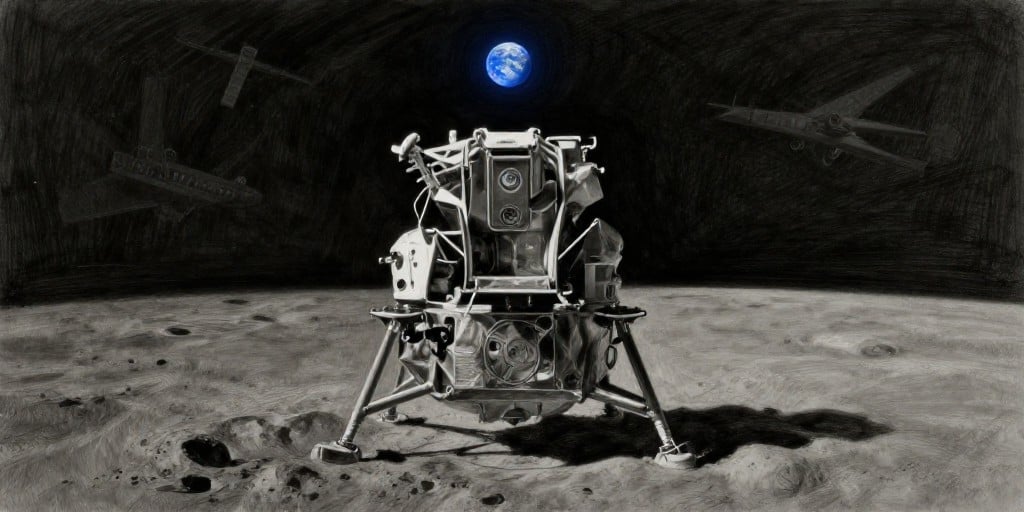
Northrop Grumman Corp. has been named one of eight aerospace and defense contractors selected by NASA to compete for lunar cargo missions under a newly announced 10‑year commercial framework. The framework is part of NASA’s broader strategy to establish a sustained human and robotic presence on the Moon, and it allows participating firms to bid for individual task orders as the agency defines specific lunar delivery requirements over the coming decade.
Strategic Significance of the NASA Contract
The selection underscores Northrop Grumman’s technical capabilities and its alignment with NASA’s evolving commercial partnerships. By positioning itself to secure future lunar missions, the company gains a foothold in the emerging space logistics market—a sector that is increasingly attracting private capital and public investment. The lunar cargo initiative also dovetails with the company’s existing portfolio of space-based payloads, satellite systems, and space transportation services, providing a natural extension of its core competencies.
Market Dynamics and Competitive Positioning
The commercial lunar framework represents a shift from traditional, mission‑centric contracts toward a more flexible, market‑driven model. This approach is intended to spur competition, reduce costs, and accelerate technology development across the aerospace supply chain. Northrop Grumman’s inclusion places it among a select group of firms—such as SpaceX, BAE Systems, and Lockheed Martin—that are now positioned to capture a share of the burgeoning lunar logistics market.
From a competitive standpoint, the company’s participation enhances its visibility in the space sector and could lead to cross‑industry collaborations, particularly with firms specializing in propulsion, robotics, and autonomous operations. Moreover, the contract provides a platform to showcase Northrop Grumman’s expertise in secure communications and payload integration, potentially opening new business avenues beyond the lunar program.
Defense Budget Uncertainty and Stock Volatility
While the NASA opportunity presents a clear growth catalyst, Northrop Grumman’s stock remains highly sensitive to the political environment surrounding defense appropriations. The recent proposal by the Trump administration to substantially raise the U.S. defense budget has faced robust opposition from the newly empowered Democratic majority in Congress. Legislative uncertainty has translated into pronounced volatility for defense contractors, as investors weigh the feasibility of a large‑scale spending package against the backdrop of ongoing military engagements in the Middle East.
The company’s performance is therefore tethered to broader defense spending priorities. A shift toward more constrained budgets or reallocation of defense resources could dampen revenue prospects, even as space initiatives continue to expand. Investors must balance the potential upside from NASA’s lunar framework against the downside risks linked to congressional budgetary decisions.
Broader Economic Context
The interplay between space commercialization and defense spending reflects a broader trend in which defense contractors diversify into emerging high‑technology sectors to hedge against policy volatility. Northrop Grumman’s dual exposure—spanning traditional defense contracts and cutting‑edge space programs—illustrates this strategic pivot. This diversification strategy may prove advantageous as the global economy increasingly values capabilities in cybersecurity, autonomous systems, and space infrastructure.
Conclusion
Northrop Grumman’s selection to compete for lunar cargo missions marks a significant milestone that could drive long‑term growth in the company’s space sector portfolio. However, its stock valuation remains contingent upon the political dynamics governing defense appropriations. As the company navigates this complex landscape, stakeholders will watch closely for how legislative outcomes influence both its defense revenue streams and its new ventures in lunar logistics.