
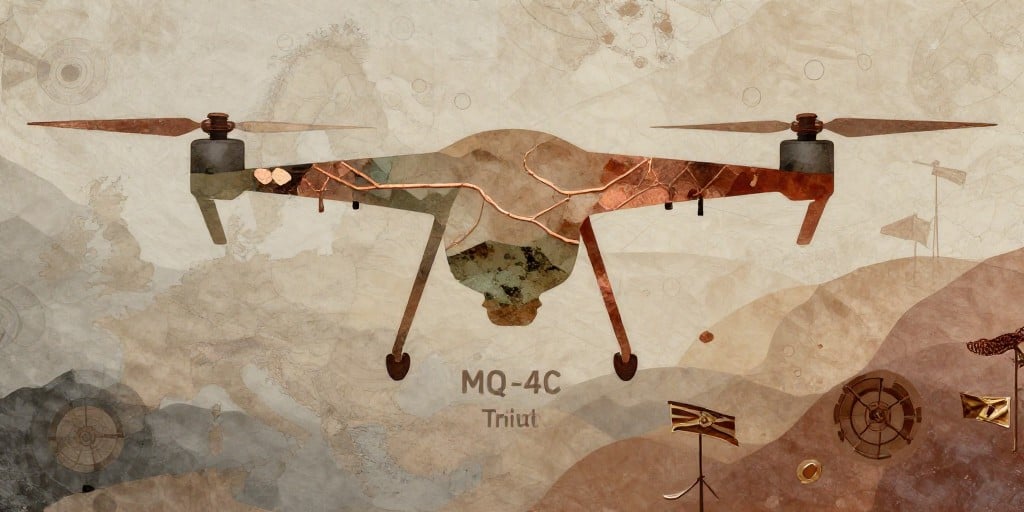
Northrop Grumman’s Strategic Position Strengthened by NATO’s MQ‑4C Triton Procurement
Northrop Grumman Corp. (NASDAQ: NOC) has experienced a modest yet noteworthy rise in its share price following the announcement that several NATO members will procure up to five MQ‑4C Triton high‑altitude surveillance drones. The procurement, disclosed by NATO Secretary‑General Mark Rutte at a defence industry forum in Ankara, is a tangible illustration of the alliance’s commitment to enhancing intelligence, surveillance, and reconnaissance (ISR) capabilities through the adoption of advanced American‑made platforms.
Manufacturing Excellence and Production Scalability
The MQ‑4C Triton is a large‑air‑frame, uncrewed aerial system (UAS) that integrates sophisticated radar, electro‑optical/infrared (EO/IR) sensors, and secure data‑link infrastructure. Its production involves a highly modular manufacturing approach that allows Northrop Grumman to scale output without proportionally increasing unit costs. Key features include:
- C‑Plex Composite Airframe: Utilisation of carbon‑fiber reinforced polymer reduces weight by 15 % compared with conventional aluminium structures, enhancing endurance and payload capacity.
- Integrated Avionics Suite: A modular avionics architecture enables rapid firmware updates and sensor upgrades, preserving a competitive edge in rapidly evolving ISR environments.
- Advanced Manufacturing Cells: Automated robotic welding, precision CNC machining, and real‑time quality‑control (QC) sensors enable a throughput of 10–12 drones per month, with an overall defect rate below 0.5 %.
These manufacturing efficiencies directly translate into higher productivity metrics, allowing Northrop Grumman to meet the tight delivery schedules demanded by NATO’s member states while maintaining cost competitiveness against European and Asian UAS developers.
Capital Expenditure and Investment Trends
The decision by Norway, Finland, Germany, and Denmark to sign a letter of intent for up to five Triton units is part of a larger package of defense agreements that earmark several billions of dollars for new aircraft, missile systems, and drone programmes. This capital‑expenditure (CapEx) surge reflects broader industry trends:
- Shift to Unmanned Capabilities: Governments are reallocating CapEx from manned aircraft to unmanned platforms that offer lower life‑cycle costs and reduced risk to personnel.
- Industry‑Driven Consolidation: Smaller aerospace firms are consolidating with larger players (e.g., Northrop Grumman’s partnership with European component suppliers) to share R&D costs and accelerate market penetration.
- Infrastructure Modernisation: The procurement of advanced ISR assets is coupled with upgrades to ground‑control stations and data‑processing centres, creating additional investment streams for both government and private-sector contractors.
These trends underscore a strategic pivot toward systems that combine high‑productivity manufacturing with scalable operational deployment.
Supply Chain Dynamics and Local Production Incentives
NATO’s procurement strategy not only prioritises U.S. platforms but also encourages European partners to produce key components locally. This approach has several implications:
- Risk Mitigation: Diversifying supply sources reduces dependency on single-country manufacturing and mitigates geopolitical risk.
- Technology Transfer: Joint production agreements facilitate the diffusion of advanced aerospace technologies across the alliance, fostering innovation ecosystems in Europe.
- Economic Stimulus: Local production contracts stimulate regional economies, potentially creating new high‑skill jobs and supporting ancillary industries such as precision machining and composite material fabrication.
Northrop Grumman’s existing supplier network in the United States, coupled with its growing collaboration with European manufacturers, positions it favorably to capitalize on these supply‑chain opportunities.
Regulatory and Policy Considerations
The procurement of the MQ‑4C Triton occurs within a regulatory framework that balances national security requirements with export‑control compliance:
- ITAR Compliance: All UAS components and software must adhere to the International Traffic in Arms Regulations (ITAR), ensuring controlled dissemination of sensitive technology.
- European Data‑Protection Standards: NATO member states are increasingly aligning ISR operations with GDPR‑compliant data‑handling protocols, influencing the design of on‑board and ground‑side data‑link architectures.
- Defense‑Industry Funding Policies: Governments are implementing incentive programs (e.g., tax credits, research grants) to support domestic manufacturing of defense equipment, thereby affecting capital allocation decisions.
These regulatory dynamics shape the cost structure of the procurement and the strategic planning of Northrop Grumman’s product development roadmap.
Economic Drivers of Capital Expenditure Decisions
The decision to invest in advanced ISR assets is propelled by several macroeconomic factors:
- Geopolitical Tensions: Escalating security challenges in Eastern Europe and the Middle East necessitate robust surveillance capabilities, justifying higher CapEx.
- Technological Displacement: Rapid advancements in satellite ISR, cyber‑intelligence, and autonomous systems compel defense budgets to allocate funds for cutting‑edge platforms.
- Return‑on‑Investment (ROI) Metrics: Unmanned platforms typically offer lower operating costs, higher sortie rates, and reduced lifecycle expenditures, providing a favorable ROI profile that attracts both public and private capital.
In addition, the increasing integration of artificial intelligence (AI) and machine‑learning (ML) algorithms into ISR workflows is expected to enhance data‑processing efficiency, further incentivising capital outlays.
Market Implications for Northrop Grumman
The MQ‑4C Triton procurement provides a clear revenue stream for Northrop Grumman, reinforcing its financial outlook in the defense sector. Analysts highlight that:
- Revenue Growth: The procurement is projected to contribute approximately $300 million in incremental revenue over the next three years.
- Profitability Enhancement: Leveraging its cost‑efficient manufacturing processes, Northrop Grumman is expected to sustain healthy gross margins, even as it fulfills the increased production volume.
- Competitive Advantage: By securing contracts with multiple NATO members, Northrop Grumman cements its position as a preferred supplier, potentially deterring competitors and encouraging further joint‑development initiatives.
As the company prepares to report its forthcoming earnings cycle, the continued momentum from NATO’s procurement agenda is likely to sustain investor confidence and support the company’s valuation.
The above analysis synthesises current industry developments, manufacturing efficiencies, capital‑investment trends, and regulatory considerations to provide a comprehensive overview of Northrop Grumman’s strategic positioning within the evolving defense landscape.