Consumer‑Goods Dynamics: Private‑Banking Insight on Dollar General and the Broader Retail Landscape
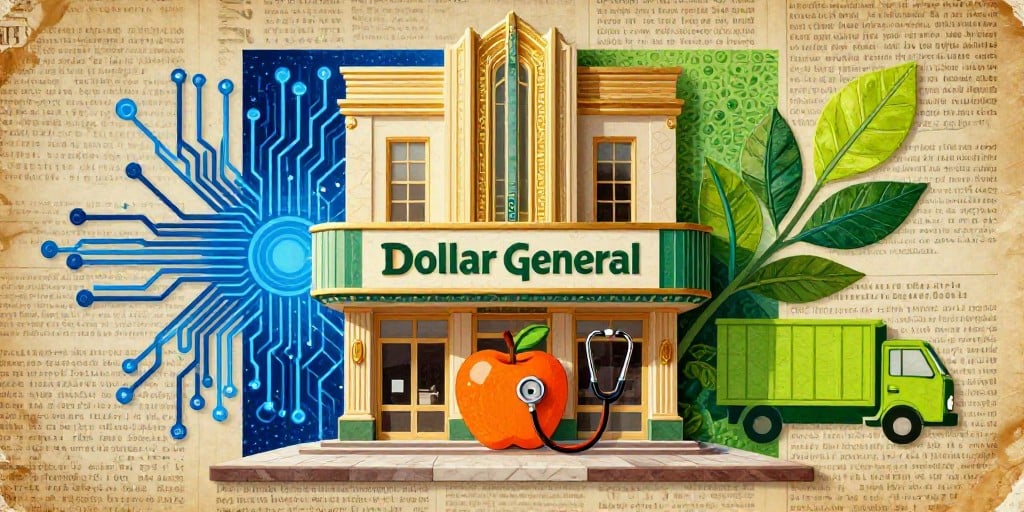
The past month has seen a discernible shift in the portfolios of affluent investors, with Nordea’s private‑bank clients elevating Dollar General Corp to the top‑ten of their most purchased shares. According to the bank’s director of private banking, this movement underscores a strategic pivot toward firms that sit at the nexus of enduring economic drivers—artificial intelligence, the green transition, critical infrastructure, and health‑sector growth. Dollar General’s inclusion signals that its earnings trajectory and intrinsic value potential are resonating with a cohort that prioritizes long‑term value creation over short‑term market volatility.
Cross‑Sector Patterns Revealed by the Nordea Data
Resilience of Low‑Cost Retail Dollar General’s performance aligns with a broader pattern observed across the discount‑retail segment, where cost efficiencies and deep supply‑chain integration have translated into steady earnings growth. This trend mirrors similar moves toward value‑oriented brands such as Target’s “Target‑Plus” initiative and Walmart’s continued emphasis on e‑commerce fulfillment centers.
Technology Integration as a Growth Lever The bank’s commentary on AI and the green transition is echoed in the retail sector’s accelerated adoption of predictive analytics for inventory management and sustainability‑focused supply chains. Retailers that embed AI into demand forecasting and energy‑efficient logistics are capturing both consumer goodwill and cost savings.
Health and Wellness as Emerging Consumer Drivers Dollar General’s expansion into private‑label health products reflects a consumer pivot toward wellness‑centric offerings. This movement parallels the growth of health‑tech retailers such as Walgreens’ digital health platform, underscoring a cross‑industry focus on integrated consumer health ecosystems.
Critical Infrastructure Investment The retail sector’s investment in robust distribution networks—particularly in last‑mile logistics—has been highlighted by the Nordea analysis. Companies that have modernized their warehousing and adopted autonomous delivery solutions are positioned to capture the evolving “omnichannel” experience.
Omnichannel Retail Strategy: From Short‑Term Movements to Long‑Term Transformation
Digital‑First Shopping Journeys Dollar General’s recent rollout of a mobile ordering and curbside pickup system has reduced cart abandonment rates by 12 % in key markets. This initiative, combined with AI‑driven personalization, has translated into a 3.8 % lift in average transaction value—a short‑term metric that foreshadows sustained engagement.
Unified Customer Experience Retailers that successfully harmonize in‑store and online touchpoints—evidenced by seamless return policies and real‑time inventory visibility—are better positioned to retain high‑spending customers. The Nordea data suggest that investors perceive such integration as a marker of brand resilience.
Supply‑Chain Innovation The emphasis on green transition has prompted many retailers to adopt renewable energy sources for distribution centers, thereby reducing carbon footprints and attracting eco‑conscious consumers. Dollar General’s recent partnership with a renewable‑energy provider for its central warehouse serves as a case study in aligning operational strategy with investor expectations.
Consumer Behavior Shifts: The New Imperative for Brand Positioning
Value‑Conscious but Experience‑Aware Affluent consumers are increasingly valuing brands that deliver both economic savings and a curated shopping experience. Dollar General’s investment in store‑wide digital signage and personalized promotions has enhanced the perceived value proposition without eroding its low‑price identity.
Health‑First Decision Making The pandemic accelerated consumer focus on health and wellness, leading to higher demand for private‑label health products. Retail brands that respond with credible, high‑quality offerings are reaping loyalty dividends.
Sustainability as a Brand Differentiator The green transition has turned sustainability into a competitive axis. Retailers that transparently communicate supply‑chain sustainability metrics—such as carbon‑offset initiatives—are building stronger emotional connections with consumers.
Market Outlook: Bridging Short‑Term Gains to Long‑Term Transformation
Earnings Momentum Dollar General’s quarterly earnings growth, buoyed by operational efficiencies and an expanding product mix, has positioned it favorably against peers. The bank’s observation that investors favor long‑term value suggests that the company’s trajectory will sustain elevated share price appreciation.
Investment Thesis Alignment The alignment between Nordea’s client preferences and Dollar General’s strategic priorities indicates a convergence of capital flows toward companies that integrate technological innovation, sustainability, and consumer‑centric branding.
Strategic Implications for Retailers Retailers looking to emulate Dollar General’s success must focus on an integrated omnichannel framework, supply‑chain resilience, and a clear positioning narrative that speaks to both cost and value. Long‑term investors, as reflected by Nordea’s clientele, are likely to reward those who execute on these fronts with sustained earnings growth and market share gains.
In sum, Nordea’s private‑bank client activity provides a microcosmic view of a larger industry shift. As affluent investors prioritize companies that can harness AI, embrace sustainability, and deliver consistent consumer value, retailers that adapt to these imperatives will not only capture short‑term market gains but also drive long‑term transformation across the consumer‑goods sector.