
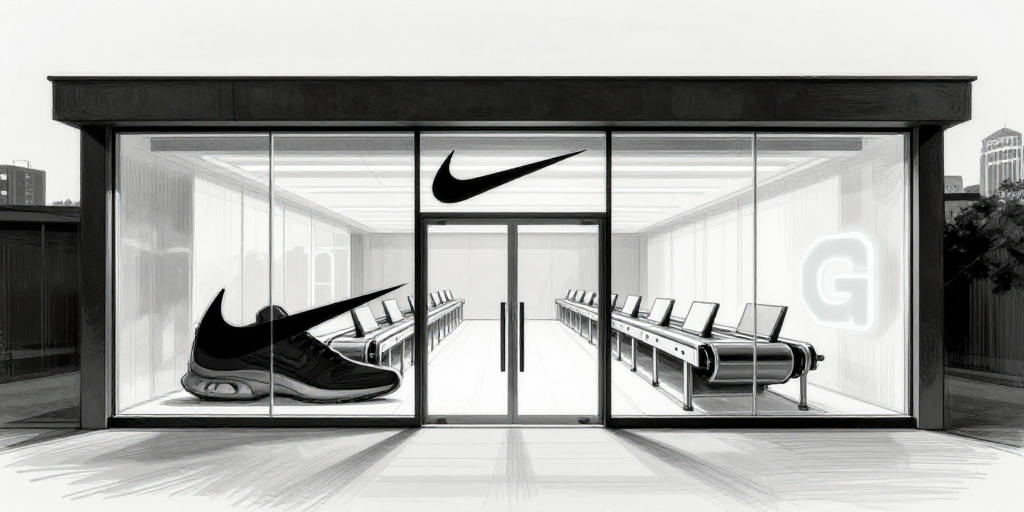
Corporate News – Nike Inc. Announces Workforce Reduction Amid Strategic Shift
Nike Inc., the global footwear and apparel powerhouse, has announced a further reduction of its global workforce, eliminating approximately 1,400 roles—about two percent of its employees—through a restructuring that focuses largely on technology functions. The move follows earlier layoffs at distribution facilities and is part of a broader “Win Now” turnaround plan aimed at streamlining operations, enhancing automation, and realigning resources toward core footwear and apparel activities. Company leadership explained that the changes are intended to accelerate competitive responsiveness and support long‑term profitability, although they acknowledge short‑term disruption for affected teams.
The announcement coincided with a modest lift in the company’s share price during after‑hours trading, but the stock remains under pressure amid ongoing sales declines, particularly in key markets such as China. Analysts have maintained a mixed outlook, with some issuing moderate buy ratings while noting that the cuts are a necessary step to restore profitability. The restructuring is viewed as a continuation of CEO Elliott Hill’s effort to reverse recent sales momentum and strengthen the brand’s position against rivals.
Overall, the news signals Nike’s intent to tighten its operating model, invest in automation and technology, and reposition its supply chain, while acknowledging the challenges posed by current market conditions and the need for disciplined execution to achieve sustainable growth.
Digital Transformation Meets Physical Retail: A Strategic Imperative
Nike’s decision to shed a modest portion of its workforce reflects a larger trend in consumer retail: the convergence of digital and physical touchpoints. Millennials and Gen Z consumers increasingly seek seamless omni‑channel experiences, blending online discovery with instant in‑store fulfillment. In this environment, brands that can accelerate digital capabilities—such as inventory management, data analytics, and personalized marketing—are better positioned to capture and retain these high‑spending, digitally‑native segments.
The workforce reductions in technology and logistics functions are a calculated effort to re‑allocate capital toward high‑impact digital initiatives. By deploying more sophisticated supply‑chain analytics, Nike can reduce lead times, improve inventory accuracy, and deliver “just‑in‑time” fulfillment for in‑store pickups. This aligns with the current consumer expectation for rapid, on‑demand service, which is particularly critical in fast‑fashion and athletic apparel markets where trend cycles are compressed.
Demographic Shifts and Generational Spending Patterns
The global shift toward a younger, more health‑conscious population is reshaping the apparel market. Gen Z, now the largest cohort of discretionary spenders, prioritizes sustainability, ethical manufacturing, and digital engagement. Their purchasing behavior is less tied to traditional retail channels and more oriented toward experiences that blend physical products with immersive digital storytelling.
Nike’s “Win Now” plan, by cutting back on non‑core functions and investing in technology, positions the company to better serve these demographic preferences. Automation and data‑driven personalization allow Nike to deliver tailored product recommendations and micro‑experiences across its retail spaces. Moreover, the emphasis on core footwear and apparel ensures that the brand remains competitive in the high‑margin segments that appeal most strongly to younger consumers.
Cultural Movements Driving Market Opportunities
Recent cultural movements—such as the rise of athleisure, the emphasis on wellness, and the growing importance of corporate social responsibility—present tangible opportunities for Nike. The brand’s strong heritage in performance sports, combined with its recent expansion into lifestyle segments, enables it to capitalize on the sustained demand for comfortable, functional apparel that can be worn in both athletic and everyday contexts.
The workforce reduction signals a readiness to streamline operations and focus on core competencies. By reducing bureaucratic overhead, Nike can respond more quickly to emerging cultural trends, test new product concepts, and deploy them faster to market. Additionally, the emphasis on technology will support sustainability initiatives, such as closed‑loop recycling programs, which resonate strongly with socially conscious consumers.
Forward‑Looking Analysis: From Societal Change to Market Opportunity
Omni‑Channel Integration: As consumers demand instant access to products, brands must seamlessly integrate e‑commerce, mobile commerce, and physical retail. Nike’s investment in automation and data analytics will enable real‑time inventory visibility, improving in‑store pickup rates and reducing out‑of‑stock events—critical metrics for consumer satisfaction.
Personalization at Scale: Leveraging machine‑learning algorithms to analyze purchase history and browsing behavior can drive personalized marketing and product recommendations. This capability is especially valuable for younger demographics who expect hyper‑personalized experiences.
Agile Supply Chain: Automation can reduce the time required to move from design to retail. By shortening product lifecycles, Nike can align more closely with rapid trend cycles, a key driver in athleisure and streetwear markets.
Sustainability as Differentiator: Technology can facilitate transparent supply‑chain tracking, enabling Nike to verify sustainable sourcing claims. This not only satisfies regulatory demands but also appeals to eco‑conscious consumers, particularly among Gen Z shoppers.
Talent Reallocation: Shifting focus toward technology functions means hiring talent that can innovate in AI, data science, and robotics. This talent shift supports long‑term competitiveness and creates a workforce capable of driving next‑generation retail experiences.
Conclusion
Nike’s workforce reduction is more than a cost‑cutting exercise; it is a strategic pivot toward a future where digital innovation and physical retail coexist seamlessly. By focusing on technology, automation, and core product strengths, Nike aims to meet the evolving expectations of younger, digitally‑savvy consumers while capitalizing on cultural trends that favor performance, sustainability, and experience‑driven purchases. The company’s disciplined execution of this plan will determine its ability to convert societal changes into sustained market opportunities.