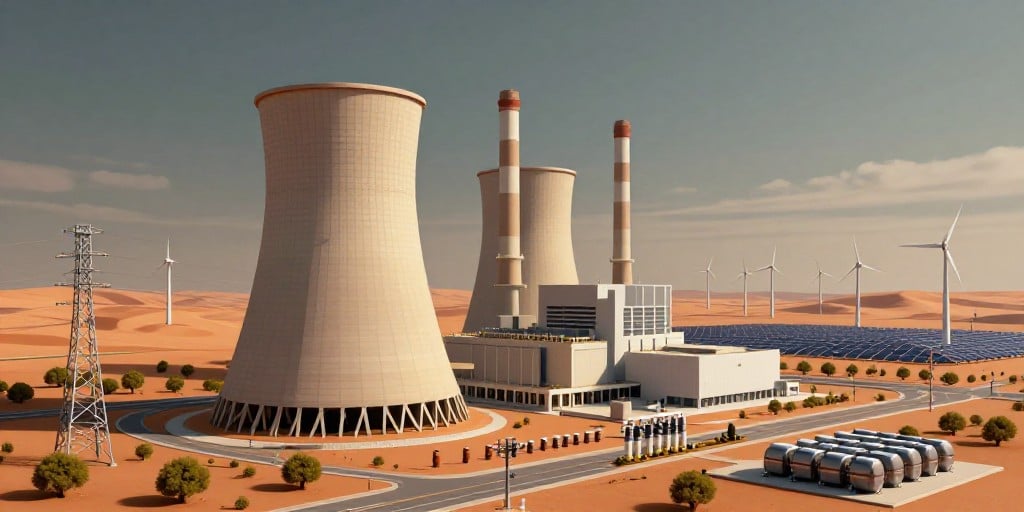
Corporate Update: NextEra Energy’s Strategic Outlook and Nuclear Financing
Executive Investor Engagement
NextEra Energy, Inc. has announced that its senior management will conduct a series of investor meetings throughout September and into early October. The meetings will address long‑term growth expectations, capital allocation strategies, and broader corporate initiatives. As the preeminent electric power and energy infrastructure entity in North America, NextEra’s diversified portfolio—encompassing natural gas, nuclear, renewable generation, and battery storage—underscores its capacity to meet the escalating demand for clean and reliable electricity across the United States.
DOE‑Backed Financing for Iowa’s Nuclear Asset
In parallel, NextEra secured a Department of Energy (DOE) loan facility of up to $1.9 billion to facilitate the restart of the state of Iowa’s sole nuclear power plant. The loan underscores the company’s strategic commitment to maintaining and expanding its nuclear generation assets, which are integral to its broader clean‑energy portfolio. The financing arrangement is contingent on adherence to DOE regulatory requirements and represents a significant public‑private partnership aimed at preserving a low‑carbon baseline in the grid.
Technical Analysis: Power System Implications
Grid Stability and Renewable Integration
The expansion of renewable resources—particularly wind and solar—introduces variability that challenges frequency regulation and voltage stability. NextEra’s battery storage portfolio mitigates these challenges by providing rapid-response services such as frequency containment and load shifting. Advanced inverter controls and droop‑based voltage regulation further enhance system resilience, allowing the grid to accommodate higher penetrations of intermittent resources without compromising reliability.
Nuclear as a Clean‑Energy Backbone
Nuclear power remains a low‑carbon, baseload source that complements intermittent renewables. The restart of Iowa’s nuclear plant will provide a steady 1,000 MW of generation, thereby reducing reliance on fossil‑fuel peaking plants. From an engineering perspective, the plant’s inherent large thermal capacity and inherent inertia support grid frequency stability, while its high capacity factor (≈ 92 %) offers predictable output that facilitates planning for ancillary services.
Transmission and Distribution (T&D) Modernization
Achieving a resilient grid capable of integrating distributed energy resources (DERs) demands substantial investment in high‑capacity transmission corridors and advanced distribution automation. NextEra’s planned upgrades include:
- High‑Voltage Direct Current (HVDC) links to interconnect distant renewable clusters, reducing transmission losses and facilitating cross‑border power flows.
- Smart grid sensors and Phasor Measurement Units (PMUs) for real‑time situational awareness, enabling predictive maintenance and rapid fault isolation.
- Grid‑stabilizing capacitor banks and dynamic voltage regulators to maintain voltage profiles amid fluctuating renewable output.
These upgrades, though capital intensive, are essential to prevent congestion and to support the 2035 renewable portfolio standards set by many state regulators.
Regulatory and Economic Considerations
Rate Structures and Consumer Impact
The Department of Energy loan and associated capital expenditures are reflected in the utility’s rate‑making filings. Under the *U.S. Federal Energy Regulatory Commission (FERC) Rate Design guidance, NextEra must demonstrate a cost‑allocation methodology that links capital costs to consumer benefits. The projected increase in operating rates is modest relative to the expected reduction in wholesale energy purchases due to higher internal generation and storage capacity.
Economic Impacts of Modernization
Investment in nuclear, renewable, and storage assets yields multi‑layered economic benefits:
- Job creation in manufacturing, construction, and operations.
- Energy cost stabilization, as diversified generation reduces exposure to volatile commodity prices.
- Enhanced grid reliability, which translates into lower outage costs for industrial and commercial customers.
Additionally, the DOE loan’s favorable terms—subsidized interest rates and deferred payment schedules—improve the project’s net present value, thereby encouraging further private investment in clean infrastructure.
Engineering Insights into Power System Dynamics
Inertia and Frequency Regulation Nuclear units provide substantial mechanical inertia, which dampens frequency excursions. When combined with inverter‑based storage that can emulate inertia through virtual inertia protocols, the grid’s frequency response is markedly improved, even at high renewable penetration levels.
Voltage Stability under Variable Load Advanced voltage‑regulation schemes—such as Volt/Var support from inverter‑interfaced PV systems—help maintain voltage levels within acceptable limits, reducing the need for reactive power compensation from conventional generators.
Transient Stability The integration of HVDC interties enhances transient stability by allowing controlled power transfer during fault conditions, thereby limiting the propagation of disturbances across the network.
Conclusion
NextEra Energy’s investor outreach and DOE financing for Iowa’s nuclear plant illustrate a forward‑looking strategy that blends traditional low‑carbon generation with emerging renewable and storage technologies. The company’s planned transmission and distribution upgrades address critical grid stability challenges, while its regulatory engagement seeks to balance the economic impacts on consumers with the long‑term benefits of a modernized, resilient power system. As the United States advances toward higher renewable penetration, such integrated investment frameworks will be pivotal in ensuring reliable, affordable, and low‑carbon electricity for all stakeholders.