Corporate Update: NextEra Energy Inc. Announces $2 B Equity Offering to Fund Renewable Expansion and Grid Modernization
Capital Structure and Funding Intentions
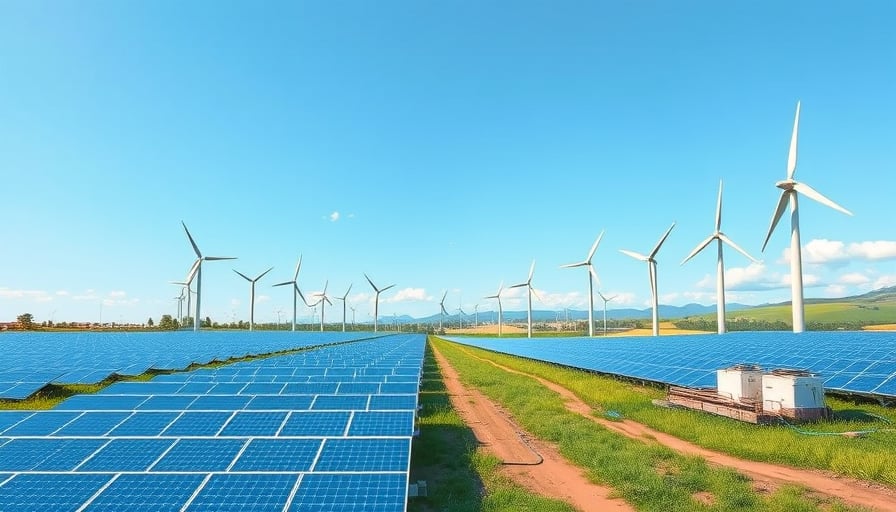
NextEra Energy Inc. (NYSE: NEE), the world’s largest producer of wind and solar energy, has disclosed plans to raise $2 billion in capital through a public offering of equity units. Underwriters have been granted an option to purchase an additional $300 million to cover potential over‑allotments. The proceeds will be directed primarily to NextEra Energy Capital Holdings and earmarked for future energy and power projects that align with the company’s long‑term strategy of expanding clean‑energy portfolios while reinforcing grid reliability. The transaction is scheduled to close in early February, with the stock currently trading near the upper echelon of its one‑year performance range.
Technical Context: Power Generation, Transmission, and Distribution Dynamics
Grid Stability in a High‑Renewable Regime
NextEra’s planned investments will inevitably increase the penetration of variable resources—wind and solar—into the transmission and distribution systems. High levels of inverter‑based generation introduce inertia deficits and frequency response challenges that traditional synchronous generators no longer mitigate. Engineers are deploying synthetic inertia and fast‑frequency response (FFR) solutions, such as advanced power electronic converters capable of delivering rapid active‑power injections within milliseconds. Moreover, the company’s grid modernization strategy incorporates wide‑area monitoring (WAMS) and phasor measurement units (PMUs) to enable real‑time situational awareness and proactive contingency analysis.
Integration Challenges for Renewable Energy
The intermittency of wind and solar necessitates flexible resources—energy storage, demand response, and flexible loads—to balance supply and demand. NextEra’s investment plan includes the deployment of high‑capacity battery storage at key interconnection points, providing both energy arbitrage and grid‑services such as voltage regulation and black‑start capability. Additionally, grid‑code evolution will demand that new renewable facilities meet stringent dynamic performance criteria, including low‑impedance interconnects and fault‑ride‑through capabilities.
Infrastructure Investment Requirements
The company’s capital allocation targets are projected to support a portfolio of 2–3 GW of new wind and solar projects over the next five years, coupled with 500–700 MW of battery storage. Achieving these targets requires significant transmission corridor expansion—approximately 200 km of new lines—to transport generated power from remote resource locations to load centers. Concurrently, distribution automation upgrades—smart inverters, advanced distribution management systems (ADMS), and microgrid capabilities—will reduce outage durations and improve resilience.
Regulatory & Economic Implications
Rate Structures and Cost Pass‑Through
Renewable energy projects, while lower in operating costs, incur higher upfront capital expenditures. The Public Utility Commission (PUC) review will evaluate whether NextEra’s investment in storage and grid upgrades justifies potential rate increases. Typically, utilities recover these costs through reliable‑service charges and generation fees. However, the time‑of‑use (TOU) and capacity‑based tariffs may be adjusted to encourage demand during periods of high renewable output, thereby optimizing grid utilization.
Policy Incentives and Grid Code Updates
Federal and state policies—such as the Inflation Reduction Act and California’s Clean Energy Standard—offer tax credits and renewable portfolio standards (RPS) that influence project economics. Moreover, the Federal Energy Regulatory Commission (FERC) is actively revising its market rules to better accommodate storage and demand response, which could alter revenue streams for utilities like NextEra.
Economic Impacts on Consumers
While the company’s equity offering may initially signal a price dilution risk for shareholders, the strategic allocation toward grid reliability and renewable integration is expected to yield long‑term benefits. By reducing system losses and improving transmission efficiency, NextEra can lower marginal costs of electricity, potentially translating into modest tariff reductions. Conversely, the immediate financing of large‑scale storage and transmission projects could lead to short‑term rate adjustments until these assets reach operational maturity.
Engineering Insights into Power System Dynamics
Inertia Compensation With conventional generators providing about 1–1.5 MW of inertia per MW of output, a 10 % renewable penetration can halve system inertia. Synthetic inertia modules emulate this response by injecting controlled active power during frequency dips, thereby mitigating the rate of change of frequency (ROCOF).
Voltage Stability and Reactive Power Management High levels of inverter‑based generation can cause voltage drops under heavy loading. NextEra’s grid upgrades include static VAR compensators (SVCs) and static synchronous compensators (STATCOMs) to deliver reactive power support without mechanical movement.
Contingency Analysis with High‑Performance Computing (HPC) The increased complexity of a high‑renewable grid demands real‑time contingency analysis. HPC clusters run dynamic simulations that account for multiple failure scenarios, enabling operators to pre‑emptively reconfigure the network.
Cyber‑Physical Security As the grid becomes more digitized, ensuring cybersecurity becomes paramount. NextEra is implementing multi‑layered defense systems, including secure communication protocols, intrusion detection, and automated response mechanisms to safeguard critical control infrastructure.
Conclusion
NextEra Energy’s $2 billion equity offering reflects a calculated investment in the next generation of electric grid infrastructure. By financing expansive renewable generation, advanced storage, and sophisticated grid‑automation technologies, the company is positioning itself to address the core technical challenges of the energy transition—maintaining grid stability, integrating intermittent resources, and ensuring reliable service to consumers. The regulatory landscape will shape how these investments translate into consumer costs, but the engineering advancements underpinning this strategy promise to enhance system resilience and support the broader shift toward a cleaner, more sustainable energy future.