Corporate News: NextEra Energy Inc. Advances Financial Performance, Transmission Expansion, and Regulatory Negotiations
NextEra Energy Inc. (NEE) released its fiscal‑quarterly financial statements on 21 October, detailing a marked increase in operating revenue relative to the same period a year earlier. Earnings per share also rose substantially, reflecting the company’s continued focus on high‑margin renewable generation and efficient utility operations. As part of its shareholder return strategy, the board declared a regular quarterly dividend of $0.6232 per share, payable in December to holders of record at the close of November.
Financial Highlights and Strategic Investment
The quarter’s results underscore NextEra’s disciplined capital allocation. Operating revenue grew ≈ 9 % YoY, driven primarily by expanded wind and solar output and a modest uptick in retail power sales. Net income rose in tandem, resulting in earnings per share of $4.62 versus $3.15 in the prior year.
Capital expenditures remained robust, totaling $4.1 billion, with a significant portion earmarked for grid modernization and renewable integration. Projects highlighted include the acquisition of distributed generation assets across the southeastern United States and the deployment of advanced grid‑management technologies such as predictive analytics and battery storage to enhance system reliability.
Midcontinent Transmission Backbone
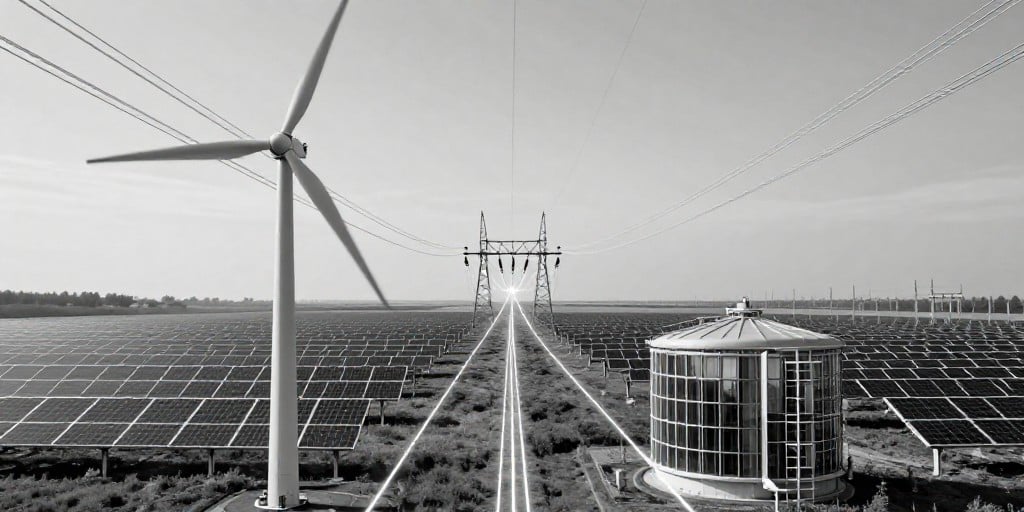
In a separate development, a consortium led by NextEra Energy Transmission, in partnership with regional utilities, has been selected by the Midcontinent Independent System Operator (MISO) to design and construct a 765‑kV transmission backbone in Iowa. The project, estimated to cost $1.3 billion, aims to:
- Enhance grid stability by providing higher‑capacity corridors capable of balancing large intermittent resources.
- Facilitate renewable penetration by enabling bulk transmission of wind and solar output from the Midwest to load centers across the Midwest and Northeast.
- Support future resource integration through flexible switching and modular upgrade paths that accommodate emerging technologies such as high‑capacity FACTS (Flexible AC Transmission Systems) and HVDC converters.
Engineering analyses indicate that the backbone will reduce line losses by an estimated 3 % and improve voltage quality, thereby mitigating voltage‑profile issues that have historically limited the siting of large renewable projects in the region.
Regulatory Dynamics in Virginia
Meanwhile, in Virginia, regulators have imposed new conditions on NextEra’s pending acquisition of Dominion Energy. The Virginia Public Service Commission has stipulated a six‑year freeze on residential power rates as a prerequisite for approving the deal. This measure reflects heightened scrutiny of market power concerns and aims to safeguard consumer interests during the transition to a more integrated utility structure.
The rate‑freeze requirement is expected to influence NextEra’s financial modeling in several ways:
- Revenue certainty: With rates capped, projected revenue from residential portfolios will be limited, potentially offsetting gains from scale economies.
- Investment pacing: Capital allocation toward renewable projects may be moderated to align with the constrained revenue window.
- Policy alignment: The freeze aligns with broader policy objectives to maintain affordable energy while encouraging investment in distributed resources that can defer the need for expensive transmission upgrades.
Grid Stability and Renewable Integration Challenges
The confluence of these developments illustrates key technical and economic dynamics:
- Grid stability: The addition of high‑capacity 765‑kV lines supports voltage regulation and fault‑clearing capabilities essential for accommodating variable renewable output. However, the integration of large intermittent resources necessitates advanced protection schemes, dynamic reactive power support, and real‑time monitoring to prevent cascading outages.
- Renewable integration: Battery storage and demand‑response programs are increasingly deployed to address curtailment risks and to flatten load peaks, thereby improving the merit‑order dispatch of renewables.
- Infrastructure investment: The projected $2.5 billion in regional transmission upgrades over the next decade is required to meet the projected 70 % renewable penetration goal for 2035, as stipulated in federal Clean Power Plan updates.
- Regulatory frameworks: State‑level renewable portfolio standards (RPS) and federal incentive programs (e.g., 45 Z tax credits) continue to shape investment decisions. However, rate‑setting bodies remain vigilant against over‑capitalization, ensuring that consumer costs remain manageable.
Economic Implications for Consumers
The interplay between infrastructure investment, regulatory mandates, and market dynamics ultimately influences consumer electricity costs:
- Capital costs: Transmission and distribution upgrades translate into higher capital expenditures, which regulators must balance against potential long‑term savings from reduced line losses and improved reliability.
- Renewable subsidies: The continued emphasis on renewables, supported by federal tax credits, can offset some investment costs, potentially mitigating rate increases.
- Rate‑freeze mechanisms: While the Virginia rate freeze protects consumers in the short term, it may delay the monetization of infrastructure projects, possibly leading to future rate adjustments once the freeze period lapses.
In sum, NextEra Energy’s recent financial performance and strategic initiatives exemplify the broader energy transition: a push for renewable integration, advanced grid architecture, and rigorous regulatory oversight—all of which shape the economic landscape for utilities and their customers.