
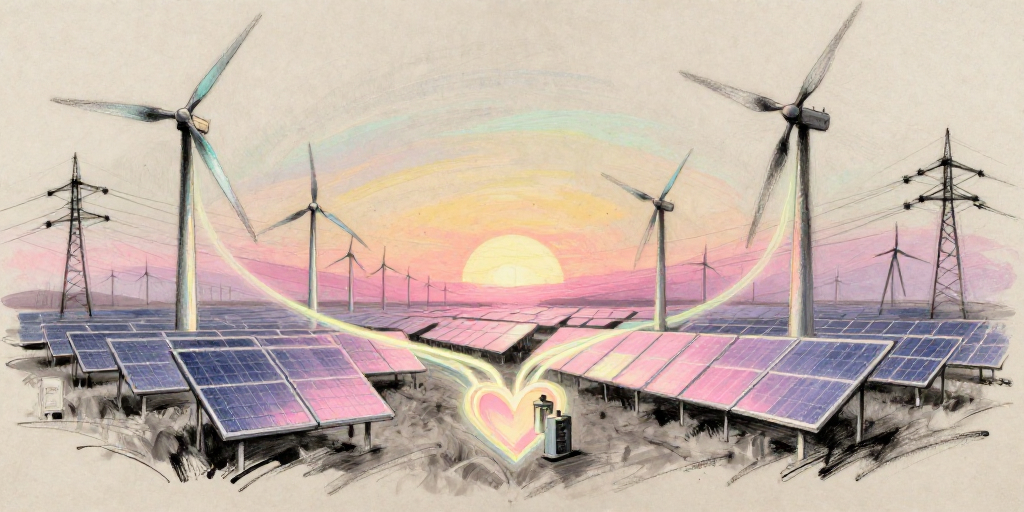
Corporate Outlook for NextEra Energy Inc. Amidst a Renewables‑Driven Growth Narrative
The forthcoming first‑quarter earnings release from NextEra Energy Inc. is anticipated to reinforce the company’s standing as a benchmark in the U.S. power sector. Analysts project an increase in earnings per share, driven largely by Florida Power & Light’s (FPL) customer expansion and the broader utility’s accelerated investment in wind and solar assets. The company’s strategic focus on renewable generation is positioned to strengthen grid reliability, enable higher renewable penetration, and support infrastructure modernization.
Power Generation Portfolio and Renewable Integration
NextEra’s generation mix is shifting rapidly from fossil‑fueled baseload units toward variable renewable resources (VRRs). The company currently operates more than 21 GW of wind and 2 GW of solar capacity, with a pipeline that adds an additional 5 GW of wind and 1.5 GW of solar over the next 18 months. From an engineering perspective, the integration of these VRRs presents both opportunities and challenges:
- Capacity Factor Improvement – Modern offshore wind platforms and advanced solar tracking systems have pushed capacity factors from 30 % to 45 % for wind and 22 % to 28 % for solar. This increase translates directly into higher revenue per megawatt‑hour and improved return on capital expenditures.
- Curtailment Management – Grid constraints in the Southeast often limit the amount of renewable output that can be injected. NextEra is investing in grid‑scale energy storage (Lithium‑ion and pumped‑hydro) to smooth output, mitigate curtailment, and provide ancillary services such as frequency regulation.
- Smart Grid Analytics – Real‑time forecasting of wind speeds and irradiance, combined with predictive maintenance algorithms, reduces unplanned outages and optimizes dispatch, thereby enhancing operating margins.
Transmission and Distribution (T&D) Dynamics
The expansion of renewable assets in geographically dispersed locations necessitates robust T&D upgrades. NextEra’s investment strategy includes:
- High‑Voltage Direct Current (HVDC) Corridors – These allow efficient long‑distance transfer of wind power from Gulf Coast projects to high‑demand markets in the Midwest and Northeast. HVDC reduces line losses by ~10 % compared to equivalent AC routes.
- Dynamic Line Rating (DLR) – Implemented on key transmission corridors, DLR increases capacity during favorable weather, thereby reducing congestion without new hardwired infrastructure.
- Microgrids and Distributed Energy Resources (DERs) – In Florida, NextEra is deploying microgrid solutions to provide resilience during hurricanes. These systems incorporate battery storage, local generation, and demand‑response controls, enabling self‑healing and reducing grid strain during peak events.
These T&D initiatives enhance grid stability, reduce the risk of cascading failures, and support a higher penetration of renewables without compromising reliability.
Regulatory Frameworks and Rate Structures
State and federal regulators are evolving to accommodate the new generation paradigm:
- Time‑of‑Use (TOU) Tariffs – Florida’s Public Service Commission is extending TOU rates, encouraging peak shaving and aligning consumer demand with renewable generation windows. NextEra’s advanced forecasting and real‑time pricing models enable customers to participate effectively in these tariffs, increasing customer satisfaction and revenue predictability.
- Renewable Energy Standards (RES) – The U.S. Department of Energy’s RES mandates for utilities are tightening, with a projected 80 % renewable mix by 2035. NextEra’s current 48 % renewable portfolio positions it well to meet future mandates without significant policy risk.
- Capital Cost Recovery – The Investment Tax Credit (ITC) for solar and the Production Tax Credit (PTC) for wind provide significant depreciation benefits, lowering the effective cost of capital and improving net present value (NPV) for new projects.
Wells Fargo’s recent price target adjustment reflects confidence in NextEra’s ability to navigate these regulatory shifts while sustaining robust capital efficiency and operating margins.
Economic Impacts of Utility Modernization
The financial metrics that will be scrutinized by investors include:
- Operating Margins – With lower operating costs for renewables and improved T&D efficiencies, margins are expected to rise above the 25 % benchmark typical for utilities.
- Capital Efficiency – Return on invested capital (ROIC) is projected to improve as renewable projects have lower O&M costs and higher capacity factors compared to traditional plants.
- Pipeline Valuation – The present value of the renewable pipeline is estimated at $12 billion, representing a 15 % increase over the previous year, driven by favorable tax incentives and lower capital expenditures.
The economic benefits of modernization extend beyond the company: grid stability translates into lower outage costs for consumers, while increased renewable penetration drives down wholesale price volatility and mitigates fuel price risk.
Conclusion
NextEra Energy Inc.’s first‑quarter results will be pivotal for understanding the interplay between renewable generation expansion, grid modernization, and regulatory compliance. The company’s engineering‑driven approach to integrating wind, solar, and storage solutions, coupled with targeted T&D upgrades, is poised to enhance grid reliability, improve operating margins, and deliver value to shareholders and consumers alike. Investors will pay close attention to how effectively NextEra capitalizes on its renewable pipeline and capitalizes on evolving tariff structures to sustain growth in an increasingly clean‑energy‑centric market.