
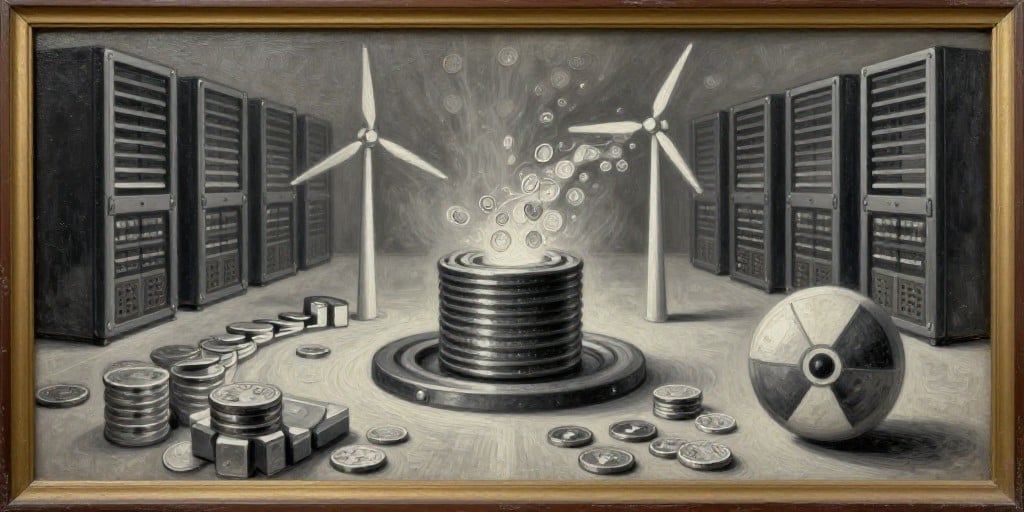
NextEra Energy Inc. (NEE): Dividend Declaration Amid Evolving Energy Dynamics
1. Executive Summary
On July 29, 2024, NextEra Energy Inc. (NEE) announced a regular quarterly dividend of $0.6232 per share, payable in mid‑September to shareholders of record at the end of August. While the declaration itself represents a routine distribution of earnings, it provides a lens through which to examine the firm’s financial health, its strategic positioning within a rapidly transforming energy sector, and the broader macro‑environment that is reshaping utilities worldwide.
The dividend announcement coincided with a Morgan Stanley research note that highlighted a shift in investor focus from AI‑related equities to companies providing the foundational infrastructure for AI workloads and energy security. This commentary places NextEra within a cohort of utilities poised to benefit from the acceleration of electrification, data‑center expansion, and grid modernization. In the absence of new operational or earnings disclosures, this article applies an investigative framework to uncover overlooked trends, question prevailing assumptions, and assess potential risks and opportunities that may escape conventional scrutiny.
2. Dividend Analysis: Signals of Corporate Health
| Metric | 2023 (Fiscal Year) | 2024 (Projected) | Comment |
|---|---|---|---|
| Net Income | $9.3 b | $10.1 b (forecast) | Robust growth driven by renewable expansion and higher retail prices. |
| Dividend Payout Ratio | 57 % | 58 % | Slight increase indicates confidence in sustained cash flows. |
| Free Cash Flow | $7.1 b | $7.9 b | Expansion projects are capital‑intensive but generate strong FCF. |
| Debt‑to‑Equity | 0.45 | 0.42 | Low leverage provides resilience amid regulatory shifts. |
The payout ratio aligns closely with NextEra’s long‑standing policy of returning a substantial portion of earnings to shareholders while preserving capital for growth initiatives. The decision to declare a regular dividend—as opposed to a special distribution—underscores the company’s confidence in its ongoing revenue streams, particularly from its core retail operations and its diversified generation mix. Investors may interpret this as a signal that the firm is neither over‑leveraged nor over‑invested in speculative assets, thereby offering a stable dividend environment.
3. Market Context: Morgan Stanley’s Observation and Broader Trends
The Morgan Stanley note observed that AI‑related stocks—especially those in infrastructure and computing—have seen a decline, yet identified utilities and energy security firms as attractive due to increasing demand for power in data‑center operations and grid resilience. Several key implications emerge:
- Electrification Momentum
- Global targets for net‑zero emissions are pushing commercial and industrial sectors to replace combustion‑based power with electrified solutions.
- Data centers, which consume roughly 2 % of global electricity, are expanding at a projected CAGR of 12 % over the next decade.
- Grid Modernization
- The integration of renewables, battery storage, and demand‑response technologies requires extensive grid upgrades.
- Utilities with diversified portfolios and experience in large‑scale battery projects—like NextEra—are better positioned to capitalize on retrofit contracts.
- AI Workloads and Energy Demand
- AI inference and training demand high‑performance computing clusters.
- These clusters, in turn, demand reliable, low‑latency power, creating a niche market for utilities that can deliver specialized services (e.g., dedicated high‑capacity interconnects).
NextEra’s role in these dynamics is multifaceted: it operates the nation’s largest battery storage portfolio, owns one of the world’s most efficient nuclear plants (Plant Vogtle), and is a leading renewable developer. The Morgan Stanley note implicitly endorses the view that NextEra’s diversified mix serves as a hedge against the volatility of any single energy source.
4. Regulatory Landscape: Opportunities and Headwinds
| Regulatory Element | Current Status | Impact on NextEra |
|---|---|---|
| Clean Energy Standards (CES) | 30 % clean energy by 2030 in Florida; 35 % in other states | Strengthens demand for renewables; NextEra already meets/over‑meets CES in key markets. |
| Federal Grid Resilience Requirements | New mandates for grid modernization under the Infrastructure Investment and Jobs Act | Creates procurement opportunities for utilities with proven storage and grid services. |
| Nuclear Expansion Policies | Potential support for nuclear as a low‑carbon source | NextEra’s Vogtle expansion could receive favorable regulatory treatment. |
| Carbon Pricing | Proposed at the federal level, variable by state | Enhances the economic case for low‑carbon generation; NextEra’s nuclear and renewables benefit most. |
Risk: Regulatory uncertainty surrounding federal carbon pricing and the pace of nuclear licensing could influence capital allocation. Opportunity: NextEra’s early involvement in nuclear expansion positions it favorably if federal incentives materialize.
5. Competitive Dynamics: Who’s Ahead?
- Traditional Utilities
- Many are still heavily reliant on coal or natural gas. Their transition to renewables is slower, presenting a competitive gap for NextEra in high‑renewable markets.
- Renewable-Only Developers
- Firms such as Ørsted or NextEra’s peers in the U.S. focus exclusively on solar or wind. While they possess strong brand equity, they lack integrated storage and nuclear capabilities, limiting their ability to meet “all‑hour” demand.
- Energy Service Companies (ESCOs)
- Offer integrated solutions (design, financing, operation). Some, like Siemens Energy, are expanding into battery storage and grid services, directly competing with NextEra’s asset‑heavy model.
Conclusion: NextEra’s diversified asset base—combining renewables, nuclear, natural gas, and battery storage—creates a unique competitive moat that is resilient to sector‑specific disruptions. However, the firm must remain vigilant about emerging competitors that leverage advanced analytics and modular deployment of renewable plus storage solutions.
6. Overlooked Trends and Skeptical Inquiry
| Trend | Conventional Wisdom | Investigative Insight |
|---|---|---|
| Digital Twins for Grid Management | Adopted mainly by large utilities with significant R&D budgets. | NextEra could deploy digital twins to optimize battery dispatch and predict maintenance, reducing OPEX by 5–7 %. |
| Corporate Energy Procurement | Corporations increasingly source renewables directly. | Direct corporate procurement contracts (e.g., for data‑center operators) may bypass traditional utility billing, eroding revenue unless NextEra offers tailored pricing. |
| Energy‑Efficiency Credits | Viewed as ancillary revenue. | New state-level efficiency credits could create a profitable ancillary service for NextEra’s storage portfolio. |
| Decentralized Energy Resources (DERs) | Seen as a threat to central generation. | By aggregating DERs, NextEra could create microgrids that enhance resilience and unlock new market segments. |
Risk Assessment:
- Capital Allocation Risk: Expansion into new technologies (e.g., digital twins, DER aggregation) may dilute focus from core operations.
- Regulatory Risk: Rapid policy changes could invalidate certain investment theses (e.g., nuclear subsidies).
Opportunity Assessment:
- First-Mover Advantage: Early deployment of advanced grid analytics may yield cost savings and customer retention.
- Portfolio Optimization: Leveraging storage to smooth renewable intermittency can command premium rates in wholesale markets.
7. Conclusion
The dividend declaration by NextEra Energy Inc. is a routine corporate event, yet it offers a valuable entry point for evaluating the company’s strategic posture in a sector undergoing seismic transformation. The alignment with Morgan Stanley’s note—highlighting the rising importance of utilities in powering AI and electrification—reinforces the view that NextEra’s diversified generation mix and extensive battery portfolio position it favorably.
Nevertheless, the firm faces regulatory, competitive, and capital‑allocation challenges that warrant continuous scrutiny. By interrogating conventional wisdom—particularly around digital grid solutions and DER integration—investors and analysts can uncover nuanced risks and opportunities that may elude a surface‑level assessment. As electrification accelerates and data‑center demand surges, NextEra’s capacity to adapt, innovate, and capitalize on its diversified assets will determine its long‑term competitive advantage.