Executive Management Transition at Aker BP ASA and its Implications for the Energy Sector
Aker BP ASA has announced that a new executive management team will assume office on 1 January 2027 following an internal reorganisation aimed at streamlining operations across the company’s value chain from exploration to production. The current leadership will remain in place until the transition date, giving the incoming team ample time to develop a revised operating model. The reorganisation seeks to accelerate project maturity, reduce costs, and simplify processes by cutting organisational interfaces and consolidating functions.
The new structure builds on Aker BP’s long‑term investment in industrial data, artificial intelligence (AI), and partnership collaboration. By positioning the company to meet evolving conditions on the Norwegian continental shelf, the reorganisation is expected to strengthen Aker BP’s competitive stance in both conventional and renewable energy markets. CEO Karl Johnny Hersvik highlighted the company’s unique ability to create long‑term value and expressed gratitude for the foundational work of the outgoing team.
Restructured Leadership Framework
| New Team Focus | Key Functions |
|---|---|
| Find & Develop | Exploration, discovery, and early development |
| Build | Construction of infrastructure, asset acquisition |
| Produce | Operations, production optimisation |
| Optimise | Asset performance, cost reduction |
| PDO Projects | Production sharing agreements and contractual compliance |
| Strategic & Support Functions | Finance, services, digital, strategic innovation, transformation |
The transition is being managed in partnership with employee representatives and safety delegates to ensure smooth implementation and maintain operational continuity.
Market Context: Supply‑Demand Fundamentals and Energy Transition Dynamics
Global Energy Supply‑Demand Landscape
- Oil & Gas Demand: Global demand for oil and gas is projected to remain relatively stable over the next decade, with a modest increase driven by transportation and industrial sectors in emerging economies.
- Natural Gas: Demand for natural gas is rising in Europe as a bridge fuel, bolstered by LNG imports and the decarbonisation of power generation.
- Renewables: Renewable electricity generation continues to accelerate, with solar and wind capacity additions outpacing fossil‑fuel installations in most regions.
Commodity Price Analysis
- Crude Oil: Brent crude has traded between $75–$90 per barrel over the past 12 months, reflecting a balance between OPEC+ output decisions and geopolitical tensions in key producing regions.
- Natural Gas: European gas spot prices have averaged $25–$35 per megawatt‑hour, influenced by winter demand spikes and limited storage capacity.
- Renewable Energy Credits: The EU Emission Trading System (ETS) price has risen from €27 to €32 per tonne CO₂, signalling a tightening of carbon budgets.
These price dynamics underscore the continued relevance of conventional energy assets for investors while highlighting the growing economic case for renewable investments.
Technological Innovations in Production and Storage
- Artificial Intelligence & Digital Twins: Companies are deploying AI‑driven predictive maintenance and digital twins to reduce downtime and optimise drilling performance. Aker BP’s focus on industrial data and AI positions it to benefit from these efficiencies.
- Enhanced Storage Solutions: Advancements in battery chemistry, such as solid‑state batteries, and in compressed natural gas (CNG) storage are improving grid flexibility.
- Carbon Capture, Utilisation, and Storage (CCUS): Projects in the North Sea are demonstrating the commercial viability of CCUS, with pilot projects reducing CO₂ emissions by 80% in certain settings.
Regulatory Impacts on Traditional and Renewable Sectors
- EU Green Deal: The EU’s decarbonisation framework imposes stricter emissions limits and mandates investment in low‑carbon infrastructure. This regulatory shift encourages the diversification of asset portfolios.
- Norwegian Energy Policy: Norway’s “Climate and Energy Plan 2024” targets a 55% reduction in CO₂ emissions by 2030, supporting investment in offshore wind, green hydrogen, and CCUS.
- U.S. Clean Energy Act: Upcoming legislation may increase incentives for renewable projects and impose additional reporting requirements on fossil‑fuel operations.
The interplay between these regulations and market forces shapes investment decisions, influencing capital allocation in both traditional and renewable energy sectors.
Balancing Short‑Term Trading with Long‑Term Transition Trends
Short‑term trading in crude and gas remains influenced by geopolitical events, inventory levels, and seasonal demand variations. However, long‑term energy transition trends—driven by technological innovation, regulatory shifts, and shifting consumer preferences—are redefining value creation in the sector.
- Short‑Term: Volatility in Brent and gas prices offers trading opportunities for asset managers and commodity traders.
- Long‑Term: Strategic investments in digital transformation, CCUS, and renewable infrastructure provide a pathway to sustainable profitability.
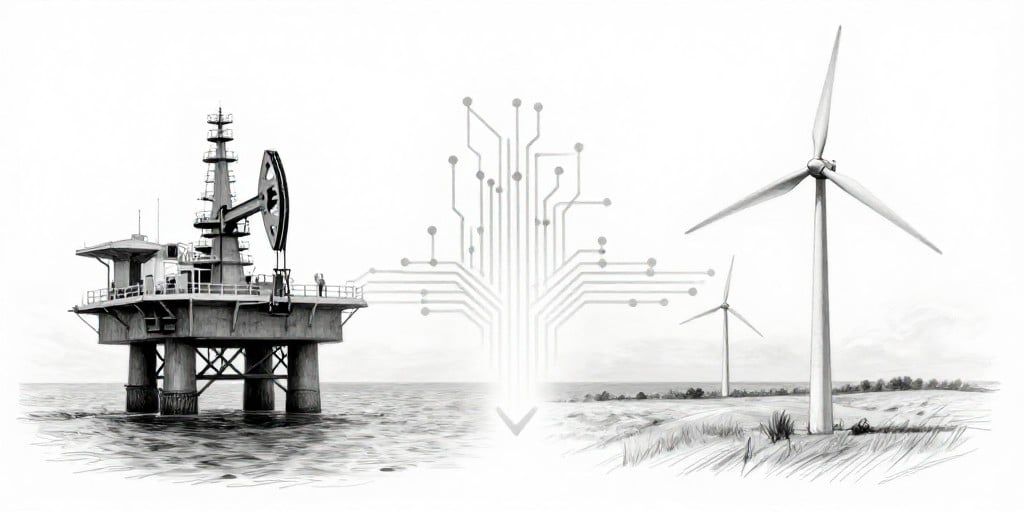
Aker BP’s reorganisation, emphasizing operational efficiency and data‑driven decision making, aligns with this dual focus. By streamlining processes and fostering cross‑functional collaboration, the company is poised to optimise its conventional assets while simultaneously expanding its footprint in emerging low‑carbon technologies.
Conclusion
The appointment of a new executive management team at Aker BP ASA marks a decisive step toward enhancing operational agility and aligning the company with the evolving energy landscape. By integrating advanced data analytics, AI, and collaborative partnership models, Aker BP seeks to deliver long‑term value across both traditional and renewable energy domains. As commodity markets continue to reflect complex supply‑demand balances and regulatory environments intensify, such strategic realignments will be pivotal for sustained competitiveness in the global energy sector.