Quantum‑Safe Connectivity: Bridging Legacy Systems and the Quantum Frontier
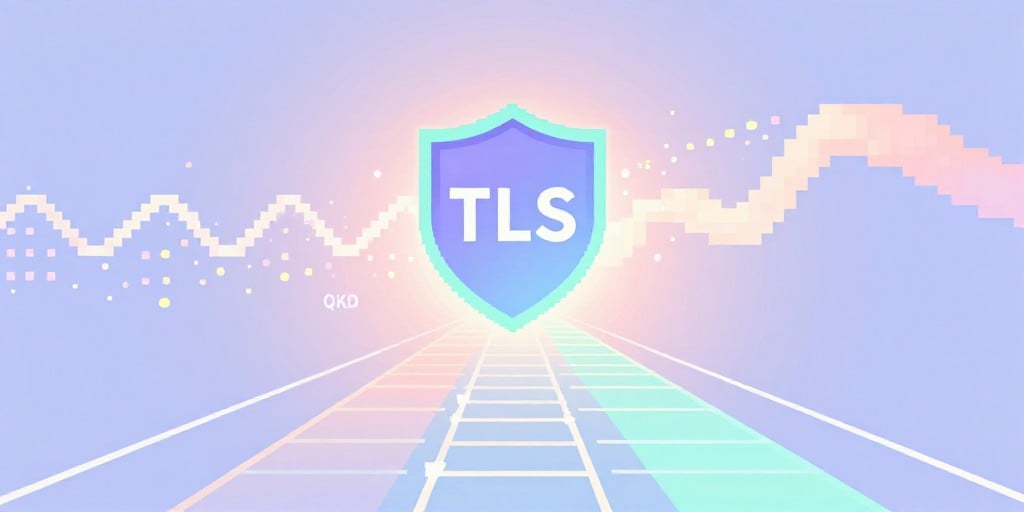
The convergence of quantum key distribution (QKD) and post‑quantum cryptography (PQC) by NEC Corporation and IBM Japan marks a decisive step toward a resilient, future‑proof security paradigm. While the industry has long debated whether quantum‑safe protocols can coexist with today’s internet infrastructure, the hybrid proof‑of‑concept demonstrates that they can, in fact, be woven into a single Transport Layer Security (TLS) stack without disrupting existing applications.
The Integration in Practice
- NEC’s QKD hardware generates truly random, entropy‑rich keys that are transmitted to IBM’s quantum‑safe proxy.
- The proxy, built on PQC algorithms such as CRYSTALS‑Kyber, encrypts the QKD output before it reaches the application layer.
- A standardized application programming interface (API) ensures that any TLS‑enabled client or server can invoke the hybrid mechanism as if it were a conventional key exchange.
This architecture resolves the most pressing practical barrier: the need to upgrade only peripheral devices rather than the entire application stack. The result is a seamless, “drop‑in” solution that can be rolled out incrementally in sectors where long‑term confidentiality is paramount—banking, critical infrastructure, and high‑performance data‑centre interconnects.
Challenging Conventional Wisdom
For decades, the prevailing belief has been that QKD, with its stringent physical‑layer requirements, is incompatible with the global, software‑centric nature of the internet. Likewise, PQC, while theoretically robust against quantum adversaries, has faced criticism for its computational overhead and lack of interoperability. The NEC‑IBM collaboration counters both narratives:
- Quantum‑Safe is Not a Trade‑off – The hybrid scheme shows that QKD can augment, rather than replace, PQC, thereby harnessing the strengths of both physical and mathematical security.
- Legacy Compatibility is Feasible – By embedding the hybrid exchange within TLS, the solution sidesteps the need for widespread hardware replacement, a significant cost and logistical advantage.
These insights suggest that the next generation of secure communication will likely be built on layered, hybrid approaches rather than on a single technology.
AI Education on the Rise: From Foundations to Frontiers
Parallel to advances in cryptographic resilience, the talent pipeline for artificial intelligence (AI) is undergoing a parallel transformation. A suite of industry‑led educational programmes—spanning professional certificates, university courses, and hands‑on internships—indicates a deliberate shift toward practical, project‑based learning.
Structured Foundations
IBM’s Generative AI Engineering Professional Certificate, delivered entirely online, offers a scaffolded curriculum that introduces generative models, large‑language‑model (LLM) fundamentals, and prompt‑engineering techniques. The emphasis on retrieval‑augmented generation and hands‑on projects ensures that learners move beyond theory into applied problem‑solving—a necessity for the rapid iteration cycles that define today’s AI ecosystem.
Deepening Domain Expertise
Courses such as the Applied Machine Learning and Agentic AI program at a leading Indian institute dive deeper into neural‑network architectures and autonomous agent design. By integrating extensive project work, the programme addresses the persistent gap between academic research and industry deployment.
Industry‑Led Apprenticeships
Hands‑on internships at Bosch, Apple, and the United Nations Environment Programme provide unique cross‑sector exposure:
- Bosch focuses on generative‑AI prototyping for manufacturing automation, blending industrial IoT data with LLM inference.
- Apple emphasizes model evaluation and large‑language‑model research, offering exposure to high‑performance computing frameworks.
- UN Environment Programme leverages AI for climate analytics, demonstrating the tangible impact of generative models on sustainability initiatives.
These experiences underscore a growing recognition that AI expertise must be cultivated in real‑world, mission‑critical settings.
Strategic Context
The dual emphasis on quantum‑safe communication and AI skill development reflects a broader strategic pivot: technology firms are simultaneously securing the channels through which data travels and training the professionals who will drive data‑driven innovation. This duality is not incidental; it is a deliberate response to emerging regulatory pressures, geopolitical uncertainties, and the accelerating pace of digital transformation.
- Regulatory Alignment – Governments worldwide are tightening requirements for data confidentiality and AI ethics. The hybrid QKD‑PQC model satisfies both security mandates and emerging privacy standards.
- Talent Scarcity – As AI becomes embedded across sectors, the demand for professionals who can navigate both the technical nuances and the ethical implications of generative models outpaces supply. Structured educational pathways mitigate this imbalance.
- Economic Resilience – Secure communication infrastructures underpin critical services, while AI capabilities fuel productivity and innovation, jointly fortifying economic resilience against cyber threats and disruptive market forces.
Forward‑Looking Analysis
Looking ahead, the interplay between quantum‑safe communication and AI talent development is poised to shape the digital economy in several key ways:
- Hybrid Security as Standard – The NEC‑IBM model will likely inspire industry consortia to formalize hybrid security protocols, leading to standardized APIs and certification frameworks that ease adoption.
- AI‑Enabled Threat Detection – Generative models, once trained on diverse datasets, can anticipate and mitigate quantum‑level attacks, creating a feedback loop between security and AI research.
- Cross‑Industry Collaboration – The convergence of AI and environmental initiatives, as exemplified by the UN internship, signals a broader trend toward socially responsible AI deployment.
- Regulatory Harmonization – As quantum threats loom, regulators may adopt a unified stance that encourages hybrid cryptographic solutions, while simultaneously endorsing industry‑backed educational standards.
In sum, the recent strides by NEC, IBM, and a coalition of educational institutions illustrate a pivotal moment: secure communication and AI expertise are no longer siloed concerns but interdependent pillars of a resilient, forward‑leaning technology ecosystem. By embracing hybrid security architectures and cultivating applied AI talent, corporations position themselves to navigate the uncertainties of the quantum era while driving sustainable innovation.