Nationwide Ground Stop Reveals Structural Vulnerabilities in U.S. Air‑Traffic Control
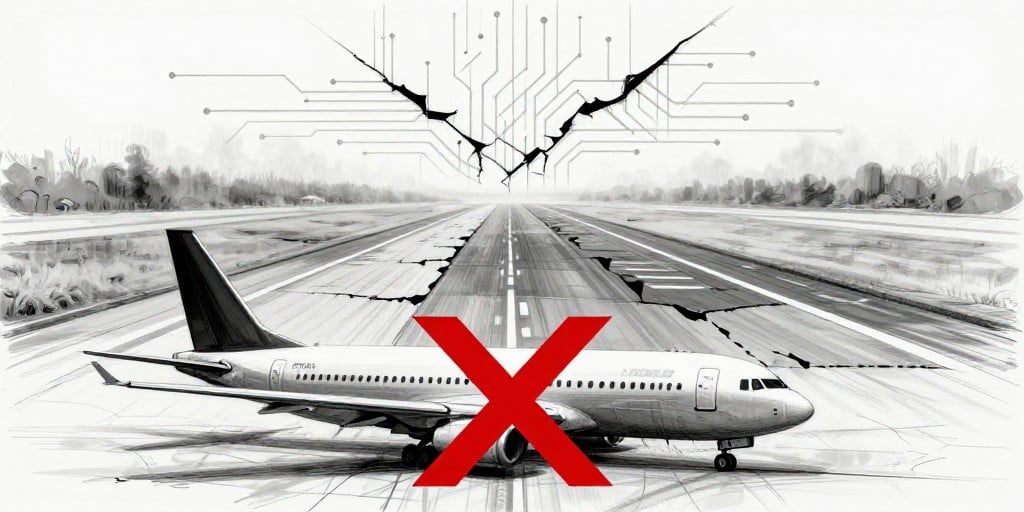
The unprecedented ground halt that unfolded across the United States on the night of Friday, 5 PM, exposed a critical weakness in the aviation industry’s most essential network. A single malfunctioning router—installed by a contractor for L3Harris Technologies—triggered a cascade of failures that disrupted thousands of flights, paused departures for several hours, and highlighted a decade‑long reliance on legacy infrastructure. The incident, which is the longest nationwide shutdown since the September 2001 attacks, serves as a stark reminder that modern aviation is as much a data‑driven operation as it is an engineering one.
A Technical Failure with Systemic Consequences
During routine maintenance, L3Harris replaced aging copper cabling in a remote FAA facility with fiber‑optic links to increase bandwidth and resilience. The new router, however, generated an unexpectedly high volume of connection requests. Because the air‑traffic control network is highly interdependent, the overload propagated through multiple control centers, severing the real‑time communication channels that enable aircraft separation and radar feeds. Although aircraft already airborne were landed safely, the backlog of flights, crew repositioning, and subsequent cancellations caused a ripple of operational disruptions that persisted for days.
Financial Fallout for Airlines and the Broader Economy
Preliminary estimates from airline revenue management groups suggest that the ground stop incurred direct losses of approximately $1.2 billion in revenue and ancillary services. According to a study by the Airlines Reporting Corp (ARC) and the U.S. Department of Transportation, the average delay cost to passengers was $400, translating into $2.8 billion in compensation payouts and loss of customer goodwill. The ripple effect extended to ground operations, where fuel surpluses and re‑routing costs added another $150 million in expenses. The cumulative economic impact—factoring in cascading delays for freight carriers and ancillary service providers—approaches $3–4 billion for the week following the incident.
Regulatory Oversight and the Need for Modernization
The Federal Aviation Administration, citing safety concerns, suspended all departures for several hours. Chief Administrator Bryan Bedford publicly acknowledged the technical issues and affirmed that the system was now operating normally. However, the incident prompted a re‑examination of the FAA’s risk‑management framework. Transportation Secretary Sean Duffy emphasized that the root cause—whether a defect in the L3Harris router or an installation error—remains unclear, and he called for a $50 billion congressional appropriation to modernize the air‑traffic control infrastructure. The current funding of $12.5 billion is widely regarded as insufficient for a comprehensive upgrade.
| Funding Request | Current Appropriated Budget | Gap |
|---|---|---|
| $50 billion (proposed) | $12.5 billion | $37.5 billion |
This funding shortfall has become a focal point in congressional hearings, with lawmakers and industry groups arguing that the current budget does not account for the rapidly evolving threat landscape—especially cybersecurity and software‑defined networking risks.
Competitive Dynamics in the Aerospace and Communications Sector
L3Harris, a global leader in avionics and communications solutions, faces intensified scrutiny. While the company has already completed 70 % of the planned copper‑to‑fiber conversion, the incident underscores the risks inherent in rapid infrastructure modernization without rigorous testing protocols. Competitors such as Honeywell Aerospace and Collins Aerospace have already announced phased upgrades to their own fiber‑optic networks, citing similar concerns about legacy system brittleness. A market analysis by Bloomberg Intelligence suggests that the U.S. air‑traffic control market—currently valued at $2.5 billion annually—could expand by 15–20 % over the next decade if modernization efforts accelerate, creating a lucrative opportunity for vendors that can demonstrate robust resilience.
Overlooked Trends and Risk Factors
Legacy Hardware Co‑existence The coexistence of copper cabling and fiber‑optic links in critical control centers creates a “dual‑mode” environment where failures in one segment can destabilize the entire network. This complexity is often underestimated in cost models.
Vendor Lock‑In and Supply Chain Fragility The incident highlights the industry’s dependence on a limited pool of contractors (notably L3Harris). Any single point of failure, whether hardware or software, can cause nationwide outages.
Cyber‑Physical Security Gaps While the immediate cause was a router overload, the same configuration could expose the network to distributed denial‑of‑service attacks. Current security protocols have not evolved to cover software‑defined networking in real‑time air‑traffic control.
Regulatory Lag vs. Technological Pace FAA regulations have historically lagged behind technological advancements. The ground stop reveals that regulatory frameworks are still inadequate for rapid, large‑scale network transformations.
Redundancy Architecture Existing redundancy architectures rely on physical separation rather than logical failover, limiting their effectiveness against simultaneous software or configuration errors.
Opportunities for Stakeholders
Infrastructure Investment The projected $37.5 billion funding gap represents an opportunity for public–private partnerships. Companies with expertise in resilient network architecture could secure long‑term contracts.
Cyber‑Security Solutions As the industry pivots toward software‑defined networking, vendors offering end‑to‑end cyber‑security suites tailored for air‑traffic control will likely see increased demand.
Data Analytics Platforms The incident underscores the importance of real‑time analytics for network health monitoring. Firms developing AI‑driven predictive maintenance solutions can position themselves as essential service providers.
Regulatory Advisory Services Given the evident regulatory lag, consulting firms specializing in aviation compliance will find a growing market for advisory services on modernizing legacy systems while maintaining safety standards.
Conclusion
The nationwide ground stop triggered by a single router malfunction is more than a logistical inconvenience; it is a wake‑up call to a sector that has long depended on aging infrastructure. While the immediate crisis was averted, the incident laid bare a constellation of risks—technical, regulatory, and competitive—that could undermine the safety and efficiency of U.S. air traffic for years to come. A decisive, well‑funded modernization effort, coupled with stringent oversight and robust redundancy, is essential to safeguard not only the aviation industry’s financial health but also national security.