Corporate Update – National Grid plc
Financial Performance Review
National Grid plc disclosed a modest decline in revenue and profit for the most recent trading period. The downturn is attributed primarily to a smaller revenue base compared with the preceding year and a slowdown in the uptake of high‑voltage transmission projects. Management indicated that the timing of new project approvals and the contractual delivery schedule have temporarily dampened results, yet emphasized that the long‑term outlook remains positive as the broader grid‑upgrade programme accelerates nationwide.
Product‑Line Highlights
| Segment | Recent Developments | Expected Trajectory |
|---|---|---|
| Smart Grid & Power‑Conversion | Ongoing progress in smart‑grid deployments; increased engagement from industrial and utility customers | Momentum expected as infrastructure projects move from approval to execution |
| High‑Voltage / Ultra‑High‑Voltage & Medium‑Voltage Equipment | New equipment roll‑outs for HV, UHV and MV networks | Sales of core components remain modest but projected to rise with project execution |
| Renewable Integration & Energy Storage | Commitment to expand HVDC transmission and grid‑scale storage | Expected to enhance grid resilience and support variable renewable integration |
Technical Analysis of Grid Dynamics
Grid Stability
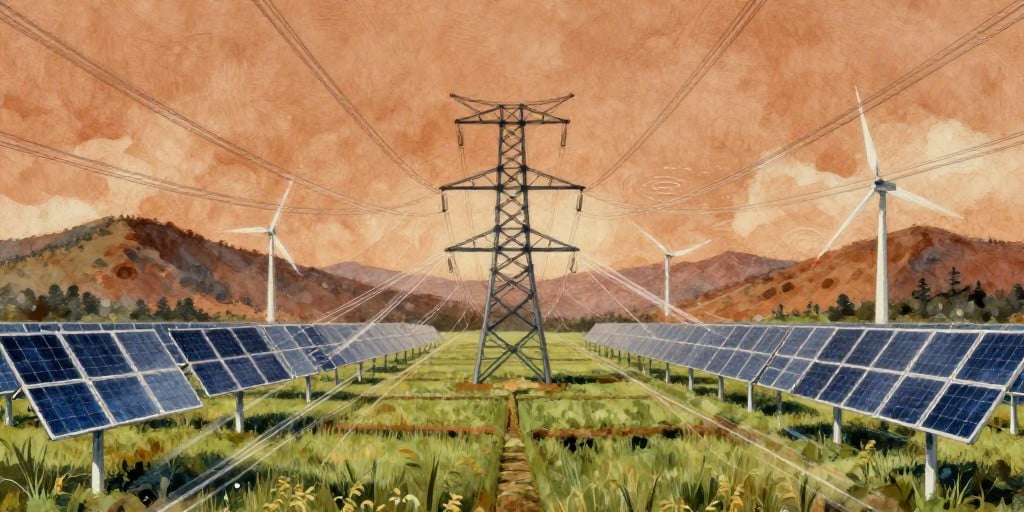
The integration of intermittent renewable generation, such as wind and solar, imposes significant challenges to voltage regulation and frequency control. National Grid’s investment in HVDC links mitigates these issues by allowing precise control of power flow and reducing reactive power losses. Additionally, the deployment of grid‑scale energy‑storage systems offers ancillary services—frequency regulation, spinning reserve, and voltage support—that are essential for maintaining system inertia in a decarbonised grid.
Transmission Project Slowdown
The slowdown in high‑voltage transmission projects is partly due to regulatory bottlenecks in the planning and approval process. Lengthy environmental assessments and community consultation periods can delay the commissioning of new lines, reducing the immediate revenue stream. From an engineering standpoint, this delay also postpones the benefits of enhanced capacity and reduced congestion, which could otherwise improve system reliability and lower transmission losses.
Infrastructure Investment Requirements
Achieving the national electrification and decarbonisation agenda demands substantial capital outlays. Estimates suggest that grid infrastructure will need to grow by 20 % over the next decade to accommodate the projected increase in renewable penetration and electric vehicle load. National Grid’s commitment to R&D in higher‑efficiency equipment—such as advanced transformer cores and superconducting cables—will be pivotal in reducing the cost of ownership for utilities and, ultimately, for end‑users.
Regulatory and Rate‑Structure Context
The regulatory framework governing National Grid’s operations is largely defined by the Office of Gas and Electricity Markets (OFGEM). The “Transmission Owner” model imposes performance‑based tariffs that reward reliability and penalise failures. Consequently, investment decisions must align with the Regulated Asset Base (RAB) methodology, ensuring that new projects deliver measurable performance improvements to justify their capital costs.
Rate structures for industrial and utility customers are increasingly shifting from flat tariffs to variable pricing schemes tied to system demand and renewable output. National Grid’s power‑conversion portfolio is positioned to offer flexible, real‑time control solutions that enable customers to optimize energy usage and reduce exposure to peak charges.
Economic Implications for Utility Modernization
Capital Expenditure (CAPEX) Escalation – Modernisation of the transmission network entails significant CAPEX. While short‑term financial performance may reflect this outlay, the long‑term benefit is a more resilient grid that reduces the cost of outages and enables higher renewable penetration, which is ultimately cost‑saving for consumers.
Operational Expenditure (OPEX) Reduction – Advanced monitoring and predictive maintenance, facilitated by smart‑grid technologies, can lower OPEX by early fault detection and reduced manual interventions.
Consumer Cost Dynamics – As the grid integrates more renewable resources, the marginal cost of electricity generation decreases, potentially translating into lower wholesale prices. However, the transition to variable pricing models may introduce cost volatility for consumers unless mitigated through hedging mechanisms and robust demand‑side management programs.
Outlook
National Grid plc plans to maintain its investment in research and development to enhance equipment efficiency and broaden its product portfolio. Management remains optimistic that the continued rollout of new transmission projects and the growing demand for grid‑support services will help the company rebound in the coming quarters. The strategic focus on renewable integration, energy‑storage solutions, and smart‑grid capabilities positions the company to contribute to the national decarbonisation target while navigating the complex dynamics of a modern power system.