
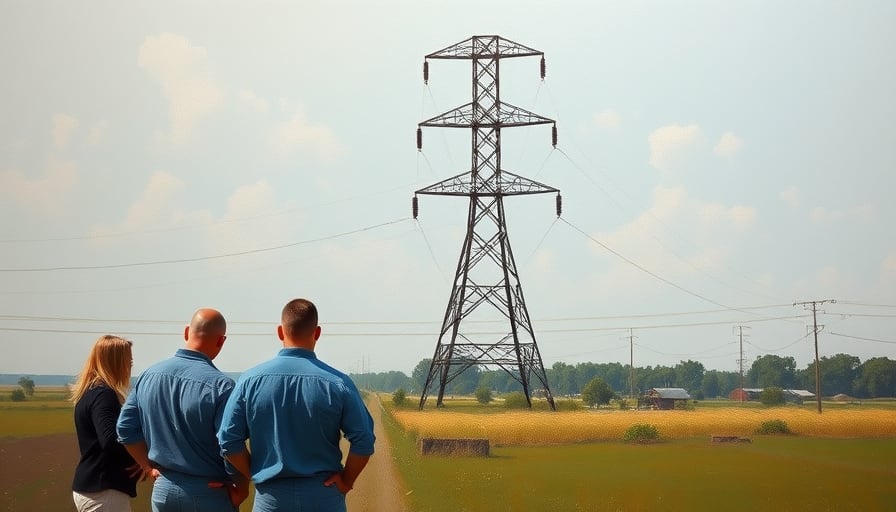
Corporate Overview
National Grid PLC, a dual‑listed utility on the London Stock Exchange, continues to operate its core electricity and gas transmission businesses in both the United Kingdom and the United States. Recent market activity shows a modest rise in the company’s share price, with the most recent closing price slightly higher than the previous trading day. The firm’s valuation metrics—including its price‑earnings ratio—remain within a typical range for regulated utilities, reflecting the stability of its earnings base.
No new guidance or significant corporate actions have been announced during the reporting period. National Grid’s operations remain centered on maintaining and expanding its high‑voltage transmission network, supporting the transition to lower‑carbon power, and integrating emerging technologies such as smart grid solutions. The company’s long‑term outlook is largely driven by sustained demand for reliable transmission capacity and the broader energy transition, which is expected to sustain its revenue base over time.
Grid Stability and Renewable Integration
Technical Challenges
The integration of variable renewable energy sources (VREs) such as wind and solar into the transmission network imposes stringent requirements on grid stability. Fluctuating generation levels necessitate rapid balancing of supply and demand, which is traditionally handled by large synchronous generators. National Grid’s transmission assets must now accommodate:
- Dynamic inertia management – Loss of conventional inertia from de‑commissioned coal and gas plants requires the deployment of synthetic inertia through inverter‑interfaced resources.
- Frequency regulation – Advanced frequency response services, including droop‑based controls and fast‑acting battery storage, are essential to maintain nominal system frequency.
- Voltage support – Reactive power provision from renewable resources must be coordinated with existing capacitor banks and synchronous condensers to preserve voltage profiles across long transmission corridors.
- Contingency analysis – The increased number of weakly connected nodes demands sophisticated N‑k contingency models to ensure reliability during fault conditions.
Engineering Insights
- Wide‑Area Monitoring Systems (WAMS): National Grid’s investment in phasor measurement units (PMUs) enhances situational awareness, allowing real‑time detection of voltage sags, frequency dips, and line overloads.
- High‑Capacity Sub‑stations: Upgrading key sub‑stations with modular, modular transformer and switchgear technologies improves fault isolation and reduces restoration times.
- Flexible AC Transmission Systems (FACTS): Devices such as Static Var Compensators (SVCs) and Static Synchronous Compensators (STATCOMs) provide dynamic reactive power control, mitigating voltage instability caused by VRE fluctuations.
Infrastructure Investment Requirements
Capital Allocation
Projected investment of £4.2 billion over the next decade is earmarked for:
- Transmission Line Upgrades: Replacing aging 400‑kV lines with 500‑kV corridors to increase bulk power transfer capacity.
- Grid Modernization: Deploying advanced communication networks and cyber‑security measures to support smart grid functionalities.
- Interconnection Projects: Facilitating cross‑border links (e.g., the proposed England‑France interconnection) to enhance market liquidity and resilience.
Funding Mechanisms
- Regulated Rate Structures: The company’s capital expenditures are recouped through regulated tariffs, subject to independent regulatory approval (e.g., Ofgem in the UK, FERC in the U.S.).
- Debt Financing: Issuance of green bonds to leverage investor demand for environmentally responsible assets, with proceeds earmarked for renewable integration projects.
- Public‑Private Partnerships: Collaboration with local authorities for infrastructure sharing, reducing the net cost burden on the company and consumers.
Regulatory Frameworks and Rate Structures
United Kingdom
- National Grid ESO: The Electricity System Operator (ESO) sets system adequacy and reliability requirements, while Ofgem regulates tariffs under the Annual Energy Review (AER).
- Dynamic Pricing Models: Time‑of‑Use (TOU) tariffs incentivize consumption during periods of high VRE output, reducing peak demand on the transmission network.
- Carbon Pricing: The EU Emissions Trading Scheme (ETS) and UK’s carbon price floor influence the cost of fossil fuel generation, indirectly affecting transmission tariff structures.
United States
- Federal Energy Regulatory Commission (FERC): Oversees wholesale market operations and interconnection standards, ensuring non‑discriminatory access to transmission.
- Regional Transmission Organization (RTO)/Independent System Operator (ISO): Regional entities manage grid reliability and market clearing, imposing reliability metrics such as Loss of Load Expectation (LOLE) and System Average Interruption Frequency Index (SAIFI).
- Renewable Portfolio Standards (RPS): State‑level mandates require utilities to source a specific percentage of electricity from renewables, necessitating transmission upgrades to accommodate distributed generation.
Economic Impacts of Utility Modernization
Consumer Costs
- Tariff Adjustments: Infrastructure investments translate into incremental charges on regulated tariffs, typically distributed over a 15‑20 year recovery period. Studies indicate a 2–3 % increase in average residential electricity rates per annum attributable to transmission upgrades.
- Demand Response Savings: Enhanced grid intelligence enables demand‑side management programs, allowing consumers to shift consumption and benefit from lower rates during off‑peak periods.
- Renewable Subsidies: Government incentives for renewable generation reduce overall system costs, potentially offsetting some of the tariff increases.
Broader Economic Benefits
- Job Creation: Transmission projects generate construction, engineering, and operational jobs, stimulating local economies.
- Reliability Gains: Reduced outage frequency enhances productivity across industrial sectors, providing a measurable return on investment.
- Energy Security: Strengthened interconnectors improve resilience to geopolitical shocks and supply disruptions, safeguarding national energy security.
Conclusion
National Grid PLC’s continued focus on maintaining and expanding its transmission network, coupled with strategic investments in grid stability technologies and renewable integration, positions the company to support the ongoing energy transition. Regulatory frameworks and rate structures in both the United Kingdom and the United States provide a predictable environment for these investments, while the economic impacts—though modestly increasing consumer costs—offer long‑term benefits in reliability, job creation, and energy security. The firm’s stable earnings and modest share price appreciation reflect market confidence in its ability to navigate the technical and regulatory complexities of modern power systems.