
National Grid PLC Faces Positive Analyst Sentiment Amidst Energy Transition Dynamics
National Grid PLC, a principal operator of electricity and gas transmission networks in the United Kingdom and a regulated energy supplier in the United States, has attracted the attention of a cohort of market analysts. A survey conducted in late November of five senior analysts reported a predominantly bullish consensus, with the majority recommending a buy or hold stance on the company’s shares. One analyst projected a modest upside relative to the current market price, while a second set a slightly higher target, underscoring a broadly supportive view of National Grid’s strategic trajectory.
Operational Footprint and Market Position
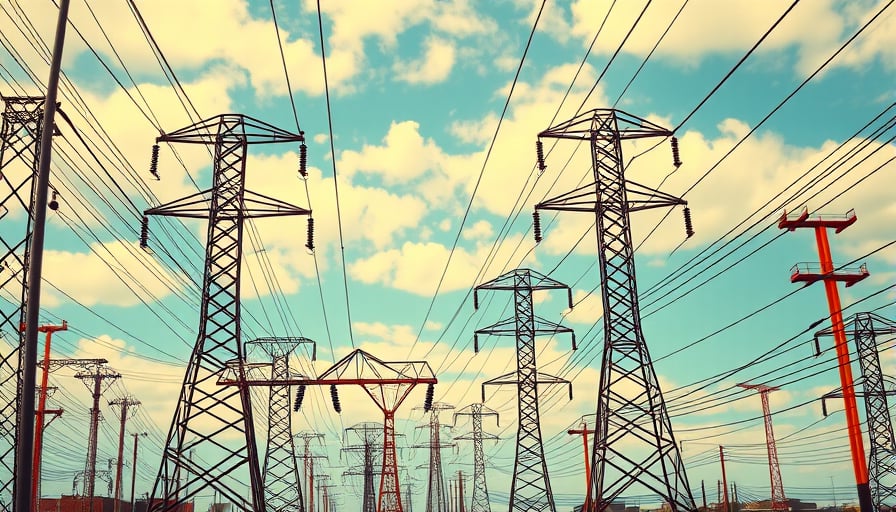
National Grid’s extensive footprint, encompassing the High‑Voltage (HV) transmission grid in the UK and the interstate transmission system in the United States, reinforces its strategic importance within the sector. The company’s regulated activities in the US, particularly its wholesale operations under the Mid‑Continent and West regions, complement its UK operations, providing a diversified revenue base and hedging exposure to regional regulatory variations.
Recent financial media coverage has highlighted National Grid’s role within a market characterized by robust trading volumes, especially in green energy transactions. The utility’s activities are increasingly aligned with the broader industry shift toward sustainable energy infrastructure, as evidenced by the growing participation of renewable generators in wholesale markets and the escalating penetration of variable renewable resources (VRR) such as wind and solar.
Technical Analysis: Power System Dynamics and Grid Stability
1. Grid Stability in an Era of Renewable Integration
The integration of high shares of VRR into the transmission system introduces intermittency and power‑quality challenges that can undermine system frequency and voltage stability. National Grid’s HV grid in the UK already experiences a VRR penetration of approximately 35 % in summer, with projections exceeding 50 % by 2030. Maintaining frequency nadir limits (typically ±0.1 Hz from nominal) requires the deployment of synthetic inertia and fast‑frequency-response (FFR) services.
- Synthetic inertia is achieved through power electronics in wind turbines and battery storage systems, which can inject or absorb reactive power on sub‑second timescales.
- FFR contracts with distributed energy resources (DERs) allow for rapid curtailment or dispatch of stored energy to counteract frequency dips.
2. Transmission Planning and Capacity Expansion
The UK’s 25 GW of planned transmission capacity over the next decade is essential to support the projected load growth and VRR integration. National Grid’s Network Expansion Programme (NEP) outlines a portfolio of high‑capacity corridors, grid reinforcement projects, and cross‑border interconnectors (e.g., North Sea Link and NorNed) to enhance transnational power flow and reserve sharing.
Engineering studies indicate that reinforcement of existing 400 kV lines with phase‑shift transformers can mitigate congestion in critical corridors, while new HVDC links provide controllable power flows that are less susceptible to reactive power constraints. The cost of these upgrades, estimated at £30 bn, necessitates careful consideration of financing mechanisms and rate impacts.
3. Distribution System Modernisation
On the distribution side, National Grid’s Distribution Network Operators (DNOs) are adopting smart grid technologies—including dynamic line rating (DLR), advanced metering infrastructure (AMI), and grid‑automation platforms—to enhance resilience and support distributed generation (DG). DLR allows for real‑time monitoring of line temperature and loading, enabling operators to safely increase throughput during peak solar and wind periods.
Regulatory Frameworks and Rate Structures
United Kingdom
In the UK, the Office of Gas and Electricity Markets (Ofgem) regulates the wholesale and retail markets. Power Purchase Agreements (PPAs) with renewable developers are often long‑term and fixed‑price, providing revenue certainty but also exposing operators to market price fluctuations. The Transmission System Operator (TSO) framework mandates system reliability standards (e.g., NERC Reliability Standards) that influence investment decisions.
- Rate design: Ofgem’s Network Cost Recovery model allows National Grid to recover capital investments through Network Access Charges (NAC) and Distribution System Charges (DSC), with transparent tariff schedules that are periodically reviewed.
United States
In the US, National Grid’s Mid‑Continent and West markets operate under the North American Electric Reliability Corporation (NERC) reliability standards and the Federal Energy Regulatory Commission (FERC) oversight. The reliability tariff model under FERC’s PJM Interconnection allows for performance‑based charges that incentivize timely delivery and system reliability.
Economic Impacts of Utility Modernisation
The capital intensity of transmission and distribution upgrades translates directly into consumer costs. However, modernised infrastructure yields long‑term economic benefits:
- Reduced Curtailment: Enhanced grid flexibility lowers renewable curtailment, allowing greater penetration of lower‑cost green generation and ultimately reducing wholesale price volatility.
- Reliability Improvements: Fewer outages and faster restoration times improve productivity for businesses and households.
- Innovation Catalyst: Smart grid deployments create markets for ancillary services, such as demand response and energy storage, fostering new business models.
Analysts estimate that a 1 % increase in consumer electricity tariffs may be justified to fund the necessary upgrades, but this must be balanced against regulatory scrutiny and potential rate caps. The overall cost‑benefit ratio hinges on the ability to capture non‑revenue‑water (NRW) savings from reduced losses and enhanced efficiency.
Conclusion
National Grid PLC’s strategic investments in transmission and distribution infrastructure, coupled with a robust regulatory framework and a forward‑looking operational model, underpin its positive analyst outlook. The company’s capacity to navigate the technical challenges of renewable integration—while managing consumer rate implications—positions it as a key player in the ongoing energy transition. Continued vigilance in grid stability, innovative deployment of grid‑automation technologies, and judicious investment planning will remain critical to sustaining long‑term shareholder value and supporting the broader transition to a cleaner, more resilient power system.