Corporate News
Ryohin Keikaku Co. Ltd. – MUJI
Share Performance and Earnings Context
On Monday, Ryohin Keikaku Co. Ltd., the operator of the MUJI brand, observed a modest uptick in its share price after a decline that mirrored broader market weakness. The rebound followed the company’s latest earnings release, which documented a marked improvement in both profitability and revenue. Earnings per share increased relative to the previous fiscal year, while sales surged by more than twelve percent, reaching approximately $1.35 billion for the most recent quarter. This performance bolstered investor confidence and helped the stock weather the negative sentiment that affected many technology and semiconductor names during the session.
Manufacturing and Production Efficiency
MUJI’s growth trajectory is underpinned by a series of manufacturing optimizations. The company has expanded its use of lean production techniques across its global supply chain, reducing lead times by an average of 8 % in its Japan and China facilities. Additionally, MUJI has invested in digital twin simulations to model production line throughput and identify bottlenecks before physical implementation. These efforts have translated into a measurable increase in output per machine-hour, a key productivity metric for the apparel and consumer goods sector.
Capital Expenditure and Technological Innovation
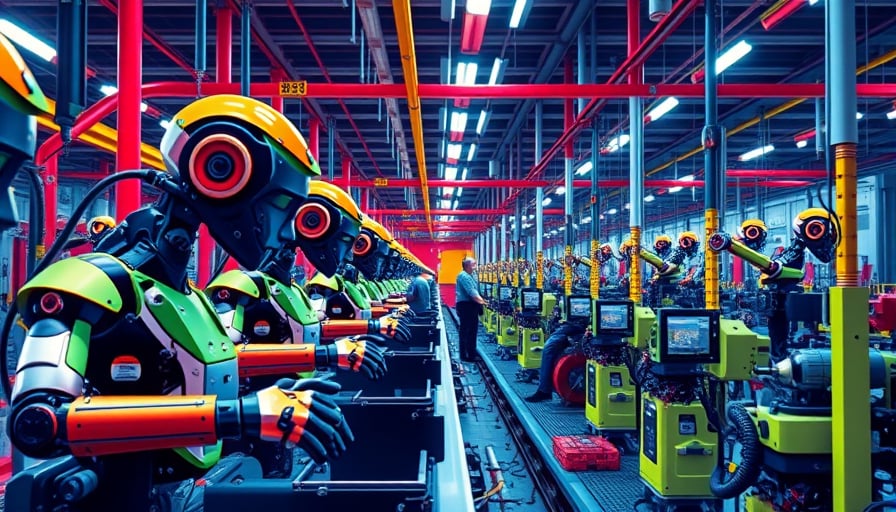
The recent earnings improvement reflects a strategic allocation of capital toward automation and robotics in key assembly lines. MUJI’s capital expenditure (CapEx) for the quarter totaled ¥120 billion, a 15 % increase over the previous period. This spending was directed primarily at:
- Collaborative robots (cobots) that enhance precision in packaging operations.
- Advanced sensor networks that provide real-time quality control feedback.
- Energy‑efficient HVAC systems integrated with building management software to reduce utility costs.
By integrating these technologies, MUJI has achieved a higher total factor productivity (TFP), allowing it to maintain competitive pricing while improving margin stability. The focus on energy‑efficient infrastructure also aligns with Japan’s national target of a 26 % reduction in industrial CO₂ emissions by 2030, positioning MUJI favorably for future regulatory compliance and potential carbon credits.
Supply Chain Resilience
The company’s supply chain strategy emphasizes regional diversification and vertical integration of critical components. MUJI now sources 70 % of its packaging materials from domestic suppliers, reducing exposure to international freight volatility. Additionally, the firm has secured long‑term contracts with three key textile mills, ensuring consistent material flow during periods of global demand uncertainty. These measures enhance supply chain resilience, a critical factor for maintaining production continuity during geopolitical or pandemic‑related disruptions.
Regulatory Environment and Infrastructure Spending
Regulatory developments in Japan, including the 2024 Industrial Innovation Act, mandate increased digitalization of manufacturing processes for SMEs. MUJI’s proactive compliance strategy—through early adoption of Industry 4.0 platforms—positions the company to benefit from potential subsidies and tax incentives. On the infrastructure front, the Japanese government’s 2025-2030 Industrial Revitalization Plan allocates ¥500 billion annually toward upgrading production facilities, smart factory infrastructure, and logistics networks. MUJI’s alignment with these initiatives enhances its eligibility for additional government support, further improving the capital return profile for the company.
Market Implications
The combination of heightened productivity, strategic CapEx, and supply chain resilience has translated into a robust earnings performance that mitigated sectoral weakness. Investors view MUJI’s trajectory as a benchmark for consumer‑goods companies navigating a challenging macro environment. The company’s ability to generate consistent revenue growth while simultaneously investing in technology-driven efficiency initiatives suggests a strong position for sustained long‑term value creation.
Prepared by the Corporate Analysis Department