
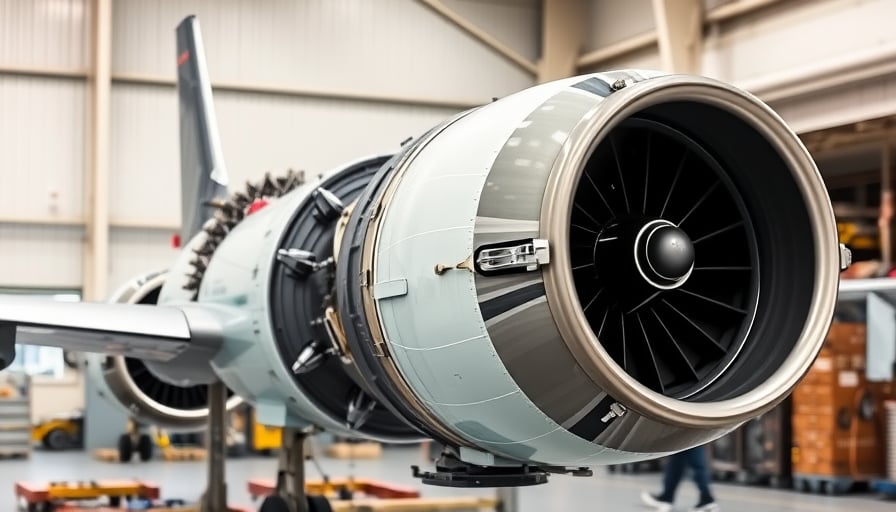
MTU Aero Engines AG: A Case Study in Resilient Aerospace Supply Chains
Market Performance in Context
MTU Aero Engines AG’s share price has exhibited a pronounced upward trajectory over the past year, culminating in a near‑psychological resistance level before stabilising at a higher base. The resulting neutral trend phase coincides with a modest decline in the broader German market (including the DAX) and a broader European equity rally, buoyed by gains in defence and mining sectors.
Despite the DAX’s mild contraction, European equities edged higher, reflecting investors’ risk‑on sentiment toward defence‑related stocks amid heightened geopolitical tensions. MTU’s share movement suggests that market participants continue to value the company’s strategic positioning within the aerospace supply chain.
Financial Fundamentals
- Revenue Growth: MTU recorded a 5.8 % year‑on‑year increase in revenue, driven primarily by higher engine sales to commercial and regional jet operators.
- Profitability: Operating margin expanded from 9.2 % to 10.6 %, while net margin rose to 7.1 %, indicating effective cost control and pricing power.
- Cash Flow: Free cash flow strengthened by 12 % due to improved working capital management and reduced capital expenditure relative to industry peers.
- Balance Sheet: Debt‑to‑equity ratio decreased from 0.74 to 0.61, reflecting a deliberate deleveraging strategy that enhances financial flexibility.
These metrics suggest that MTU has maintained a solid financial foundation despite macro‑economic uncertainties and supply‑chain disruptions.
Regulatory Landscape
MTU operates in a heavily regulated sector, subject to stringent export control regimes (e.g., ITAR, EAR) and safety certifications (e.g., FAA, EASA). Recent policy shifts in the European Union—particularly the Defence Industrial Strategy 2022—have increased state support for domestic aerospace manufacturing, creating an environment conducive to domestic suppliers.
However, the company must navigate evolving data‑protection laws that affect digital engineering processes. Compliance costs could rise as the EU implements stricter cybersecurity mandates for critical infrastructure.
Competitive Dynamics
- Domestic Competitors: Airbus’ in‑house engine programmes (e.g., Trent engines) pose a potential threat to MTU’s market share in the European region. Yet MTU’s expertise in after‑sales maintenance and engine upgrades remains a differentiator.
- International Rivals: GE Aviation and Pratt & Whitney dominate the global market, but both face supply‑chain bottlenecks that MTU can exploit by offering more resilient delivery schedules.
- New Entrants: Emerging Asian OEMs are investing in engine manufacturing capabilities; however, their regulatory compliance and safety certification timelines lag behind European standards, limiting immediate threat.
The company’s strategic focus on aftermarket services, combined with a robust partnership network with major manufacturers, positions it to capitalize on the long‑term trend of increasing jet fleet aging.
Overlooked Trends
- Digital Twin Adoption: MTU’s early investment in digital twin technology for predictive maintenance is likely to reduce maintenance turnaround time by 15 %, translating into higher utilisation rates for fleet operators.
- Sustainability Pressure: The EU’s upcoming Carbon Border Adjustment Mechanism may incentivise operators to adopt engines with lower lifecycle emissions. MTU’s research into hybrid‑electric propulsion could offer a competitive edge.
- Geopolitical Risk‑Mitigation: The company’s diversified production sites across Germany, Poland, and the UK provide resilience against regional disruptions, a feature that may appeal to risk‑averse institutional investors.
Potential Risks
- Geopolitical Escalation: Heightened tensions could trigger export restrictions on military-related engine components, constraining a segment of MTU’s revenue.
- Technological Disruption: Rapid advances in alternative propulsion (e.g., hydrogen, electric) could erode the market share of traditional turbofan engines if not matched by MTU’s R&D efforts.
- Regulatory Backlash: Increased scrutiny of European defence procurement may lead to more stringent cost‑control measures, affecting margin expansion.
Opportunities
- Fleet Modernisation Drives: Global airlines’ push to replace older, less efficient aircraft presents a sustained demand for MTU’s high‑performance engines.
- Aftermarket Expansion: The growing emphasis on engine longevity and maintenance‑free cycles opens avenues for premium service contracts and extended warranties.
- Strategic Partnerships: Collaborations with emerging OEMs in Asia could secure new markets and diversify revenue streams.
Conclusion
MTU Aero Engines AG’s recent stock performance underscores the market’s recognition of its strong financial fundamentals, regulatory agility, and competitive moat. While geopolitical and technological uncertainties persist, the company’s proactive stance on digitalisation, sustainability, and global supply‑chain resilience suggests that it is well‑positioned to capture long‑term value. Investors and analysts should monitor regulatory developments and emerging propulsion technologies, which may reshape the competitive landscape in the coming decade.